
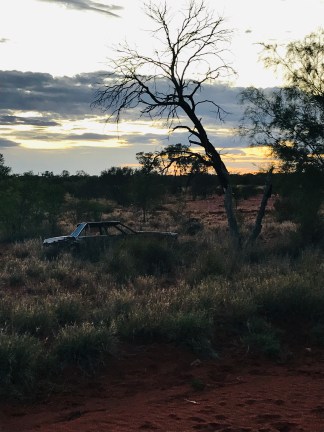
He’s lying flat on his back under a tree when we arrive. His eyes are closed. I can see the black piping is still wrapped around his neck. I feel sick.
The boy who raised the alarm is clearly shaken. He’s muttering under his breath “it’s not right, it’s not right. He shouldn’t be doing this. This should not happen”.
I put my hand on his arm as I bend down to squeeze the shoulder of the young man on the ground, saying his name over and over. He’s breathing and his eyes are fluttering. I breath. He’s lucky I think. He will live.
He has been badly beaten. Both forearms are bruised and swollen in exactly the same place, as if he has been shielding himself from attack. His ribs and back are various shades of purple and yellow. He has a large laceration to the back of head and it looks as though he’s fractured his ankle in the fall from the tree. Some are new injuries. Most are not.
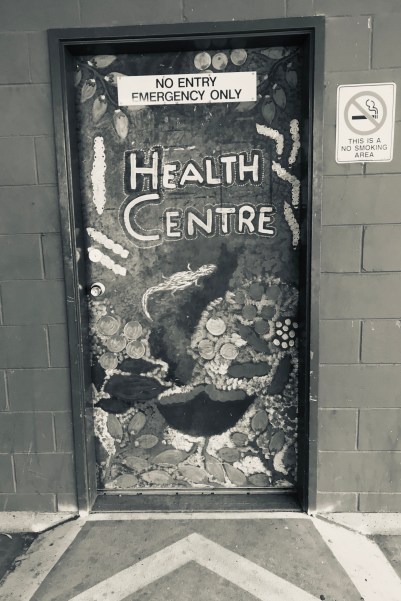
Back at the clinic, as I secure his fractured ankle and suture the cut to his head, we chat. He is a quiet boy, shy and pleasant to talk to. The more we talk, the more I begin to re-evaluate my initial response. Maybe he is not so lucky after all. His crime? He fell in love with the wrong girl. He has been shunned from his own community and it looks like he’s not very welcome in hers. His father is in prison and his mum has been absent for most of his life. The little family he has live in the community he has had to run from. With very little education and even fewer life skills, he has nowhere to go and nothing to do. He wants to do something with his life but he can’t see any way forward. There is no light at the end of the tunnel. In his own words, he is “lost”. Without her, all he has is darkness and the only way out is death.
This is the story of one young man. The story he tells is the story of hundreds of young men growing up out here, in the desert.
Three days later, we pull his girlfriend down from the same tree.
A woman sits in the waiting room. She’s been there a long while but has spoken to no-one. I ask if I can help her. She stares at her hands, clasped tight in her lap. “Health Check” she whispers. She barely mutters a word. I wonder if she understands me but when we start to discuss her children, I see her face brightens and

a small smile plays on her lips. She becomes free for a while. Then it’s gone again, her eyes cast down and her hands remaining clasped tight in her lap. She patiently sits there as I talk about violence and aggression, overcrowding, breast cancer, diet and hygiene, contraception and STI’s. She’s an adult, a mother and grandmother. I prod, poke, measure and lecture her as if she were a child. I hate it, this tick box exercise. She knows but she has no control, no means to change anything because he holds it all. So why does she sit there, shamed and unspoken? Because I will reward her with a $20 power card, for him.
We sent a young man to hospital for a brain scan. He’d had a couple of seizures we thought he should have investigated. He’s an alcoholic, they said. It’s a waste of time, they said. They found a tumour. Actually, it wasn’t a tumour, it was a fungus in his brain. He never made it home to his wife and children.
I’m helping a young lady design a poster. The poster is to be sent out to all the surrounding communities to invite her family members to the funeral of her son. Her son, who’s name will never be spoken, was born and died too early to be saved. The early labour? Brought on by infection. Too many infections.
She walks in with a six month old baby in her arms. Only he’s not six months. It is his first birthday next week. He is tall for his age, but he is incredibly thin and underdeveloped. She tells me she only breast feeds. Sometimes, when she eats, he will eat too. She only gets to eat once a day. It is all she can afford. Fear not. Here I am, with my superhero cape, armed with a growth action plan and a stack of pictorial booklets, diagrams, graphs and charts, literally overflowing with helpful information. Will they really help to feed her baby boy?
A man across the street throws a chair, full pelt, at his young son. “Oi!” the angry word flies from my mouth. An involuntary reaction and one I immediately regret. Why? Because the shame that man feels right now is not his fault. It is the fault of his young son. And he will surely pay for it.
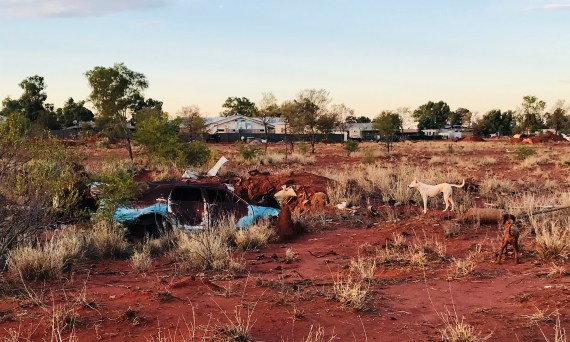
Four young people have been found dead, perished in the searing heat just yards from their broken down vehicle. No water, no food, no phone. One is just a baby, the others not yet 20. Someone needs to be blamed. Fighting breaks out in a nearby community. An episode of “unrest” as the media calls it. A young man is killed in the fighting. A death for a death. He is from the community I work in. I go to pay my respects at the sorry camp. It is like nothing I have ever witnessed. The pain and grief is palpable. I feel it as it clutches at my throat, crushes my chest and grips hold of my belly. You can hear it in the gut wrenching cries of the women. You can see it in the stillness and the silence of the men. I will never forget it.
Above and beyond the trauma, almost every day I find a child who is at risk. Malnourished. Failure to thrive. Unsafe.
Almost every day I find a child with ear infections. Chest infections. Throat infections. So many infections.
Almost every day I find a child with head lice. Ringworm. Scabies. Impetigo.
Almost every day I treat an adult with a chronic, debilitating disease, going deaf, going blind, slowly dying.
Enough now please. Enough.
This cannot be solved through healthcare alone.
 annamayventure
So beautifully written Anna. So raw and honest. So heart wrenching. Sending you strength and love to continue doing the wonderful work you do xxx
LikeLike
Spare, bleak, moving, brutally beautiful (I got this from a Cormac McCarthy paperback cover, and it’s spot on).
LikeLike