This is one of the strangest places I have ever lived. And I have lived in some fair dinkum weird towns in my time.
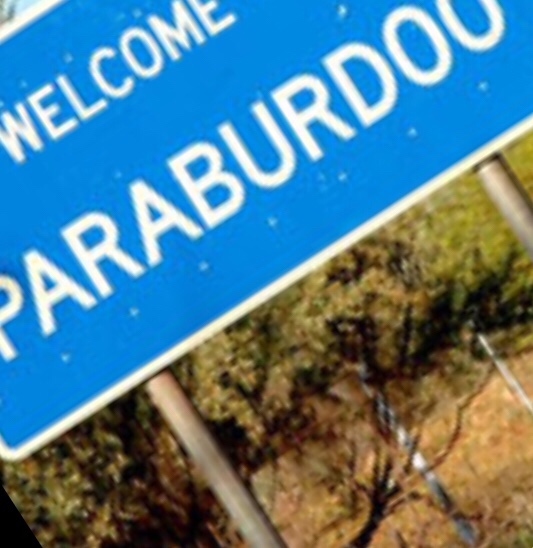
Imagine a town, if you will, like Pleasantville. Then remove the pleasant.
Uninspiring, desolate brick houses line identical streets, most of them uninhabited. Those that remain occupied are no less lifeless. From the post boxes to the cars in the driveways, there is no deviation from the norm. Even the clothes hanging on the washing lines are alike. There are no flowers planted in the front yards, no curtains framing the windows, no doorbells to announce the arrival of a friendly face. Silence fills the air. You won’t find teenagers roaming the streets or see the elderly and the infirm because they don’t live here. 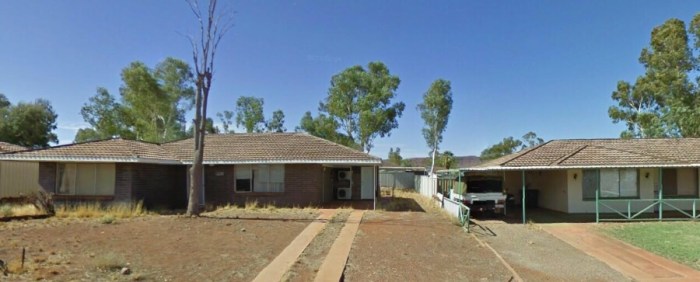 No one puts down any roots. For most people it is a means to an end and they all plan on getting out as fast as they can. Except that they don’t. Because this town can lure you in with a promise of something that we all want: Money.
It’s a tale as old as time itself. For years people have been flocking to Australia in search of better life. Australians themselves have been leaving the cities and heading into the outback in search of their fortunes. There’s gold in them there hills. Or more accurately: Iron ore.
I first arrived in Western Australia at the height of the mining boom. The state was awash with the signs of a new found wealth and full of promise. Palatial houses were springing up in their thousands, spreading Perth both north and south at a phenomenal rate. Prestige cars zoomed up and down brand new freeways alongside high speed rail networks that connected the city to the sprawling outer “burbs”. Marinas expanded their births to accommodate fleets of leisure boats and yachts, designer shopping centres arrived, 5 star hotels moved in and top class chefs opened world class restaurants. Everybody was cashing in.
That was nearly 10 years ago now and, as is inevitable with every boom, there is a bust. Western Australia has been teetering on the edge of a recession since 2015. The price of gold, nickel and iron ore has crashed, the cost of running an Australian workforce has increased and countries like China and Africa can mine minerals for a fraction of the cost. The result is most mines have either reduced output significantly or have closed down completely. The economy is dwindling, unemployment is rising and construction has ground to a halt. Dream homes stand empty and prestige cars are abandoned as banks scramble to reclaim lost money.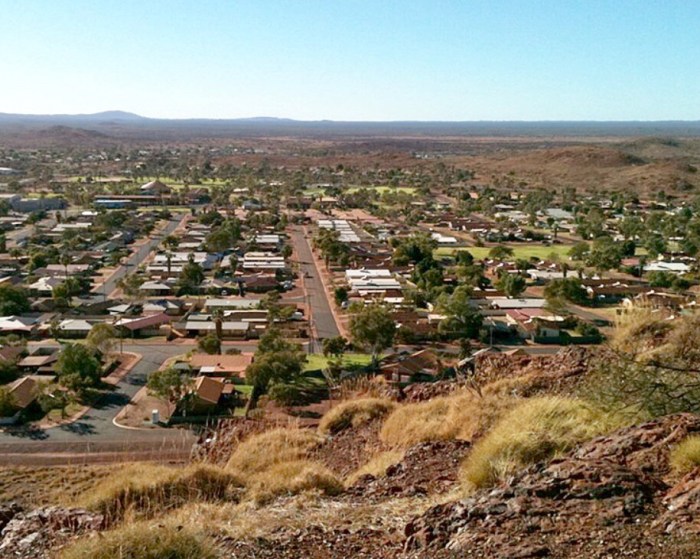
The town was originally built to accommodate a population of up to 40,000 people and I believe in the heyday of the mining boom it was quite a bustling metropolis. It currently has a transient population of less than 1400 people. Everybody who lives in this town either works at the mine or is married to someone who works at the mine. They arrived with a plan: they will stay until they have achieved their goal. Only the goal posts keep moving. Most are paying off a mortgage or setting themselves up for a comfortable retirement. Then they have children, some have lots of children (not much else to do), so they save a little slower. Then they have to add school fees and collage funds. Maybe they would like a boat to go with their new house, a campervan to park in the driveway or to see the world before it’s too late. Some simply have no choice but to stay where the employment is. Either way, the town seems to suck you in.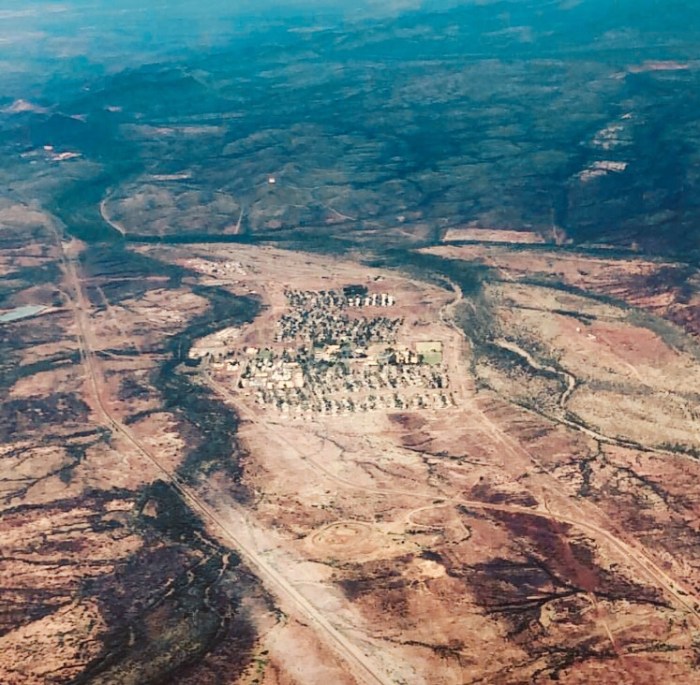
Those who have decided not to relocate their families, opt for the Fly-in/Fly-Out (FIFO) lifestyle, working a two week on, one week off roster which sees them heading back to the bright lights of the big smoke as often as they can. Despite the fact that people are earning up to $200,000 a year for relatively low skilled, low risk jobs, the industry is not without its misery: Gambling, alcohol and drug addiction, workplace bullying, poor mental health, suicide and high divorce rates top a long list of concerns for the FIFO worker.
In 2015, the WA government conducted an investigation into the dramatic increase in suicides among young male FIFO workers. Despite the report prompting the government to support 14 recommendations to help combat this rising concern, two years later, nothing has changed. To add insult to injury, the government has again pledged a substantial amount to reinvestigate what they have already investigated despite doing absolutely nothing with the findings from the last investigation. The outcome being that FIFO workers remain in a state of declining mental health with no support for the next couple of years at least. Can I have a (slow) round of applause please?
Barry, Hannah (2017) “Miners are dying”: The human cost of WA’s FIFO economy. WA Today.
Despite the doom and gloom, the Pilbara is a magical place to live.
My days off are spent exploring. I pack up my car and head off into the wilderness. I barely pass a sole on the road so I set my cruise control to 110 and crank up the stereo as I relax back. Every corner, every crest reveals a new stunning vista that I will never tire of. Lush greens and burnt reds rush by. 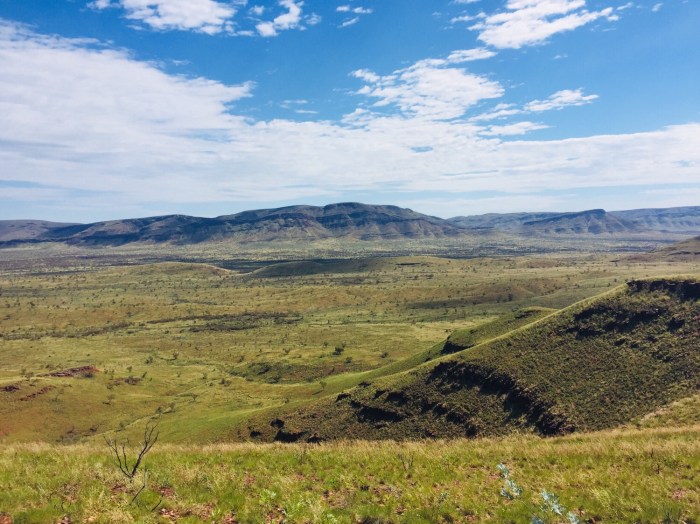 Small birds swoop and dive alongside the car. Dragons and lizards of every size and colour warm themselves in the hazy heat on the slate grey road and I marvel at how you can feel so trapped and confined in a town that is surrounded by a landscape that makes my heart sing out with the beauty of what I see and the freedom that I feel.
 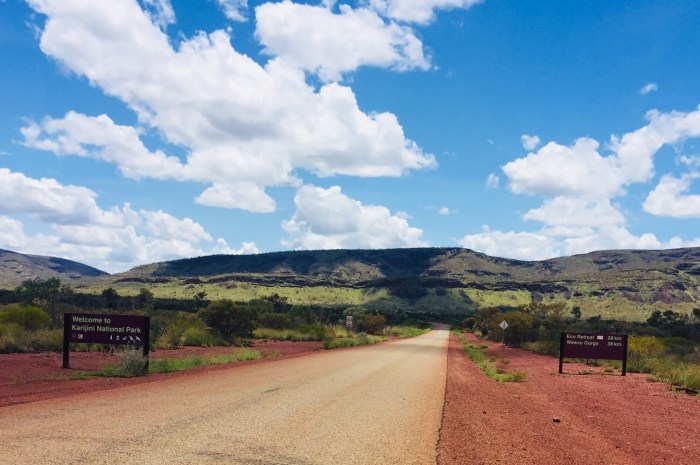 A vast colour palette sweeps throughout this wild and ancient place. It starts with the white and golden sands of the west coast beaches, the turquoise blue of the ocean and the rainbow colours of the reefs that surround the Mackerel Islands and the Dampier Archipelago, providing a spectacular home for sharks, turtles, manta rays, huge whale sharks and shoals of tropical fish.
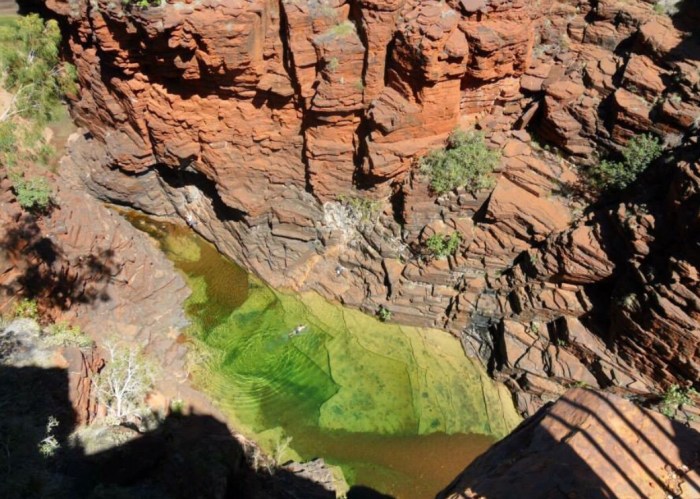
  It ends with the deep red gorges and the blue/green watering holes of the many national parks.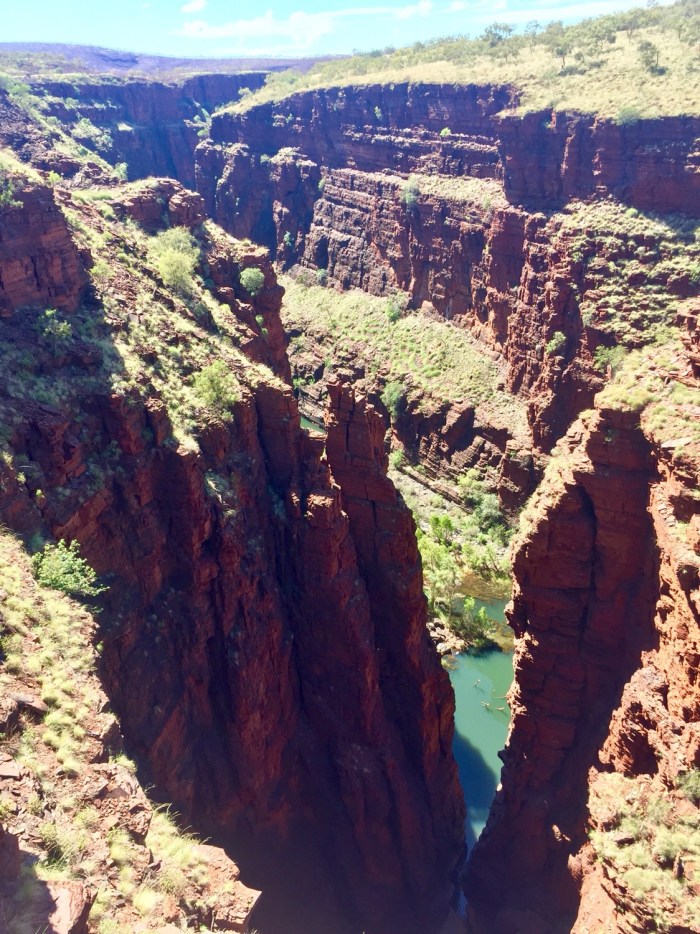
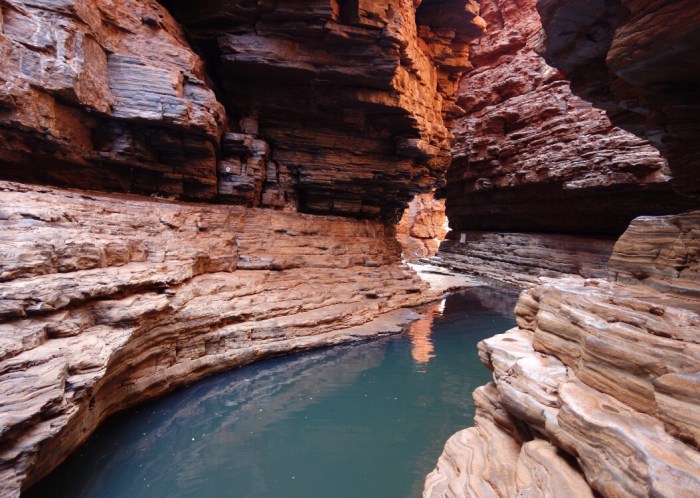
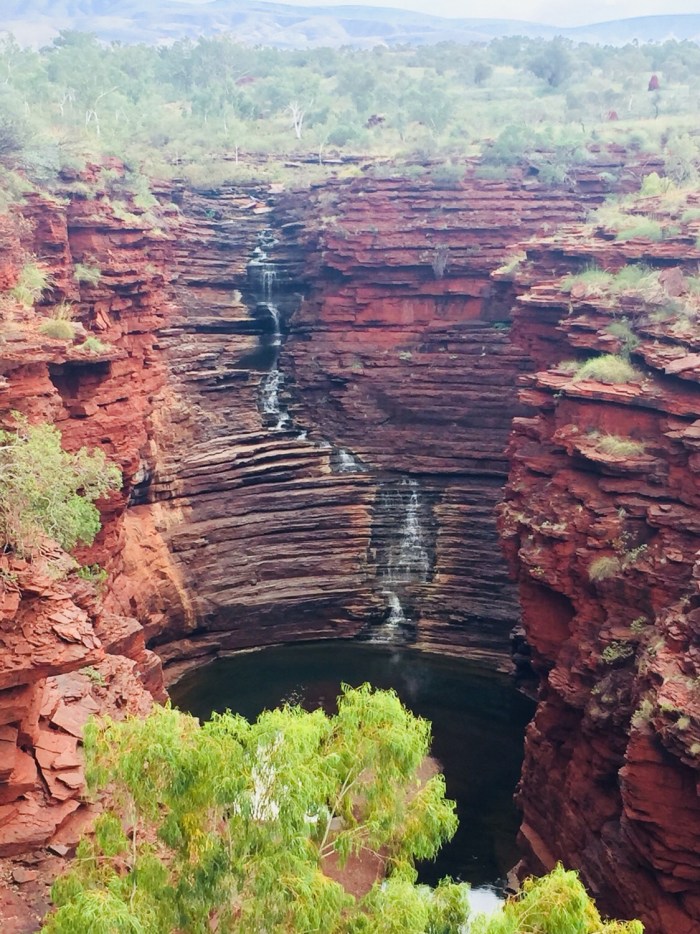 It is summer at the moment and the sun blazes down, most days a hot and humid 40 plus degrees. The red rocks burn my hands as I scramble to the top of mountains or the bottom of gorges, searching for fern lined pools and cascading waterfalls to cool me down.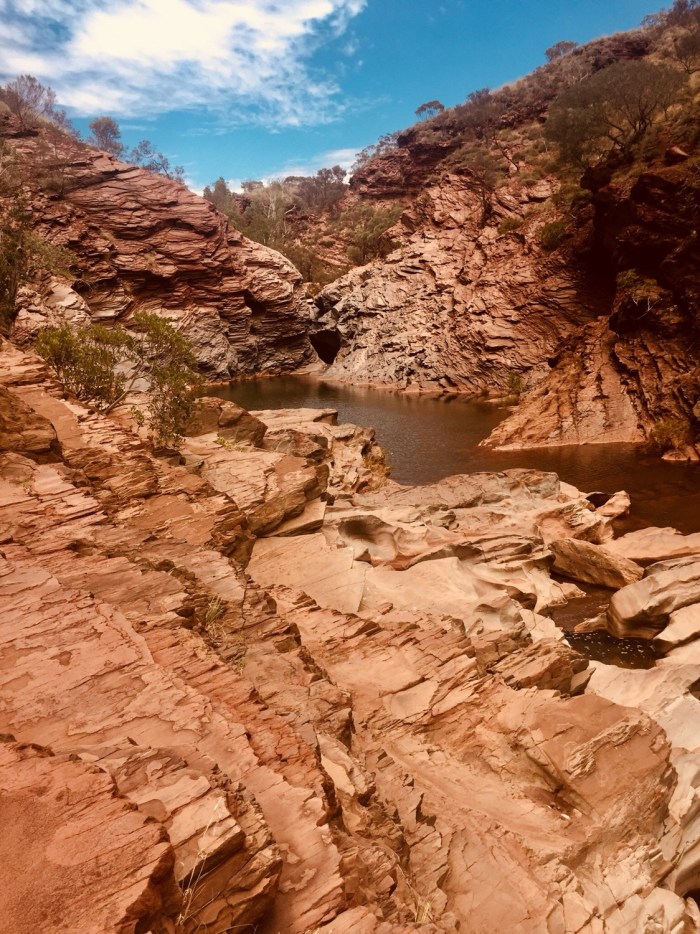
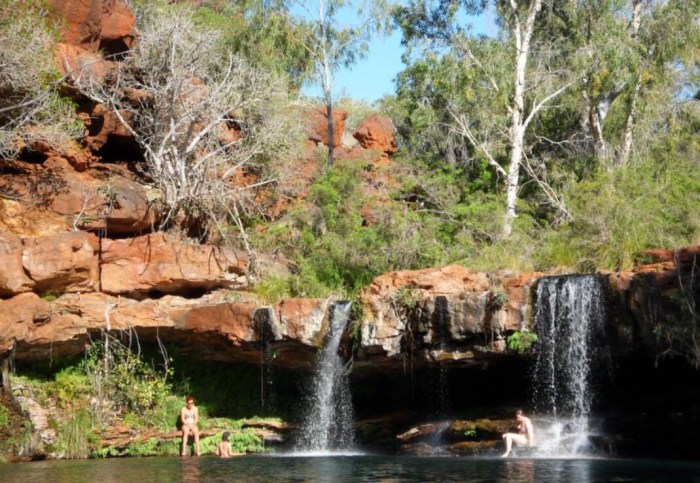
 Of course, with the hot sun come the desert storms and the torrential rains. Most nights the sky will come alive, like an amphitheatre of lights, the distant thunder rolling on into early hours.
As expected, the mining has impacted the environment substantially. Huge diesel trains nearly 2 kilometres long chug up to 25,000 tonnes of iron ore from the “pit” to the processing plants to the ocean. 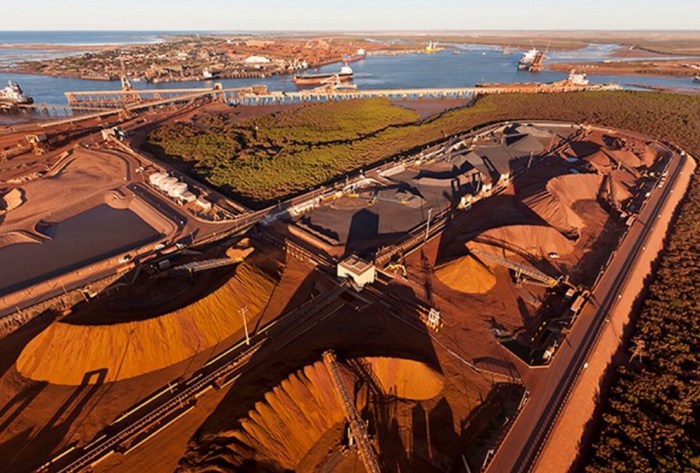 Massive docklands at Dampier and Port Headland house huge cargo ships ready to set sail to the rest of the world. Road trains fill the highways and buses take a steady stream of workers back and forth, 24 hours a day. Everything and everywhere is coated in a fine film of red dust.
 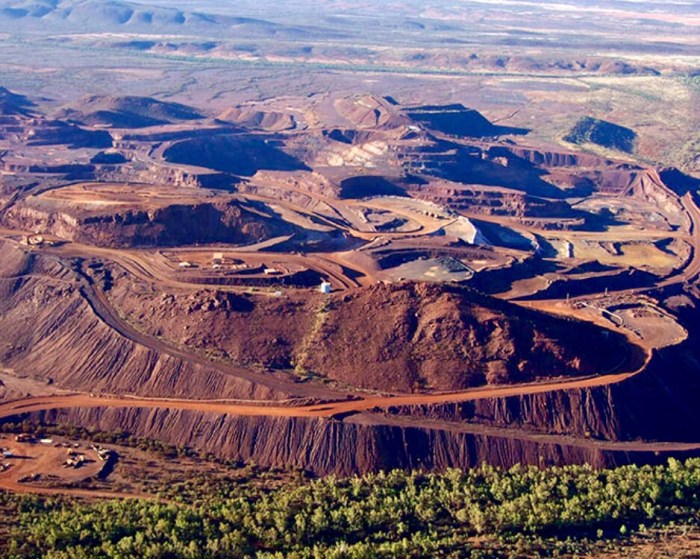 The deep ugly scars inflicted on this amazing country will be left long after the minerals have gone and the miners have left. Huge holes the size of small cities remain, whole sides of mountains simply cut away, gone forever, and places like Paraburdoo become eerie ghost towns, abandoned as fast as they were built.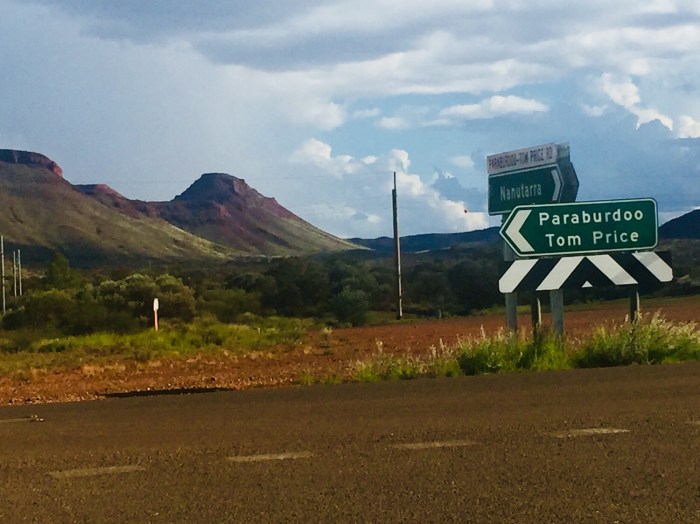
But there is a light at the end of the tunnel, for Paraburdoo at least. Prices are rising and the mines are increasing productivity. The town is having an upgrade and the population is set to expand. Who knows? Maybe it will return to its former glory. But I won’t be staying around to see it. In a town where everybody is employed, occupational health and safety is placed at the top of an employer’s agenda (everything except mental health that is) the oldest resident is 65 and the sick have long since returned home there is not much excitement to be had for an emergency nurse. It’s nearly time for a new adventure.
Everything you buy will be more expensive, shipping will be more expensive. Internet speeds will be slower and that, for some strange reason, is how they like it. If you want anything remotely sophisticated, forget about it. The height of social activity is collectively getting drunk.
I lived up there for 10 years, leaving was the only good thing that happened.
Captain Cynic had a great time. Www.forums.whirlpool.net.au
 annamayventure
so well written Anna! Love it! 😀
LikeLike
Hi anna,
Really loved the blog, very well thought out, expressed and written. Great pics, balanced view. What’s missing, perhaps, is more about yourself, your slant and humour about your working experience as a single entity in a hole in the ground. Check Solomon blog, and how to spell college ha ha. OK to give Mick and Jean the url? They’ll love it.
Keep it coming as the remoteness intensifies and the landscapes electrify.
Will call soon, lots of love, Dad and Julia xxx
LikeLike
Beautiful. I envy your ability travel to these places. I get lots of enjoyment reading you describe your experiences and the scenery so vividly. Carry on blogging, Sue.
LikeLike
Hi Anna,
This is brilliant and very well expressed and written. I cant wait to read more from the blog. interesting.
LikeLike