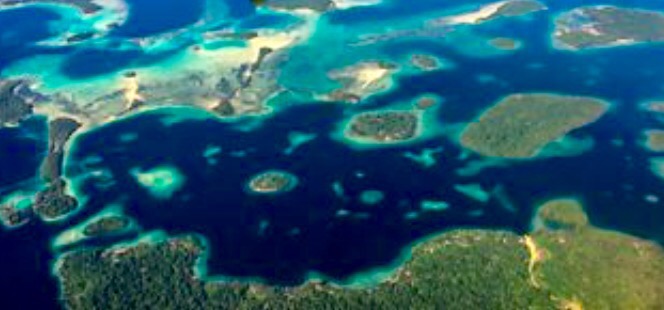
Some people don’t understand why I choose to stay in the Solomon Islands. I have lots of reasons, holidaying is one of them.
We are travelling to Simbo, a volcanic island situated in Western Province, Solomon Islands.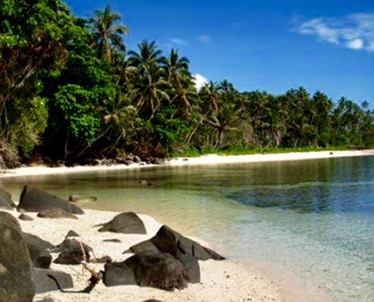
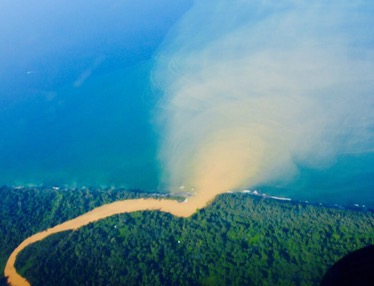
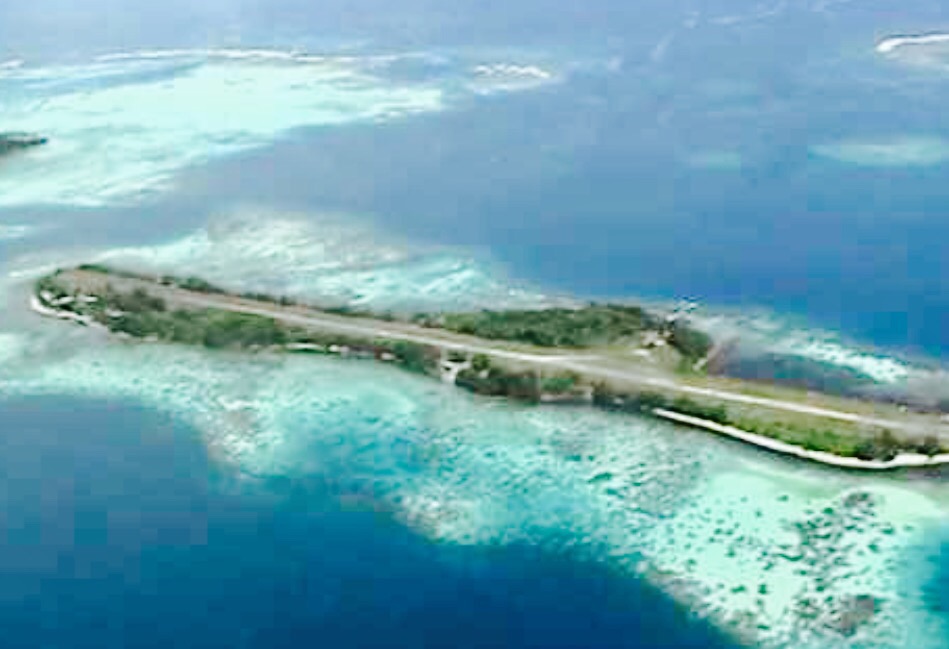
The plane lands on an island runway and we transfer to a small OBM boat for the rest of our journey.
The sea is rough, the weather harsh. My hands are white and numb, the bones in my bum feel decidedly angular as they come crashing down on the wooden bench as we pitch and lurch over limitless rolling waves. We are soaked to the bone, a fresh bucket of sea water thrown over us every 5 seconds or less. I am already feeling slightly foolish for worrying about the hem of my trousers getting wet when we first arrived. As we glance back at our driver, Obed, he is stood at the rear of the boat in only cut offs and a tee shirt. He is casually smoking a cigarette as if one was out on a boating lake. We feel safe.
Through the spray we spy a flock of birds circling on the horizon. Emma’s face lights up “Bonito”. She points the birds out to Obed and within minutes we are riding a huge wave right into the centre of the flock, a fishing line tied to a soda bottle is reeled out into the water behind us. Despite the roar of the engine and the surge of the ocean, it feels eerily calm in the heart of the flock. Black birds of every size seem to silently hover and dive all around us, as if we were never there. We emerge at the other side and Obed cuts the engine. Within seconds he has reeled in a huge silver fish, skilfully removed the hook and tossed the flapping fish under the bench. He starts the engine and we’re off, riding a second wave into the cloud of birds. Within 15 minutes we have four fresh flapping fish. Satisfied that dinner is sorted, we continue on. 
At last, we arrive and are released into the calmer waters which separate Simbo and Nusa Simbo (Simbo Island). We are able to see and breathe again as we wipe the salt water from our stinging faces. We are shivering. The still green water is clear, the sea grass gently swaying in the current. We notice the steam rising up through the wind and the rain and lower ourselves into the bath warm water of a hot a spring. Total Bliss.
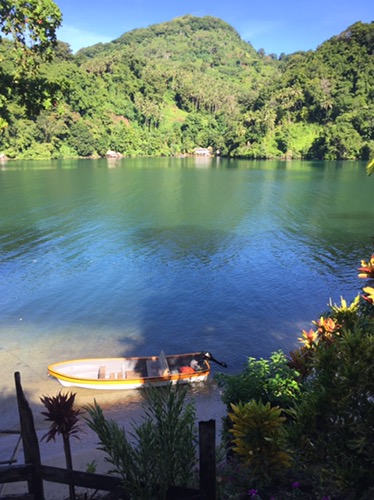
The homestay.
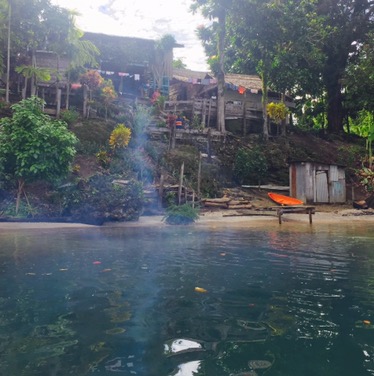
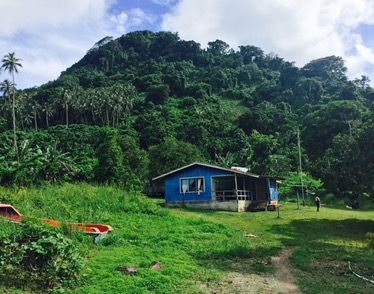
The homestay we are staying at is run by Obed and Lizzy. I say Obed and Lizzy but in true Solomon style that includes the whole family, the extended family and some or most of the villages. It is a lovely, well built, two story house looking out over the estuary between the two islands. The upstairs has three bedrooms and a communal living space that is open to the fantastic view. The bathroom a small wooded hut outside with a manual flushing toilet and a bucket shower. It has everything you need and nothing you don’t. Simple. We are surprised to find Kay, another Australian Volunteer here. She works with Olivia, the daughter of the family and is lucky enough to be here on a work trip. Her role is working with women in business and the island has a number of bee hives she hopes to develop. We taste the honey on fresh baked rolls and it is lovely.
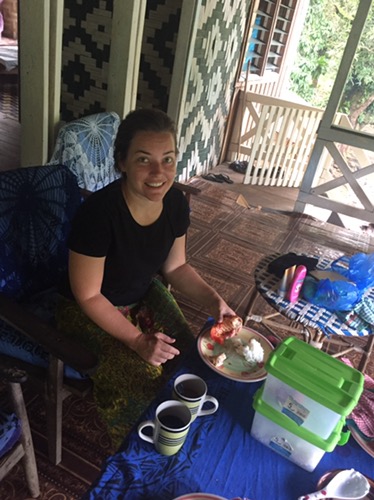
After a shower, a short stroll and a dinner of the freshest fish and the juiciest pineapple we retire early to our mosquito netted beds where I’m lulled into a dreamless sleep by the gentle lapping of the waves on the shore.
We spend the next morning on a trek up the Volcano.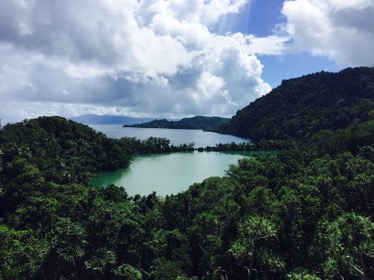
Setting off in the boat we emerge from the calm waters onto the weather coast. The sea is calmer today and the sky is blue. The water is as clear as glass with an emerald sheen against the dark volcanic rock. We catch a couple of fish (of course) on route and arrive, pulling the boat up a small rocky steam to emerge into a green lake at the base of the volcano.
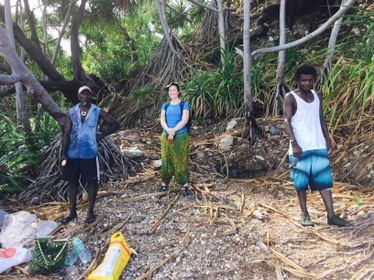
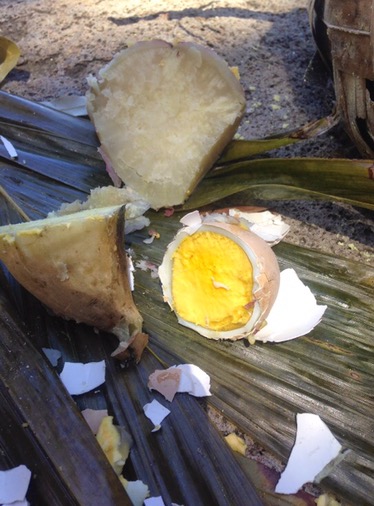
We are guided by Nevin, his wife Ollie and Obed’s son Jesse. As Jesse guts and washes the fish and Ollie weaves us a basket to cook our food in, we head off into the bush in search of Megapode eggs. The Megapode is a bird that hatch with open eyes, bodily coordination and strength, full wing feathers and downy body feathers. They are able to run, pursue prey, and fly on the same day they hatch. Interesting stuff.
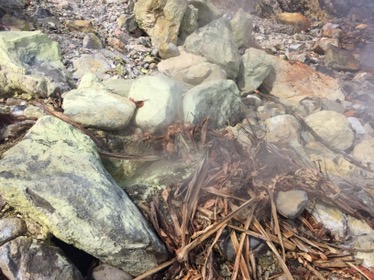
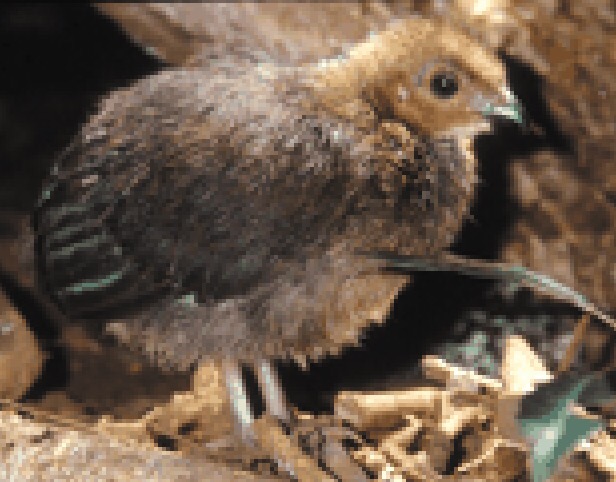 Megapode eggs are unusual because they have a really large yolk that is light and creamy and delicious. We didn’t find any. Luckily the guys had brought a few spare. Returning back to camp, the fish, eggs, cabbage, cassava and bananas had been layered into the woven basket and was now placed on a steaming outlet at the foot of the volcano. It will be left to cook, ready for a feast on the way back down.
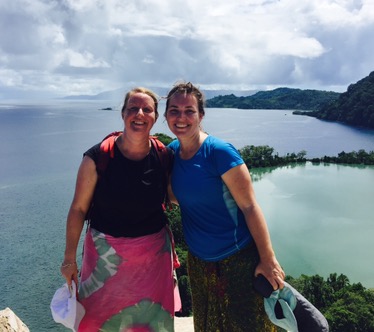
With sun beaten faces and full bellies we headed out again in the boat, ending the trip with a fabulous snorkel in the warm welcoming waters of the pacific.
Olivia’s daughter is not very well. She has a temperature, a cough and is cranky so it is decided that she will go to the local clinic to see the nurse. Not wanting to miss the opportunity to check out a rural health clinic, the whole family, three volunteers, the nurse and her friend all pile in for the boat ride and a short stroll through the village.
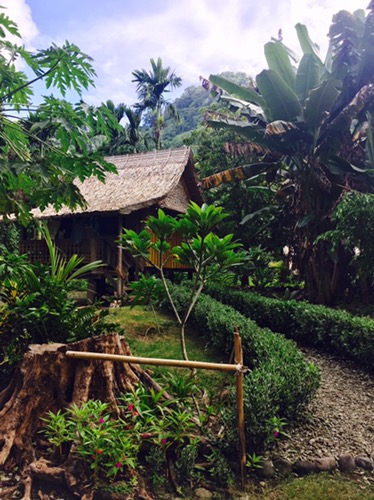
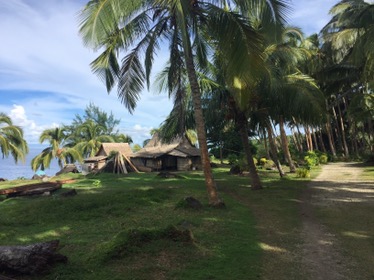
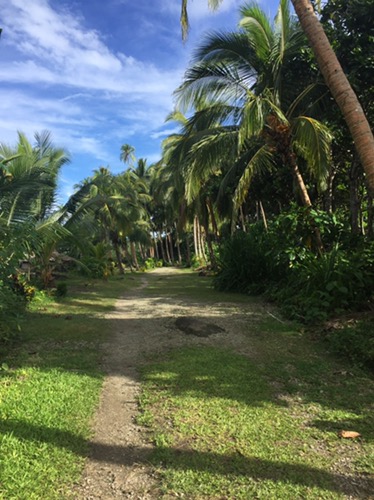 The whole island is a tropical garden paradise. There are flowers of every colour and size taken from all over the pacific islands. The butterflies, of which I am informed there are over 300 different species, dance and flutter all around. The leaf huts are immaculately maintained and the main path through town is like walking through a moss covered dream. It is certainly not what I expected from a volcanic island.
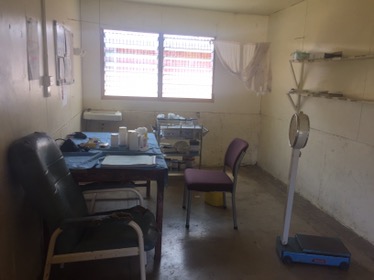
 I stori with Fiona, the registered nurse. It turns out she has worked at Kilu’ufi hospital and we have some mutual friends. It is a small world. Despite the rest of the village being well maintained, the health clinic itself is in need of some repair. It has no electricity, no running water. She is out of many essential medications and has a shortage of supplies. Her radio is broken and has been for many years.
We spend the evening stori-ing (a good old gossip) with Lizzy and I reflect on how much I am enjoying myself. In my nine months here, despite a rocky start, my Pijin is greatly improving. This was once a chore which would leave me feeling slightly exhausted as well as confused. I was never quite sure if I was having the same conversation as everyone else. Pijin is a slightly back to front, muddled version of English. It is a spoken language only and has a much smaller vocabulary.
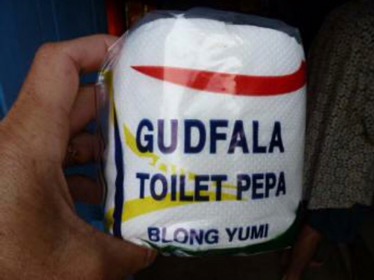
The part of pijin I really enjoy is the theatrics. My sister always makes fun of me because I use such strong adjectives when I’m telling a story such as horrific, horrendous, magical and marvellous. These words don’t really exist in pijin, you just need to accompany the sentence with a highly emphatic “yeah man!” “Hem Nice for gud” “Tru wan!” Gestures, facial expressions and lots of eyebrow Olympics is essential to really get your point across.
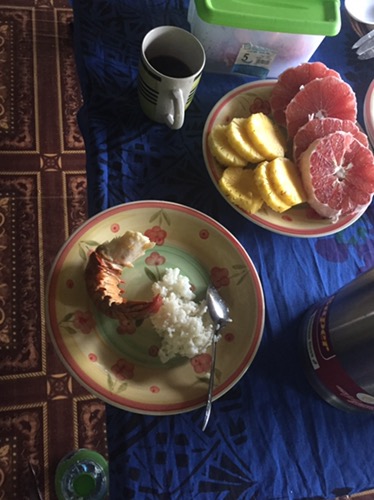
The next morning we awaken to fresh crayfish, caught overnight and rice. An excellent finish to an amazing visit.
 I would strongly recommend Simbo Island. We are back into the boat for a much calmer journey back across the sea and heading to the tourist hotspot of Gizo for a couple of days of picture postcard R&R. To follow…
 annamayventure
“Me top green, yeah man!!!”
Dadxxx
LikeLike
😊❤️
LikeLike