The concept of home.  

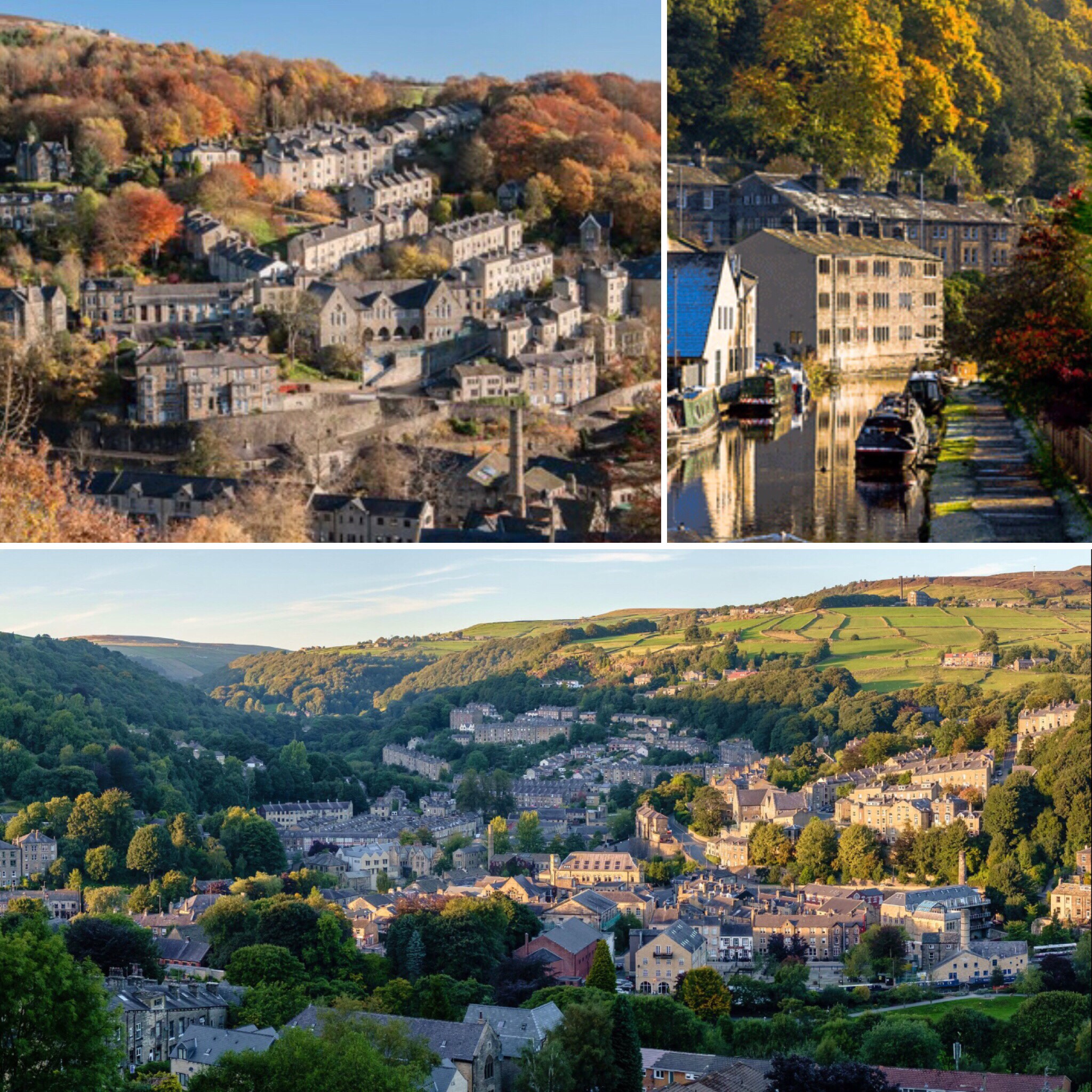
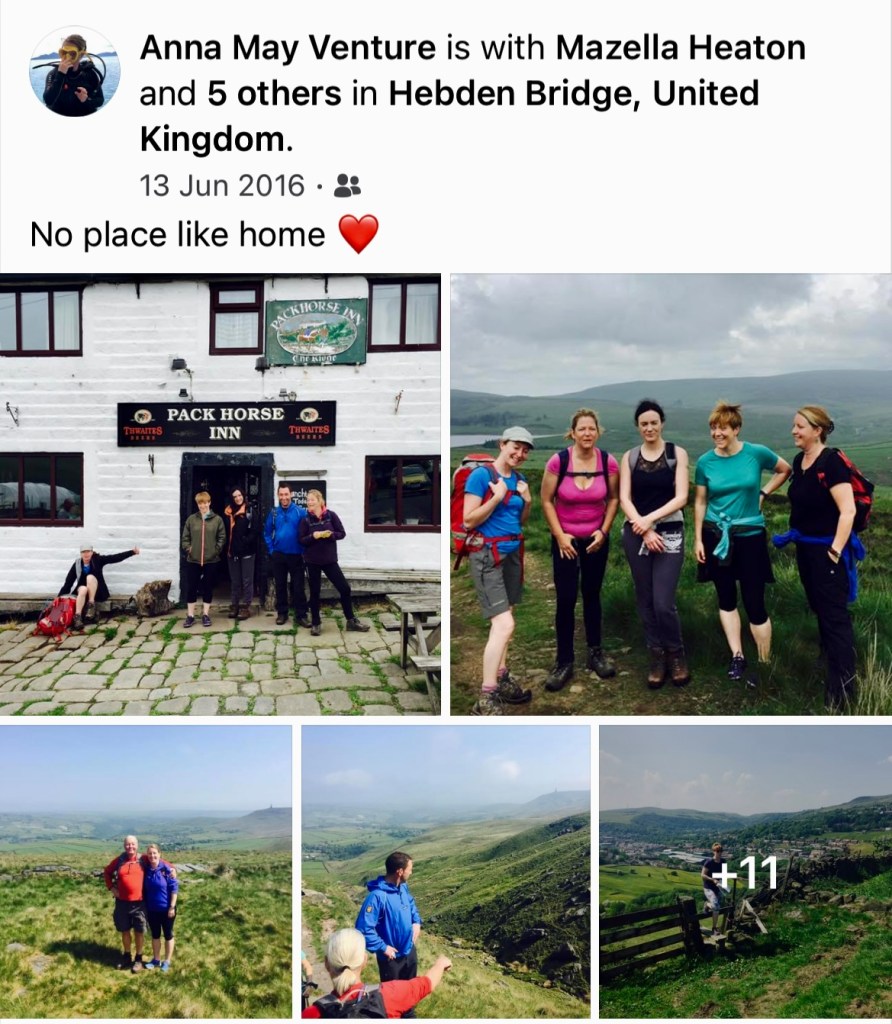
When I was back in the UK recently my dad asked me when I would stop referring to Hebden Bridge as “home”  ?
“It will always be my home”.
“Yes, but when you go back to Australia, you refer to that as home”.  
“I have lots of homes” I replied, “I am lucky”. 
And so it was, that I found myself musing about the concept of home. Last year I made the decision to begin an unconventional life of travel and uncertainty. I left my home. I sold or gave away pretty much everything that I own and returned to a life lived out of a suitcase.  

My lifestyle is a choice. It is one that I have been struggling against for years. What is different is that for the here and now, I am OK with who I am, where I am and where I am going. Which seems to be nowhere in particular and yet everywhere all at the same time. 

I did not come to this decision lightly. It has taken some years, a few social experiments and many life lessons to dispel my misplaced belief that a) it was time grow up and b) that life decisions were made to last a lifetime.  

I am in my 40’s now.  
Middle aged.  
Exactly.  
I am only middle aged.  
I still have half my life to live. That’s another lifetime again. If I can keep my health, my marbles and my drive for life then the possibilities are endless. And that is incredibly exciting.  
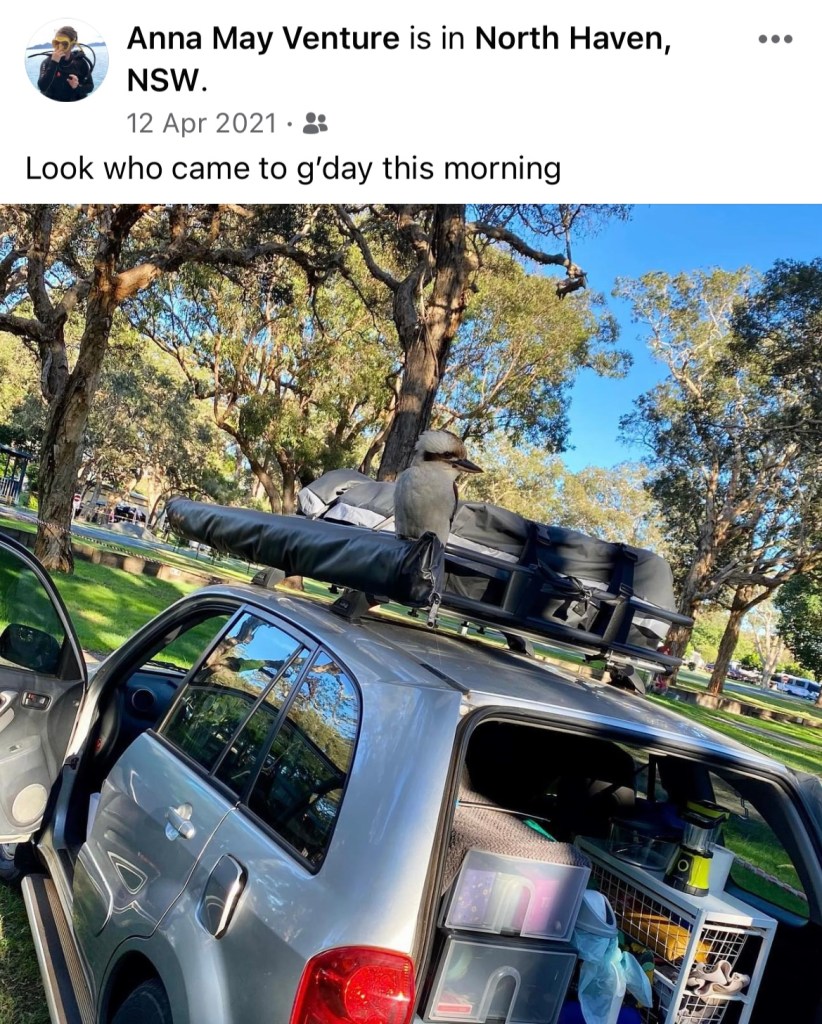
This life is not new to me. I’ve spent most of my years in Australia living out of a backpack or the boot of my car. The first five or six years were incredibly exciting. Like an addiction, I started searching for a greater, bigger adventure. I had no idea how to stop. I knew that life had to have some meaning, so I thought I had better try to save the world.  I went searching for meaning in incredibly remote, under resourced communities with very little support. Those of you who read my blog from the start will have followed as I came to the realisation that the mission I had set myself was a futile one. I had isolated myself from real life and I was frightened that I wouldn’t be able to find my way back. I think, looking back, it was obvious that my mental health was suffering. It was time to make a different decision.  

From a remote clinic deep in the heart of Kakadu, I did something I had not done for many years. I made a commitment. I packed myself up and headed off to the sheep farming capital of country Victoria.
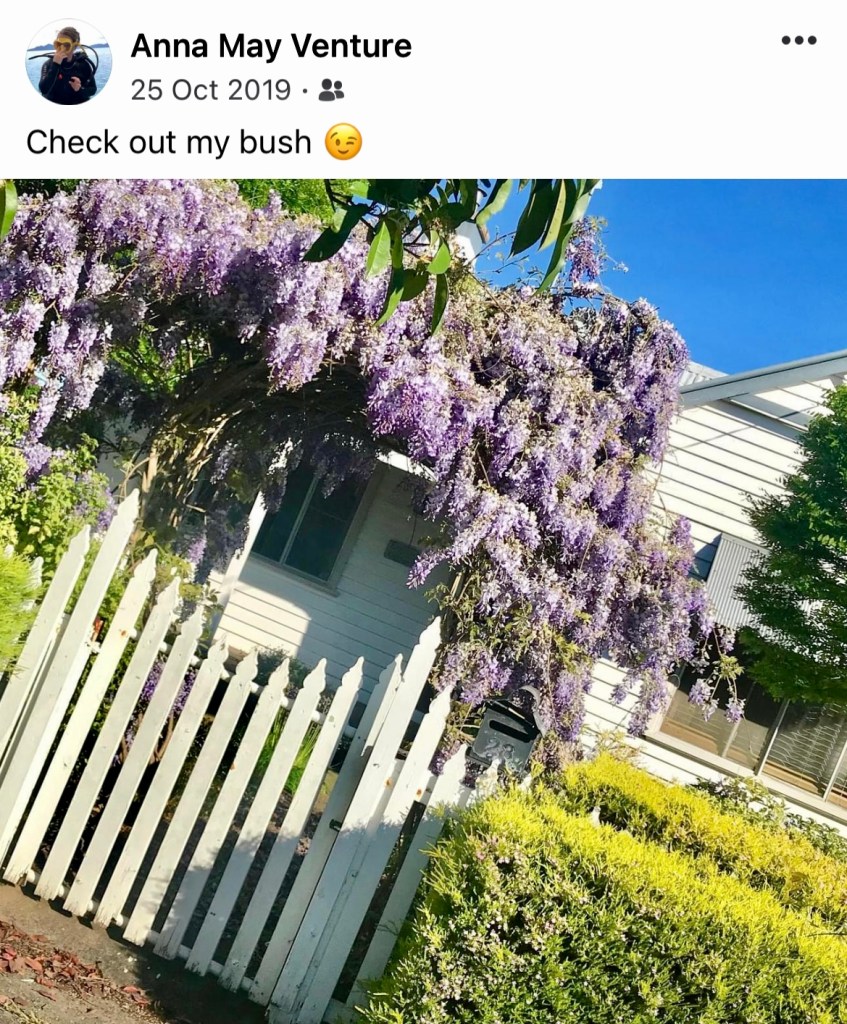
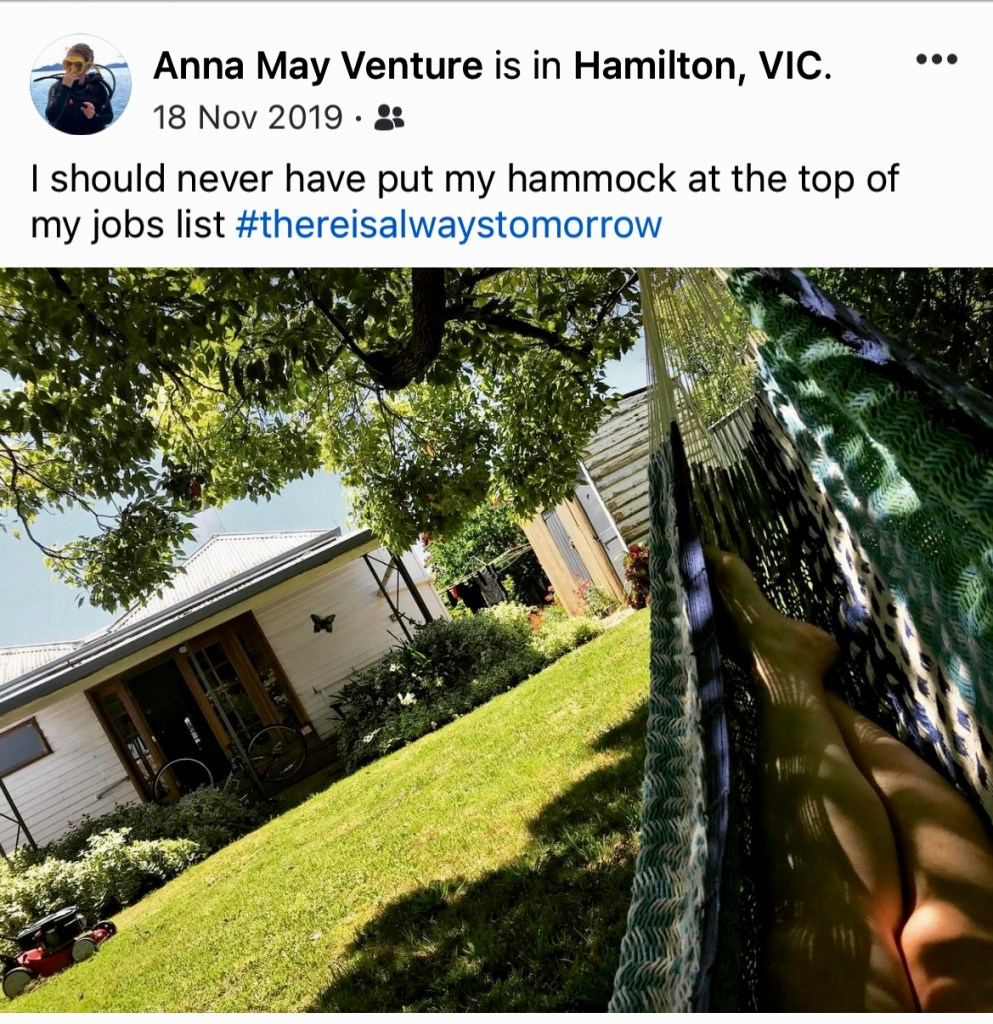
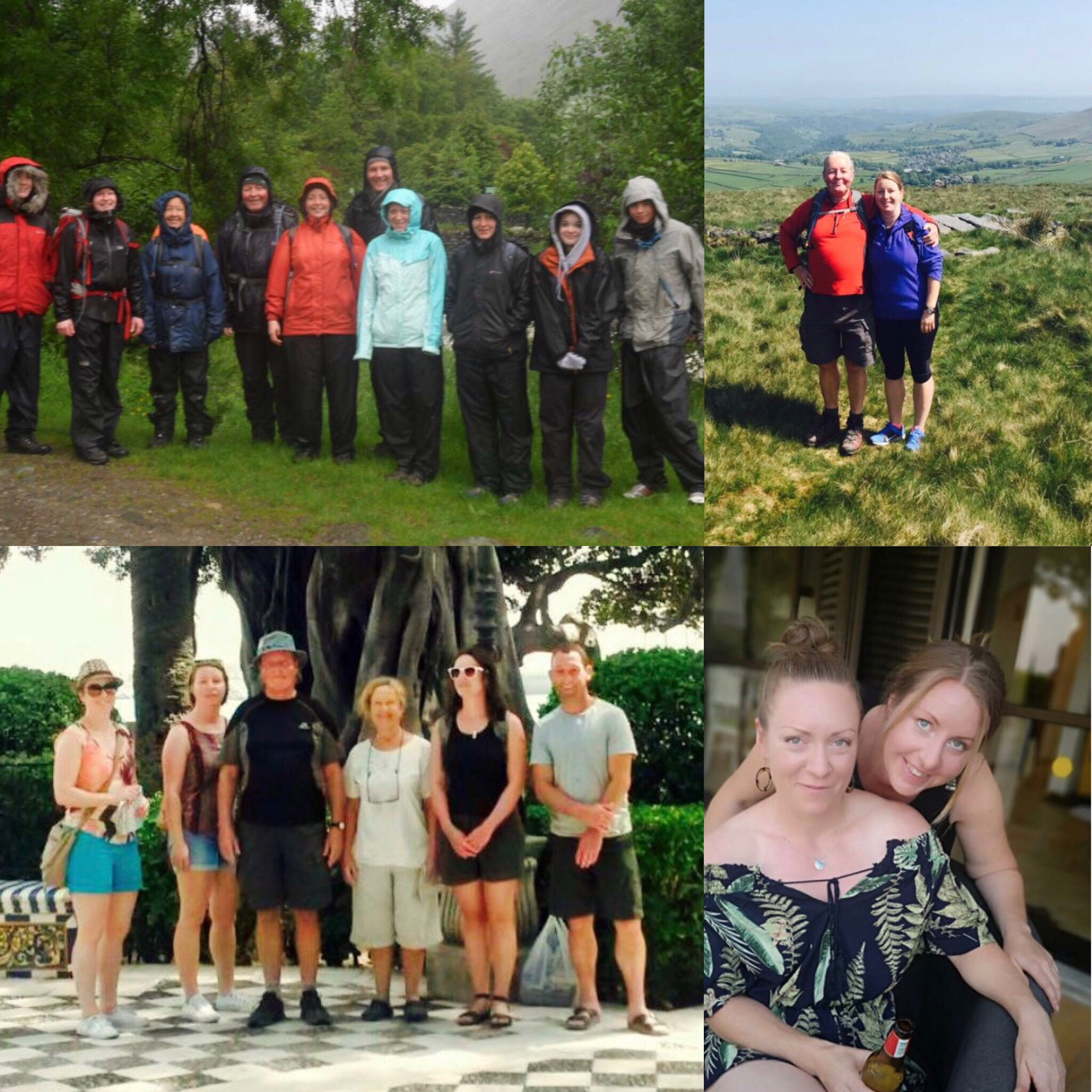
I rented a quaint white weather board cottage with wisteria blooming over the gate post and a huge tree in the back yard perfect for whiling away sunny days in the hammock. I worked in a small but busy emergency department, and I went back to university. What I wanted was some nurturing.  What I got was a job I didn’t know I needed, seasons, cold weather and sunny days, warm fires, hearty meals with red wine, camping, company, and a good dose of hiking country to sort out the noise in my head.
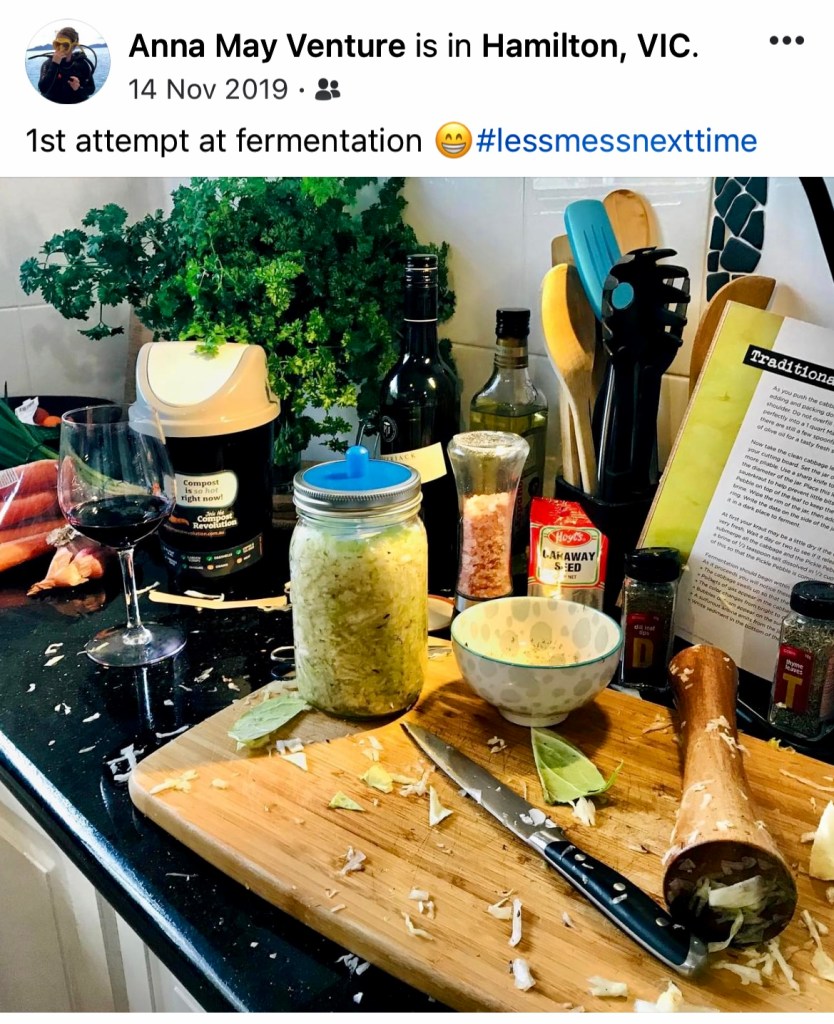
What I also got, in abundance, was the best, honest, laugh until my sides ache friends that a girl could ask for. 

The best therapy.

I had lost my confidence somewhere along the line and I couldn’t have chosen a better place, or better people to rebuild it with.  
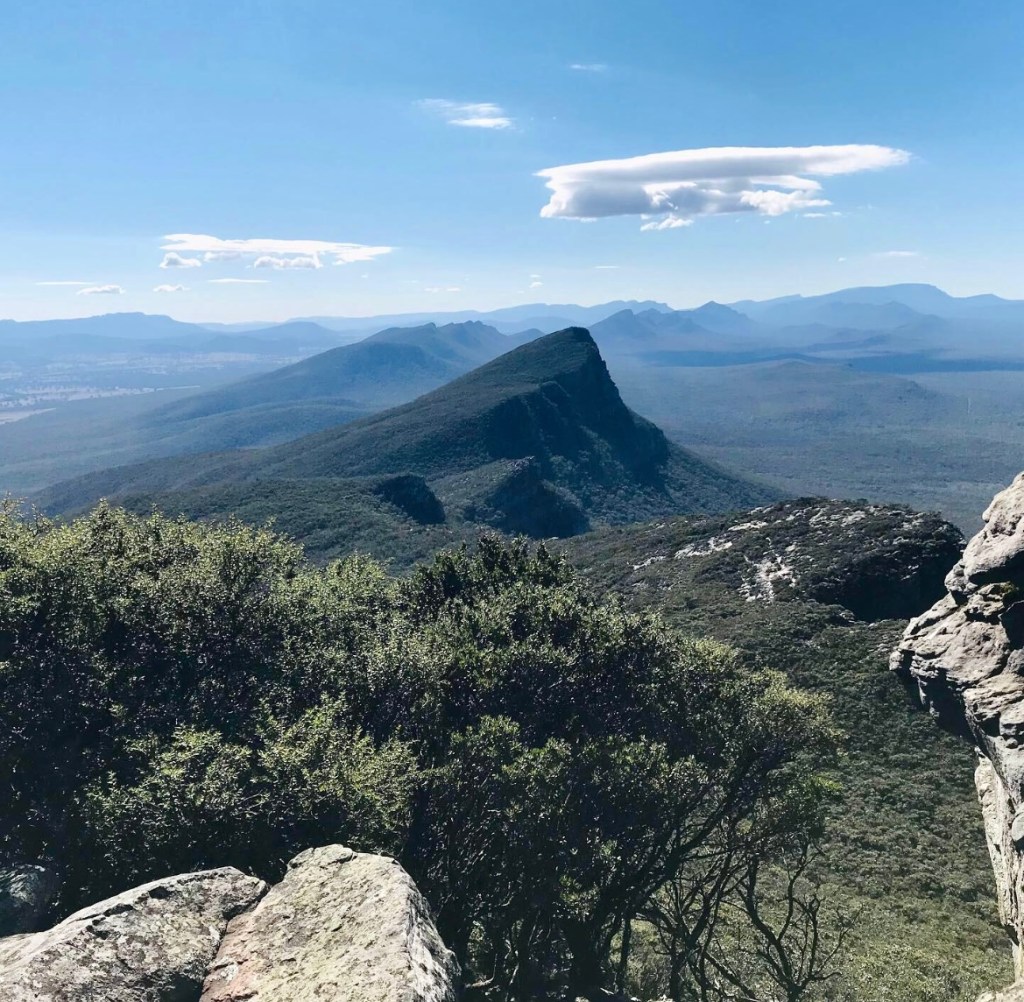
The Grampians

With my newfound confidence came the inevitable drive to explore new horizons. I had stayed for 2 years. It was the longest shot at normality that I’d had so far but somehow, I knew it wasn’t the place for me. I decided that it was time for a new challenge.

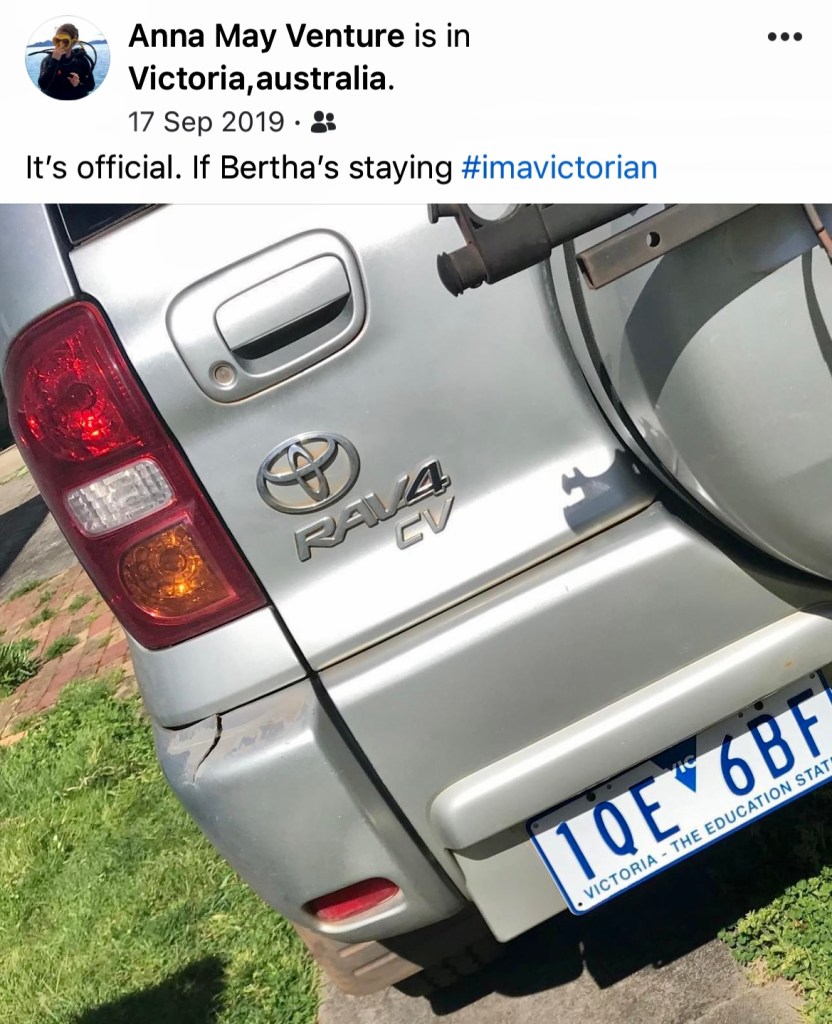
I packed what I could in my beloved Bertha and drove north for seven days until I hit the tropics of Far North Queensland. I had decided to step away from nursing and took a job as a Remote Clinical Educator in Cairns. The job involved travelling Australia, teaching emergency and trauma skills to remote area nurses. I had been volunteering for the same organisation for a few years and I loved it. It was the birth of Anna v3.0: Successful Corporate Anna. I cut my hair, changed my wardrobe and rented a stylish beach front apartment.
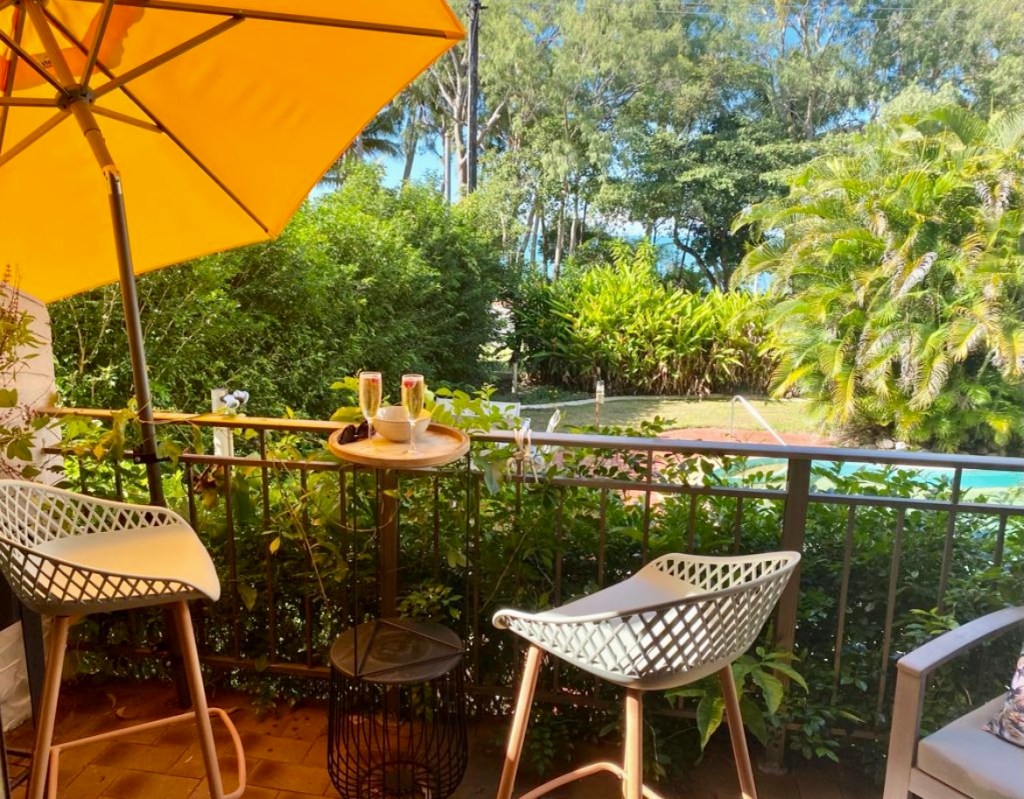
I spent a fortune creating this new life. I had lived in cheap, brown, broken nursing accommodation and worn a version of pyjamas to work for most of my adult life. This was how I thought it should be, living like a grown-up.

It wasn’t a completely stupid idea.  Except that maybe it was. Start with a demanding work schedule, throw in a huge dose of imposter syndrome, add a pinch of failure, hold off on the support and what you’ve got was a recipe for disaster. As with all of life’s little lesson though, what it taught me was, that this version of me, was not me. It was time to look elsewhere.  

But where? The answer came unexpectantly. As I fumble my way through this bizarre and unexpected life of mine, I repeatedly keep circling back to the obscure belief that maybe everything does, in fact, happen for a reason.  Somewhere, amid this madness, for reasons unbeknown, I had begun studying for a second post graduate qualification in remote health. To achieve this qualification, I was required to complete a clinical placement which was to take me back to the place that I had become most afraid of.  

It was a five-hour drive that took me deep into the vast and empty central desert.
A five-hour drive down the endless dusty, rusty, hot and corrugated road with no end. A five-hour drive that ended at a rundown clinic, in a desolate community, in the middle of nothing.  
It was a five-hour drive that cemented the belief that this was probably how I would finish my life. Crazy, unsure and alone in the middle of nowhere.  
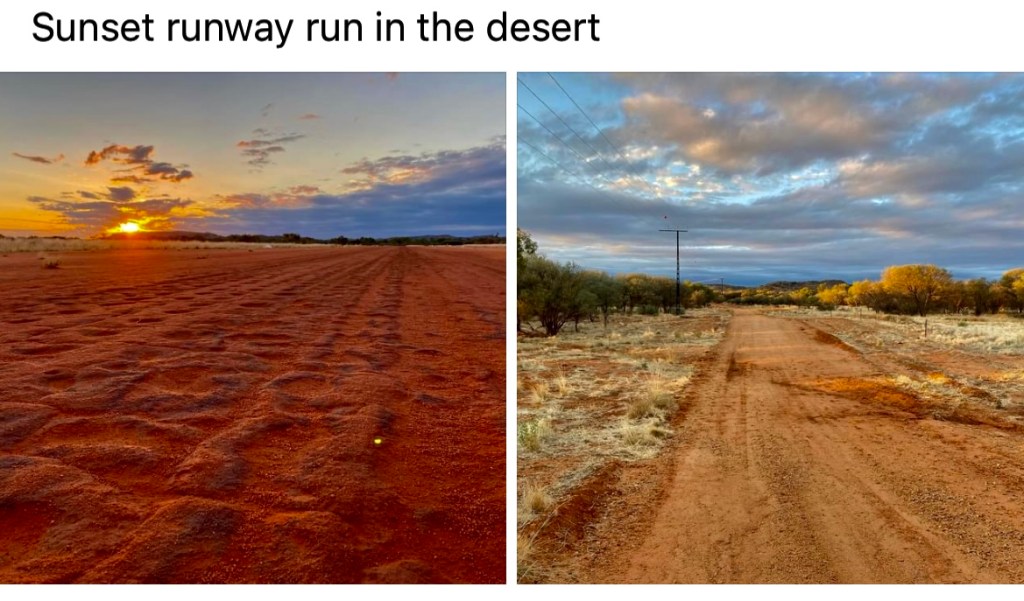
I was a tightly knitted ball of anxiety, the only thing pulling me forward was the knowledge that this was finite. I do my two weeks and I am out. Funny thing was, I loved it. Not only did I love it, but I thrived. I began to see some hope. A tiny spark that maybe I could make a difference and I think, I think for the first time in my life, I felt capable. I knew what I had to do next.  
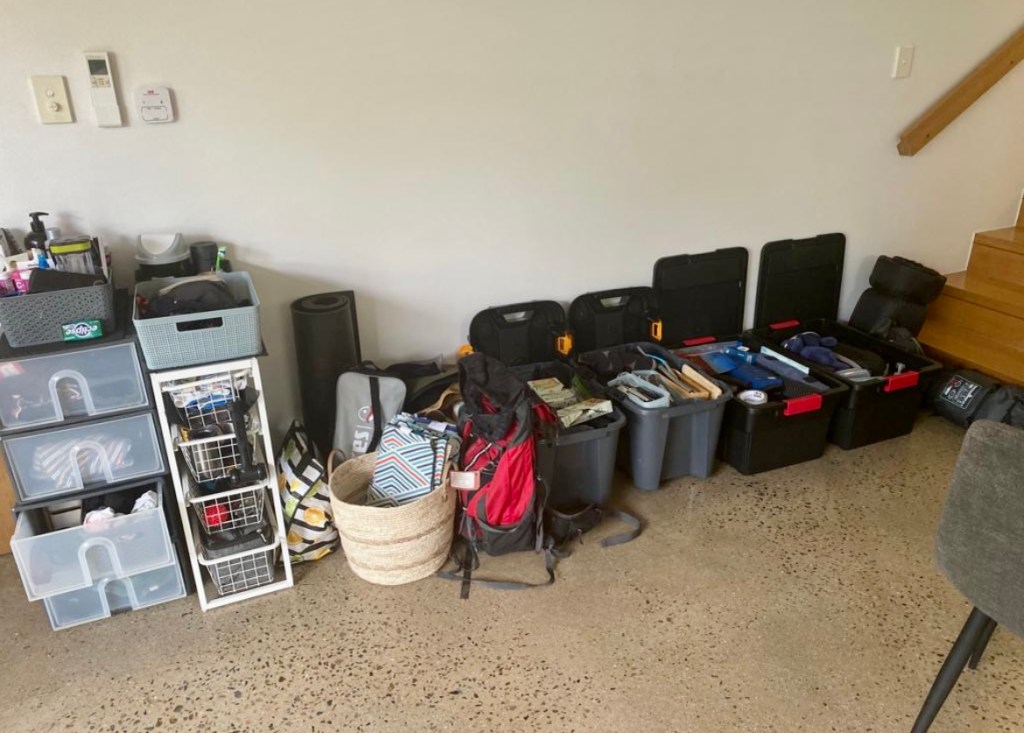

Life’s possessions

I gave my car away and sold the innards of my beautiful beach front apartment. I stripped my life of the bad bits that left me lost and I walked away from Anna v3.0.  

I am currently working two jobs. I am without a home and everything I own sits in the corner of somebody else’s bedroom. But right now? I feel like I am in the best place I have ever been. Maybe I will tell you about it sometime?  

2023. The best yet.

She’s Singing

Welcome to Community

They say that the grass is always greener on the other side. It turns out it literally is. I’ve finally made it to a place where I can see the light at the end of the tunnel. It is still a long, long way away, but it is there, glinting at me through the doom and the gloom.

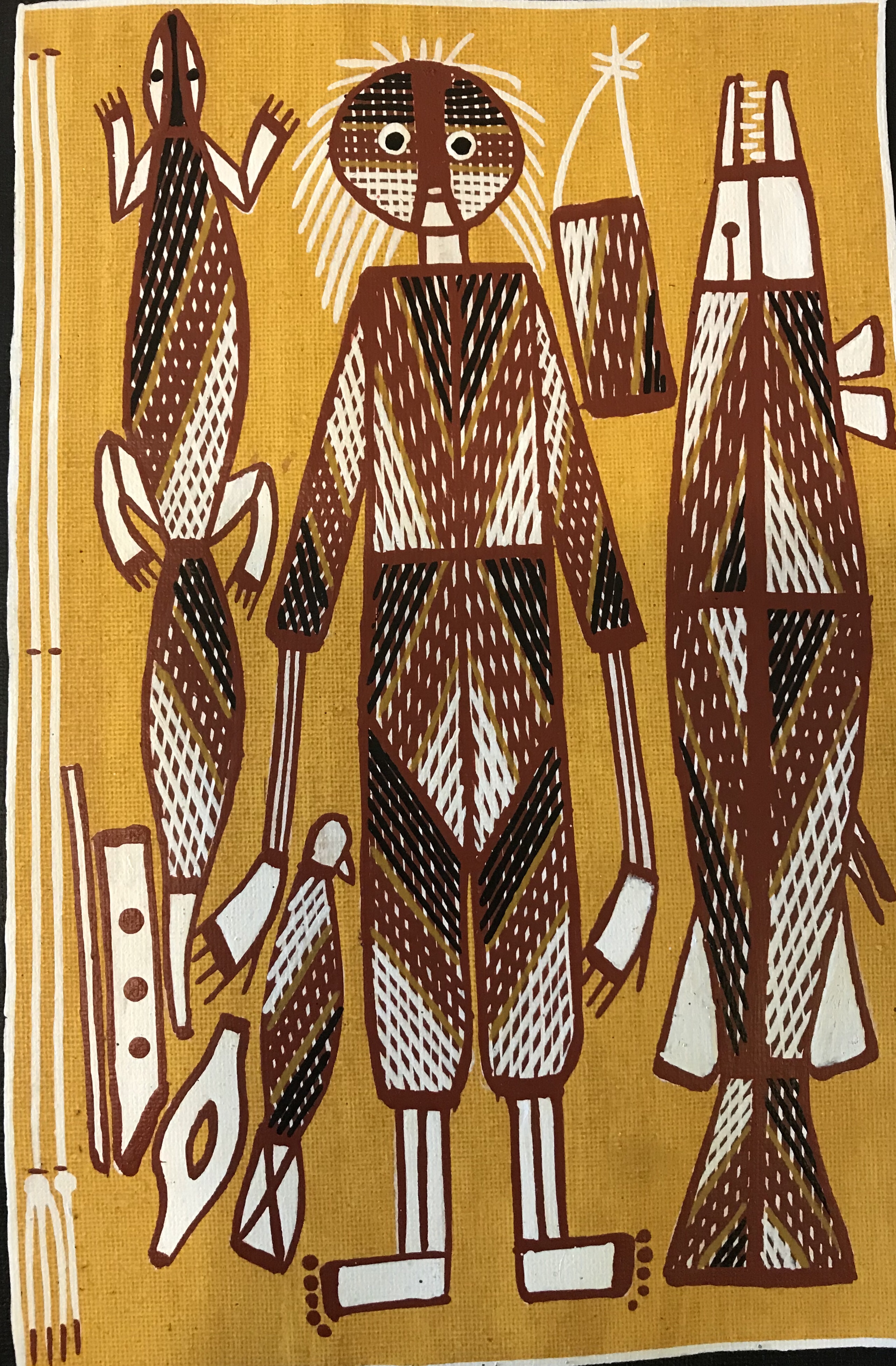
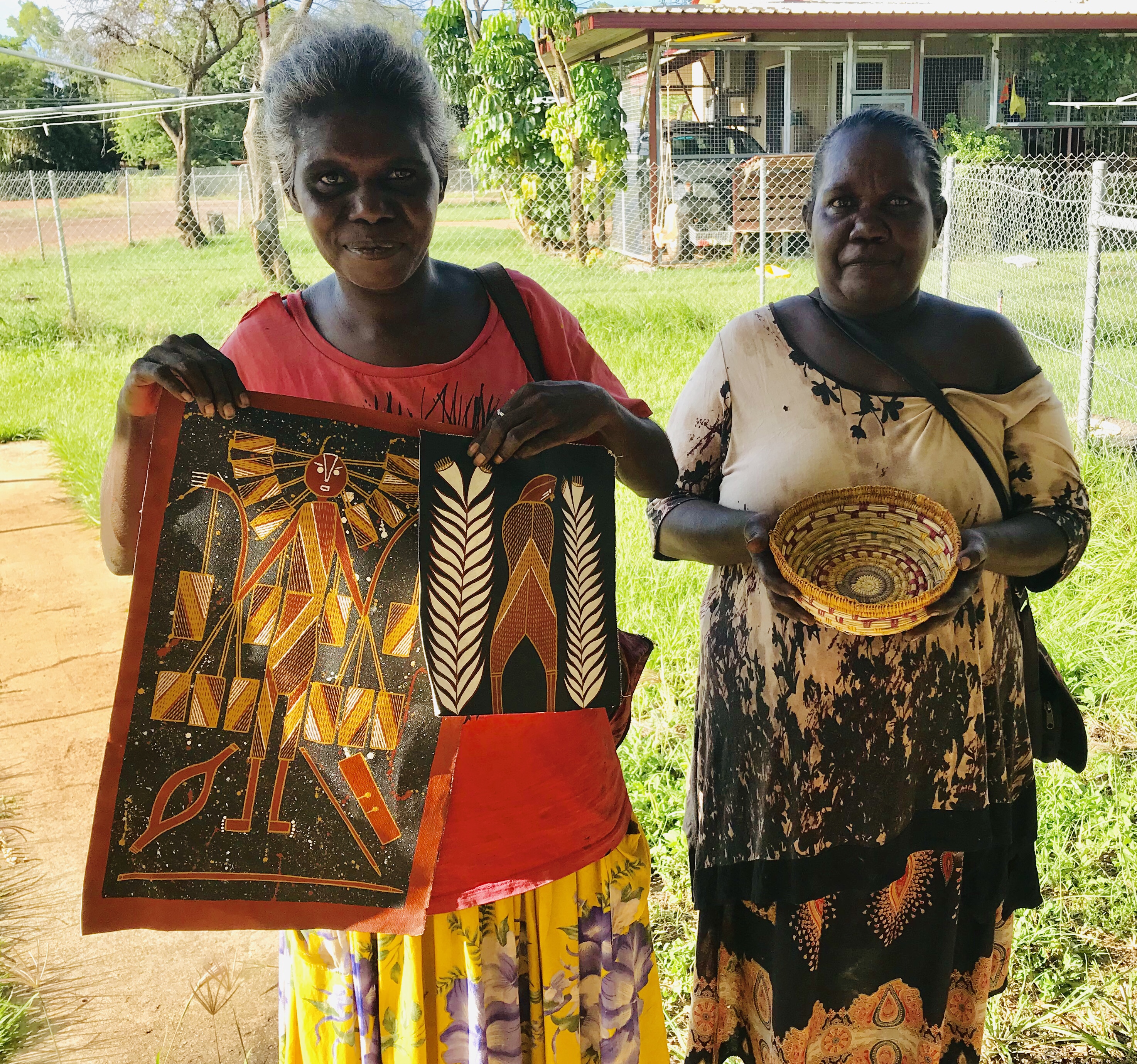
Aboriginal Art – Selina Nadjoah

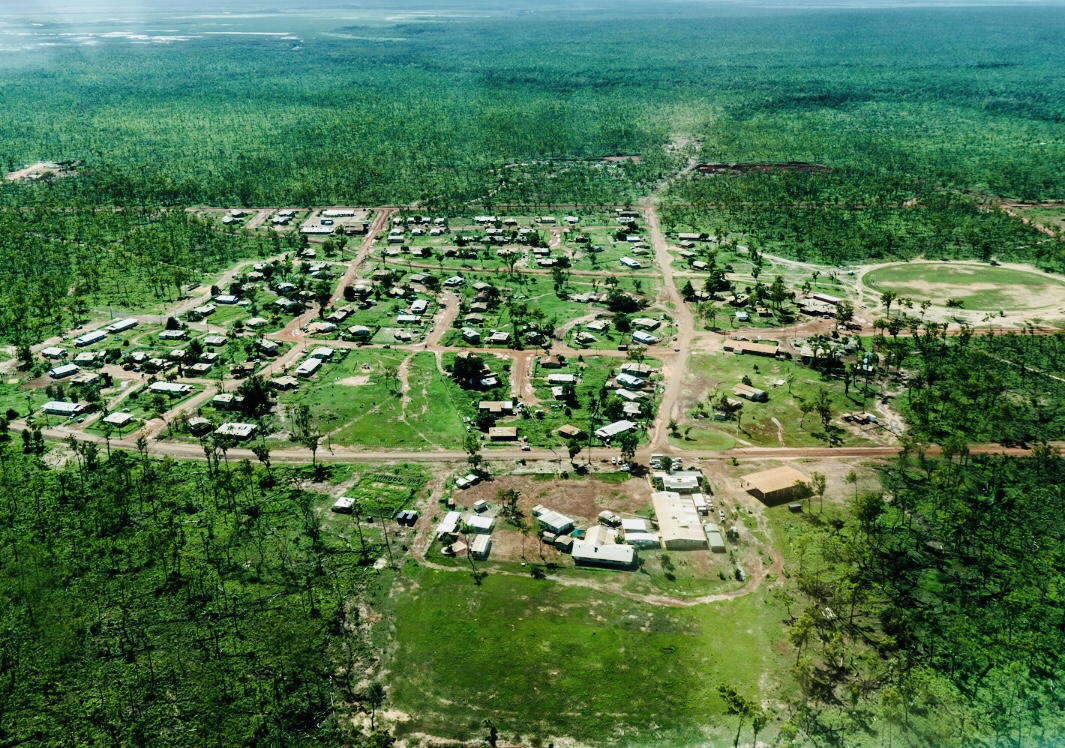
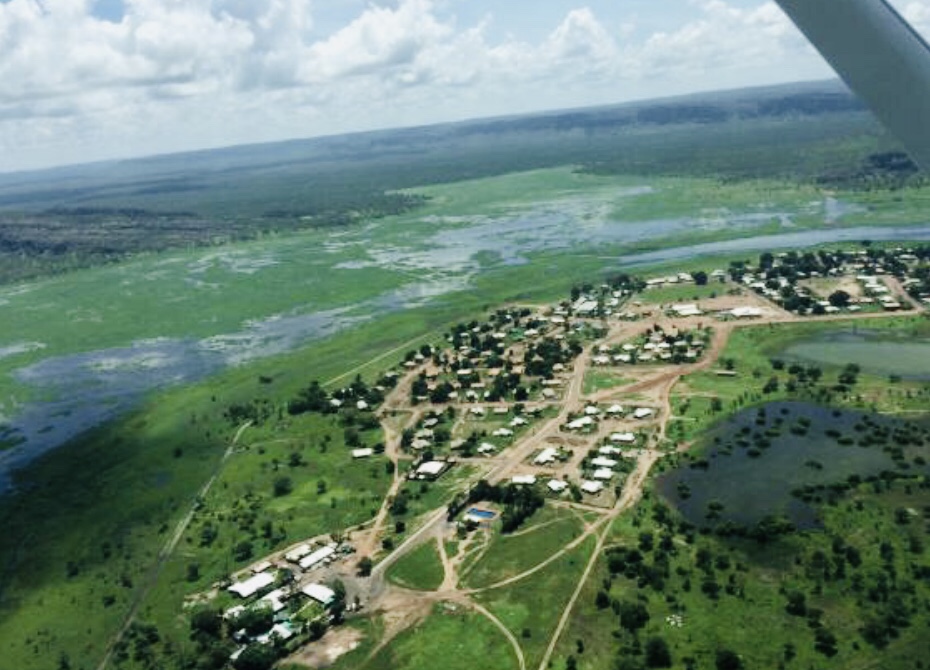
I have spent my last two placements working in health centres in the Top End NT.  What I see here, is community. I see streets and houses free of rubbish. I see mowed lawns and clean washing hanging on the line. I hear the delighted squeals of naked children as they run under the cool water of the garden hose.  I see parents taking their children to school and mums with young babies playing happily at child care. I see children with clean hair, clean faces, white teeth, healthy skin and I see the elders sitting under the shade of a banyan tree, weaving, painting and yarning. The whole community, young and old, black and white gather at the oval for a much loved, much supported game of footy. And as the hot humid heat ebbs away, I see families strolling in the streets, together. In the clinic, people chat to me with confidence, we laugh, we share a joke. Sometimes I think that they care, that they listen.

Ramingining

Perhaps the lush tropical greenness hides a multitude of sins and I am not so blind that I cannot see overcrowded homes decaying into disrepair. I am not so deaf that I cannot hear the pain caused by social injustice, unemployment, domestic violence, drink and poverty. I am not so naive to not know about the silent killers that haunt the health of this community and I am not so foolish to see that there is still a vast chasm of inequality yet to conquer. But it’s a start, right?

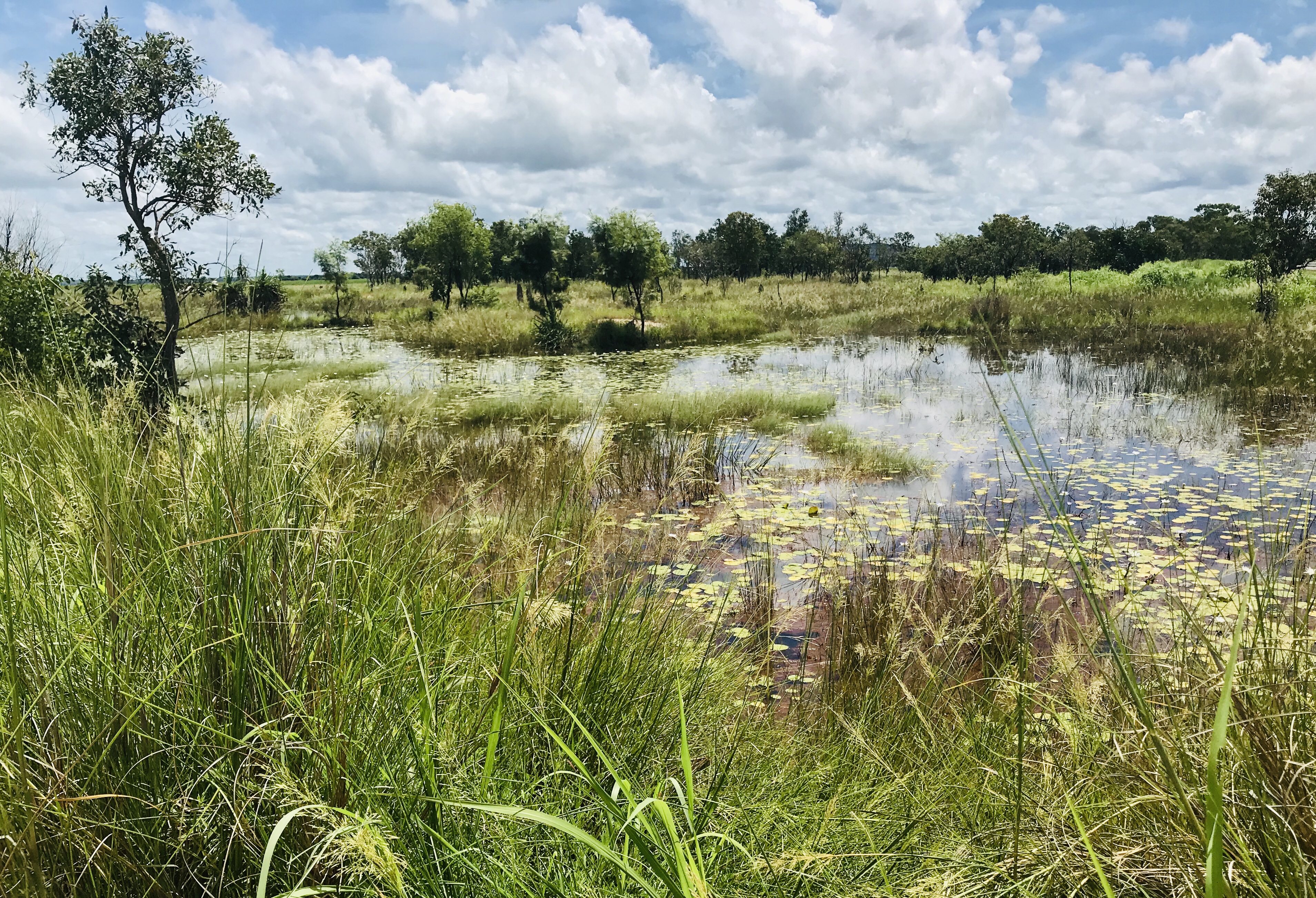
Lillies in the Billabong

I thought that what I needed was to get out of the tunnel, but now that I have seen the light, I can see that I am on the wrong train. I should be heading in a different direction and I’ve decided that this isn’t the journey for me, not now anyway. This is why…..

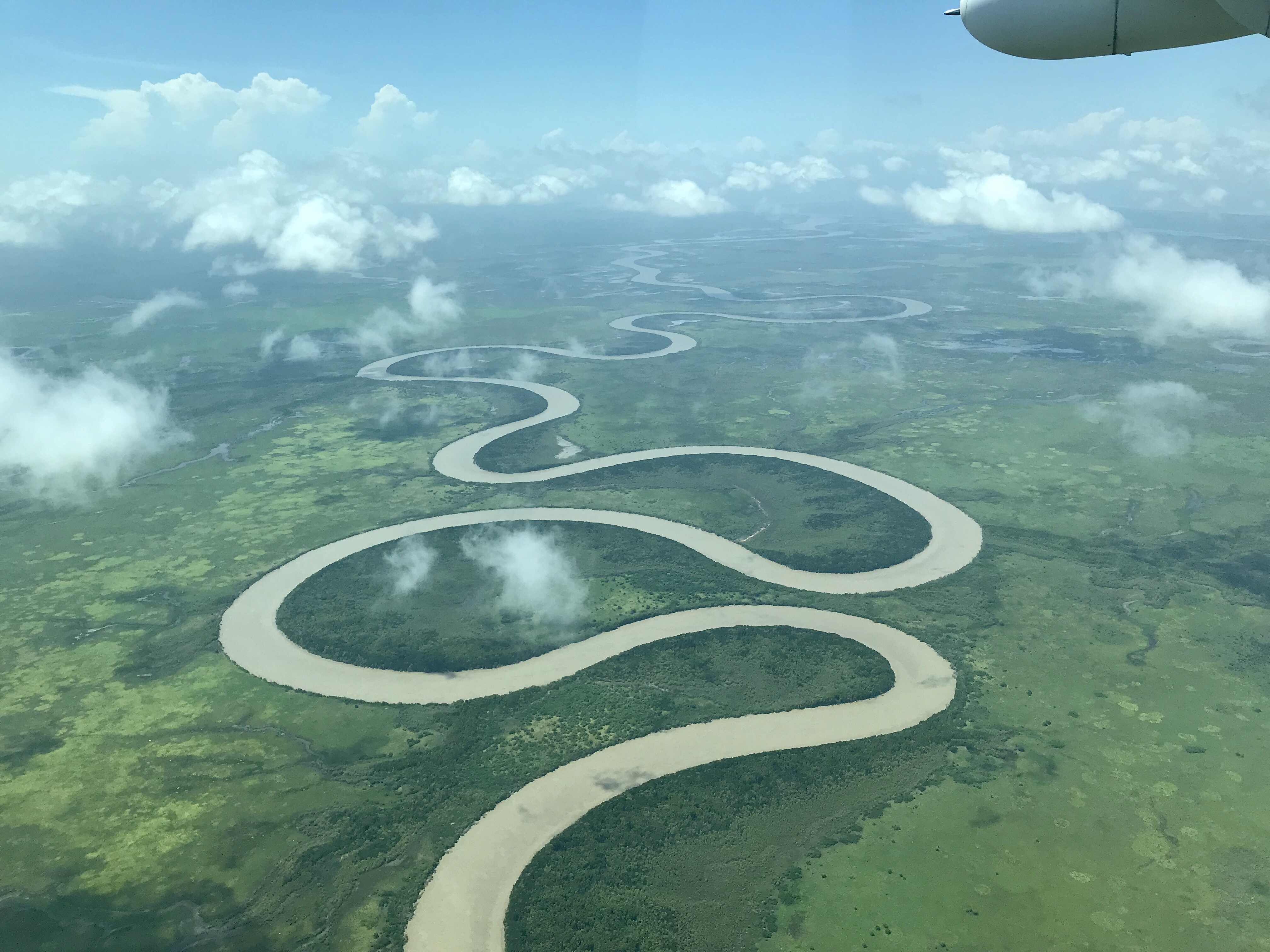
The Adelaide River

There seems to be this expectation that once you wear the title “nurse” then you know everything you need to know about, well, literally, everything. I have been nursing now for nearly 10 years and everyday it scares me how much I don’t know and that’s just the stuff I know I don’t know. There is a whole other file marked stuff I don’t know I don’t know. In the last year, I have dived head first into the sea of primary health care and man, is it a big sea. Give me a patient having a heart attack and I’m happy. An MVA? I got this. Deliver a baby? I’ll give it my best shot. But ask me to complete an antenatal check and I’m flapping about like a fish out of water. I’m an emergency nurse, I’ll patch you up and send you off.  Breast feeding and birthing advice is not my forte.

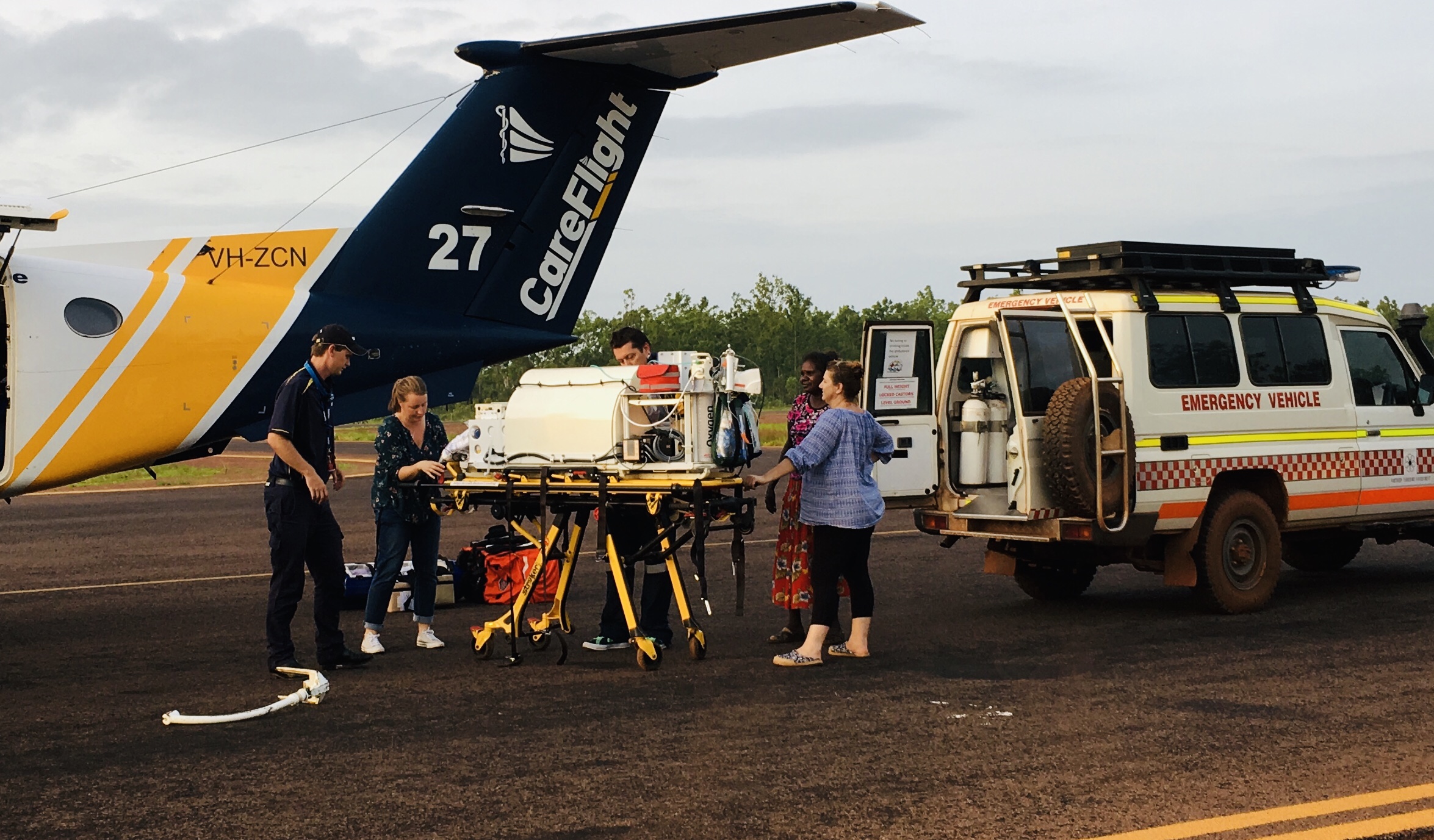
Emergency delivery of a premature baby – just one of the many strings to my bow

I have worn many hats since I started this job. I’ve looked after men’s health and women’s health, child health and sexual health.  I’ve been responsible for all the patients with chronic diseases such as diabetes, kidney disease, liver disease, heart disease and cancer to name a few. Responsibility. Weighs heavy on my shoulders. These are all specialised roles which require a lot of knowledge and expertise to manage well. Most of my patients are highly complex cases with multiple co-morbidities and advanced stages of disease. Add to this a challenging environment with vast distances, a cultural divide, a lack of resources and an absence of services and you’ve got a hell of a job on your hands. Me? I’ve got four weeks, a to-do list 28 pages long, a book and a telephone.

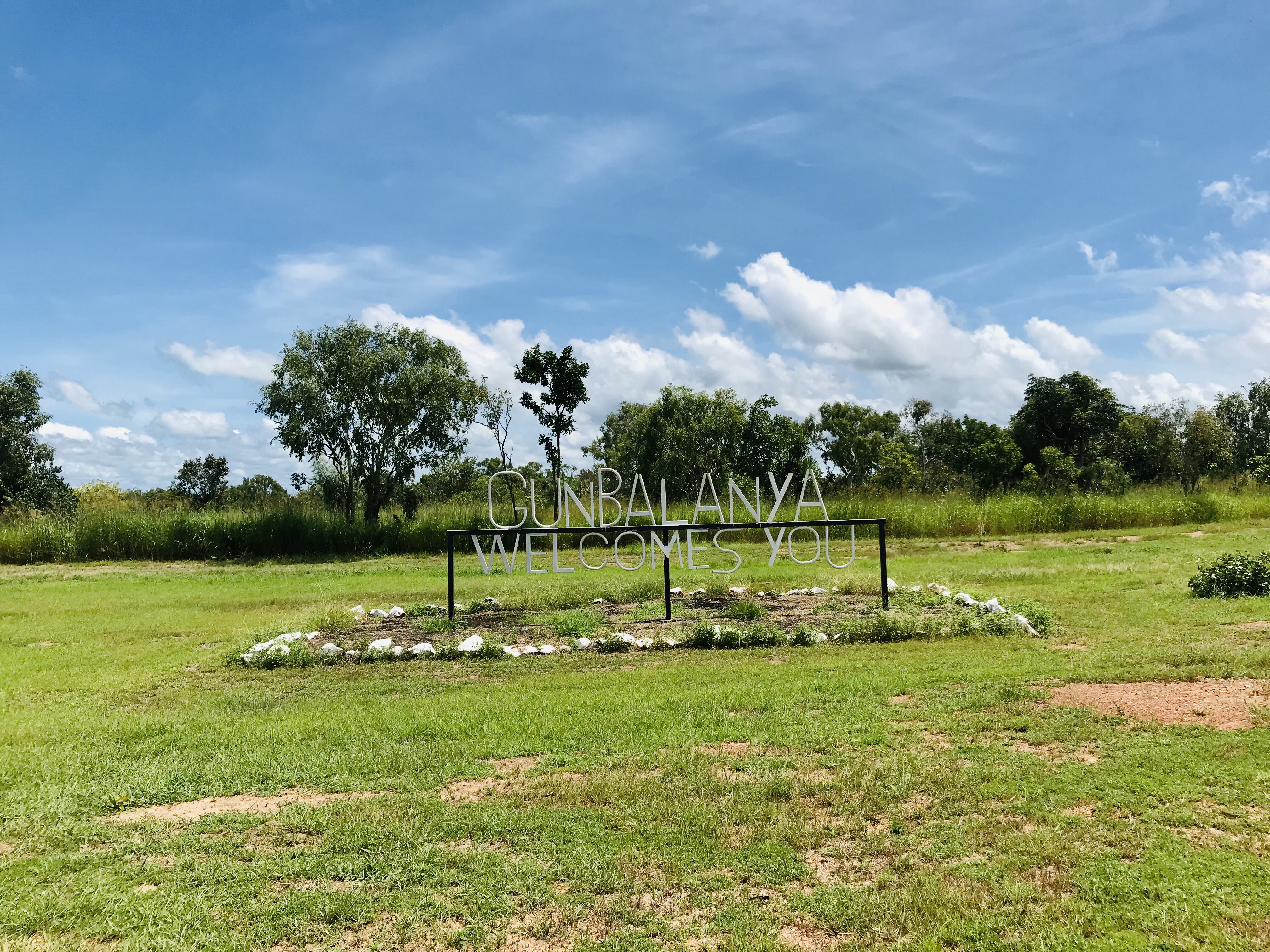
Gunbalanya (Oenpelli)

I think I made a mistake in assuming that I could do this job on a fly-in-fly-out basis. It turns out that you can’t, not in the beginning, not if you really want to make a difference. You need time to make the job your own. You need to draw your own map because you will not find one waiting for you. You need to reach out and build relationships not only with your patients but with the whole of the community. Most of all, you need to become a specialist in your area because you are it. Four weeks and you are nothing more than a list shuffler who barely skims the surface.

Aboriginal art and traditional basket weaving

These clinics run on a wing and prayer, chaos and fatigue. Some barely run at all. I struggle to cope with the changing roles of nurse, educator, Travel co-ordinator, paramedic, pharmacist, cleaner and driver. Ask anyone for help and advice and you’ll get a weary sigh and the same response “you do whatever you want to do”. The assumption is that everyone is past caring. The reality is that the constant juggling of balls results in burnt out people doing a half -hearted job because that is all they have left in the pot. You are just another nurse on another list who came and then left again.

Gunbalanya (Oenpelli)

Here is the crux of the matter. When I do a job, I like to do it well but I can’t. It is impossible and honestly, I wing it every day. It is just not good enough, not to me, not for my patients. I want to go home thinking “you did good today Anna”.  Instead I worry constantly about all the things I missed, all the things I should have done and didn’t do. I have sleepless nights haunted by the forever growing to-do list. I’m drowning in lists. My star sign last week read like this “You’ll probably worry about everything, because that’s how you get sometimes, and anxiety might start to unravel the basic fabric of your security”. Sounds like me? I’m probably way over thinking everything as usual and I’ve learnt to handle the anxiety sometimes, just not all-the-time.

So, put a fork in me, I am done. I am too young, too single, too lonely to commit to this right now. Maybe I’ll come back in my later years when I know all the things that I don’t yet know and I am more willing to dedicate a chapter of my life to one community. But for now, I think it is time for me to face the fear, to commit, to settle and to finally unpack my suitcase. For a short while at least. But that, my friends, is a whole other anxiety driven blog of insecurity you will have to look forward to. I’ll keep you posted.

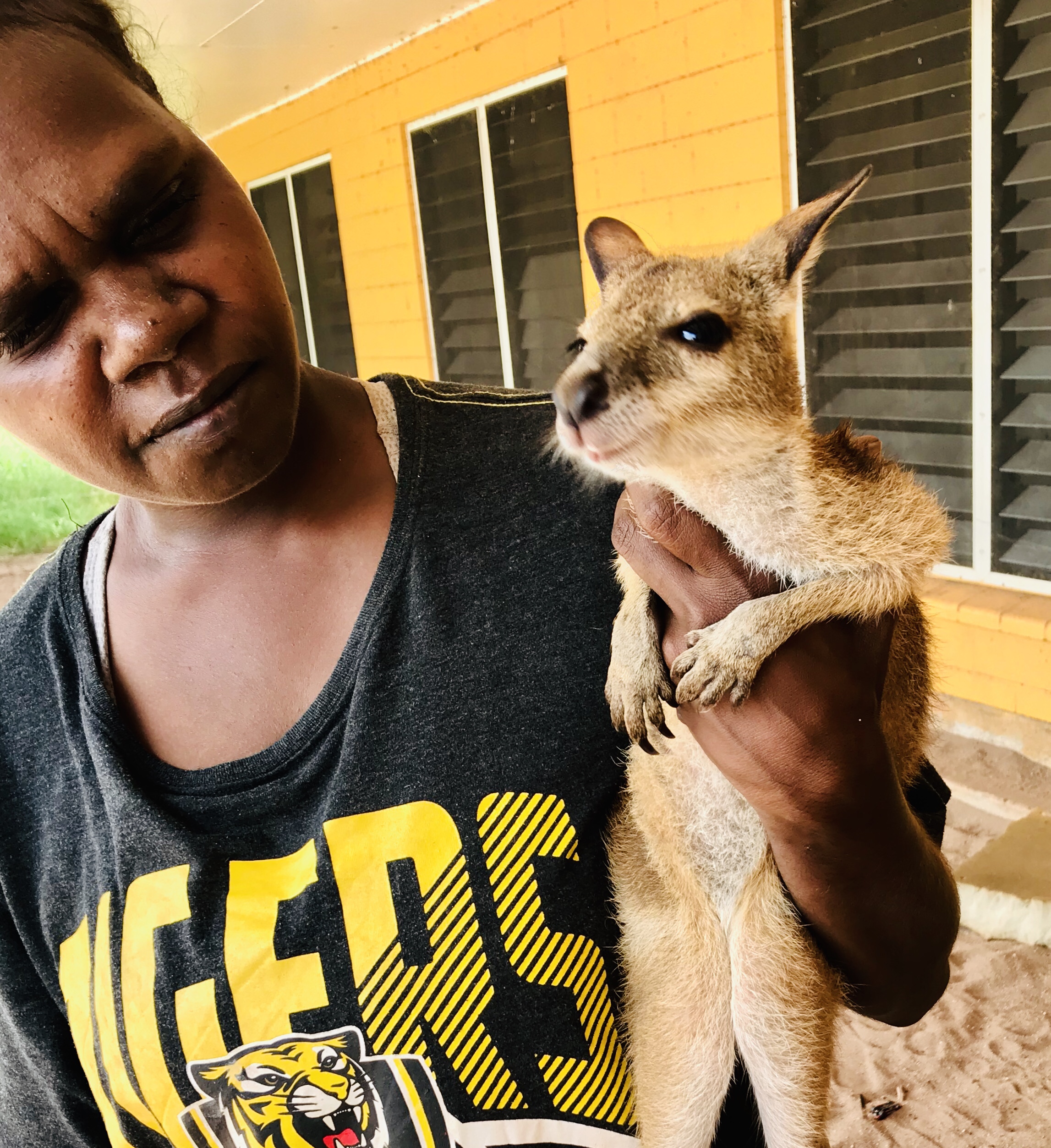
Skippy the Bush Kangaroo

Its goodbye from Skippy. And it’s goodbye from me. Say Goodbye Skippy. “Goodbye”. 

Enough

He’s lying flat on his back under a tree when we arrive. His eyes are closed. I can see the black piping is still wrapped around his neck. I feel sick.

The boy who raised the alarm is clearly shaken. He’s muttering under his breath “it’s not right, it’s not right. He shouldn’t be doing this. This should not happen”.

I put my hand on his arm as I bend down to squeeze the shoulder of the young man on the ground, saying his name over and over. He’s breathing and his eyes are fluttering. I breath. He’s lucky I think. He will live.

He has been badly beaten. Both forearms are bruised and swollen in exactly the same place, as if he has been shielding himself from attack. His ribs and back are various shades of purple and yellow. He has a large laceration to the back of head and it looks as though he’s fractured his ankle in the fall from the tree. Some are new injuries. Most are not.

Back at the clinic, as I secure his fractured ankle and suture the cut to his head, we chat. He is a quiet boy, shy and pleasant to talk to. The more we talk, the more I begin to re-evaluate my initial response. Maybe he is not so lucky after all. His crime? He fell in love with the wrong girl. He has been shunned from his own community and it looks like he’s not very welcome in hers. His father is in prison and his mum has been absent for most of his life. The little family he has live in the community he has had to run from. With very little education and even fewer life skills, he has nowhere to go and nothing to do. He wants to do something with his life but he can’t see any way forward. There is no light at the end of the tunnel. In his own words, he is “lost”. Without her, all he has is darkness and the only way out is death.

This is the story of one young man. The story he tells is the story of hundreds of young men growing up out here, in the desert.

Three days later, we pull his girlfriend down from the same tree.

A woman sits in the waiting room. She’s been there a long while but has spoken to no-one. I ask if I can help her. She stares at her hands, clasped tight in her lap. “Health Check” she whispers. She barely mutters a word. I wonder if she understands me but when we start to discuss her children, I see her face brightens and

a small smile plays on her lips. She becomes free for a while. Then it’s gone again, her eyes cast down and her hands remaining clasped tight in her lap. She patiently sits there as I talk about violence and aggression, overcrowding, breast cancer, diet and hygiene, contraception and STI’s. She’s an adult, a mother and grandmother. I prod, poke, measure and lecture her as if she were a child. I hate it, this tick box exercise. She knows but she has no control, no means to change anything because he holds it all. So why does she sit there, shamed and unspoken? Because I will reward her with a $20 power card, for him.

We sent a young man to hospital for a brain scan. He’d had a couple of seizures we thought he should have investigated. He’s an alcoholic, they said. It’s a waste of time, they said. They found a tumour. Actually, it wasn’t a tumour, it was a fungus in his brain. He never made it home to his wife and children.

I’m helping a young lady design a poster. The poster is to be sent out to all the surrounding communities to invite her family members to the funeral of her son. Her son, who’s name will never be spoken, was born and died too early to be saved. The early labour?  Brought on by infection. Too many infections.

She walks in with a six month old baby in her arms. Only he’s not six months. It is his first birthday next week. He is tall for his age, but he is incredibly thin and underdeveloped. She tells me she only breast feeds. Sometimes, when she eats, he will eat too. She only gets to eat once a day. It is all she can afford. Fear not. Here I am, with my superhero cape, armed with a growth action plan and a stack of pictorial booklets, diagrams, graphs and charts, literally overflowing with helpful information. Will they really help to feed her baby boy?

A man across the street throws a chair, full pelt, at his young son. “Oi!” the angry word flies from my mouth. An involuntary reaction and one I immediately regret. Why? Because the shame that man feels right now is not his fault. It is the fault of his young son. And he will surely pay for it.

Four young people have been found dead, perished in the searing heat just yards from their broken down vehicle. No water, no food, no phone. One is just a baby, the others not yet 20. Someone needs to be blamed. Fighting breaks out in a nearby community. An episode of “unrest” as the media calls it. A young man is killed in the fighting.  A death for a death. He is from the community I work in. I go to pay my respects at the sorry camp. It is like nothing I have ever witnessed. The pain and grief is palpable. I feel it as it clutches at my throat, crushes my chest and grips hold of my belly. You can hear it in the gut wrenching cries of the women. You can see it in the stillness and the silence of the men. I will never forget it.

Above and beyond the trauma, almost every day I find a child who is at risk. Malnourished. Failure to thrive. Unsafe.

Almost every day I find a child with ear infections. Chest infections. Throat infections. So many infections.

Almost every day I find a child with head lice. Ringworm. Scabies. Impetigo.

Almost every day I treat an adult with a chronic, debilitating disease, going deaf, going blind, slowly dying.

Enough now please. Enough.

This cannot be solved through healthcare alone.

This is My Life.

It seems to me that systematically throughout my life, I have not only ignored subtle (and not so subtle) advice on how I should live my life, more often than not, I appear to have rebelled against it. For instance, as a young teen, I was told to get my head down and study hard and yet I spent most of my high school days dodging classes and smoking weed. Nothing too unusual there.

My taste in bad fashion has not changed

By the skin of my teeth I got into university, but I had an older boyfriend at the time who thought students were just work dodgers. He drove a BMW, so I took his words as gospel and promptly got myself a job in a call centre. Unsurprisingly, he turned out to not be the celestial being I thought him to be.

I spent the next five years in and out of various mundane and uninspiring jobs, much to my mother’s worry: nightclubs, pubs, travel agents, call centres, big bank customer service. I had mantra at that time, I planned to “work to live” not “live to work”. This mainly consisted of dragging my hungover carcass through the week to emerge as a social butterfly on Friday, promptly spending everything I earnt and waking up Monday to begin the whole sorry cycle again. Living?? I’m not so sure.

My 21st Birthday

Thankfully, due to some pretty significant life events, I eventually got my shit sorted and trained to be a nurse, graduating at the grand old age of 26. Had I finally started to grow up?

Class of 2007

Possibly not.

Hurtling towards 30, my life was going pretty great. I had a job in the NHS (not so great in retrospect but at the time it was a big achievement) and an amazing flat in Manchester. I’d even managed to buy my own car.

The only part that was terrible was my love life. I have always been totally socially inept when it comes to relationships and my pass record had not filled me with enthusiasm for any further amorous encounters. I was happy on my own, at least that’s what I told myself.  So as friends started getting married and having children, I ran. I ran from the constant “when are you going to get a boyfriend Anna?” I ran from the blind dates and I ran from the set ups with cousins and work mates and boyfriends with single best mates. I ran as far as I could and I ended up here, in Australia.

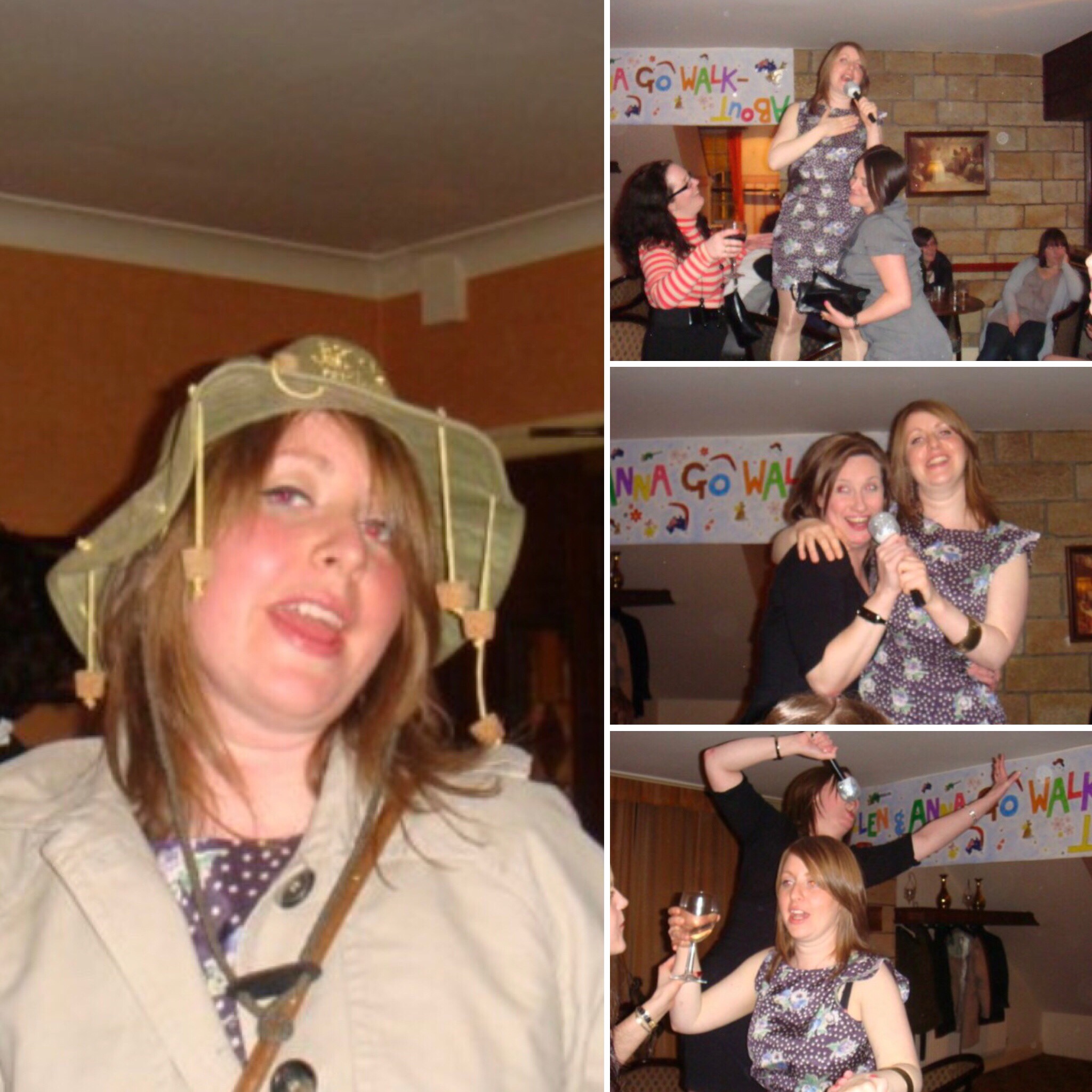
Helen and Anna go Walk About – Leaving Party

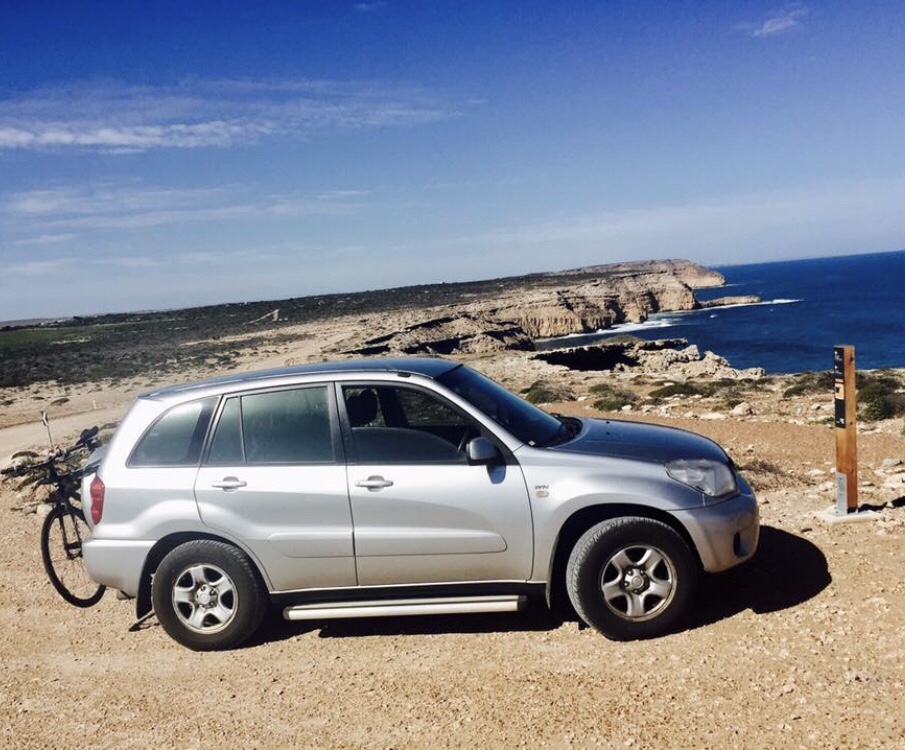
My Love: Bertha

Over the past 8 years, I have been living the life of a gap year student. I don’t have a permanent job, or a home. The only thing I own is my car, Bertha. I often think that maybe I love Bertha more than people. We have been around Australia twice, more than 180 thousand kilometres, and we spend more time together than I do with my own family. I talk to her and I miss her when we’re apart, longing for the feel of the open road, for solitude and for adventure. She is trusty, reliable and she never complains. If I could find a man like that I would probably not be writing this blog.

I’m almost 38 and the sad thing is, is that people ask me less and less if I’m going to have children. Not that I am complaining but you have to admit, it is a little sad. The answer is, I would love to have children, but not after I’m 40. Judging by my almost celibate lifestyle over the last 15 years, this would take a miracle. I’m an optimist though and strongly believe that just because I may not have my own children does not mean that I will never have a family.

My slightly dysfunction but amazing family

It sounds like I’m a poor achiever and I’m putting myself down, but I totally disagree. The last eight years have been incredible and I feel that I constantly push myself to be bigger and better than before. What I haven’t achieved in material wealth, I have certainly made up for in life experience

So, finally, to the point of this blog. The most recent mantra I now seem to be receiving from friends and family in thier constant quest to try and “normalise” my life is: When are you going to buy a house/get a mortgage? I’ve mulled it over, I’ve thought about it, I’ve talked about, worried about it and absolutely, at some time in my life, I may get a mortgage. But for now? The answer is no. I am going to keep on running and here is why:

Number one, my fear of commitment. 25 years! Are you kidding me? In my 8 years in Australia I have not even been able to commit to a 12 month mobile phone plan.

Number two, my indecisiveness. Would I buy a house in Australia or England? What state? Would I choose a house or a flat? In the city? Or in the country? Would I want to live there? Or rent it? I keep coming back to the fact that if it had wheels, I’m in.

Number three, who on earth is going to give me a mortgage? I work about six months of the year and only then when my money runs out. I’ve had more than 30 jobs in the last eight years, I can’t spend more than three months in one place and my bank balance looks like a rollercoaster on speed. I’m pretty confident my credit rating is less than crap.

Number six, I’m not ready to sacrifice my lifestyle. I love it. I often feel like the luckiest girl in the world. My mum got diagnosed with Cancer when she was only four years older than I am now. You don’t want to, but you think about these things. I plan to live and see and do as much as I possibly can as you never know when you might be forced to give it all up.

Number seven, why would I want to go back to an empty house when I have so many people to see and things to do?

Just a snippet of some of the fabulous people I don’t see enough of

I’m sure there are many, many more reasons but I think number 7 is the one that holds me back the most. Over the years, I have made some amazing friends that feel much like family. When you’re away from home, away from familiarity and those who make you feel safe, you seek these things out in the people you are with. You are all in the same situation and faced without the luxury of time, you develop strong and meaningful relationships much faster and much deeper than you ordinarily would. My friends live far and wide across Australia and I don’t spend as much time with any of them as I would like. These friends live in beautiful places and I am always made to feel welcome. I live quite a solitary life so the company of great friends and kindred spirits is essential for my happiness. I think these places feel more like home than any place I had by myself and I don’t want to give them up.

Hebden Bridge will always feel like home.

But then there is home. I mean home, home. Hebden Bridge, England home. I miss my family more and more with each passing year and I would move back in a heartbeat if I could do the job I love and live the life I live. If I was to ever buy a house, I think it would have to be here. I can think of no other place I could call my home. Unfortunately, I remember my life as a nurse in the NHS as angst ridden and dark. I have no desire to go back and be the person I was. I would have to be something else, someone else. But what? Who?

My Family

So, the answer is no, not now, maybe never am I going to buy a house. Maybe I’ll never settle, maybe I’ll never sit still. You never know what life is going to throw at you and I will do whatever I need to do when the time comes. I have taken on board concerns and yes, maybe I will work a little more, save a little more and possibly travel a little less. I’ve been up and down and round the houses but the conclusion is, is that I’m happy and I have no desire to change my life right now. Maybe this is selfish, maybe this immature of me, maybe I am being irresponsible but, do you know what? It is not the first time and I strongly believe that everything is always going to be OK.

Everything is going to be OK

The Next Chapter

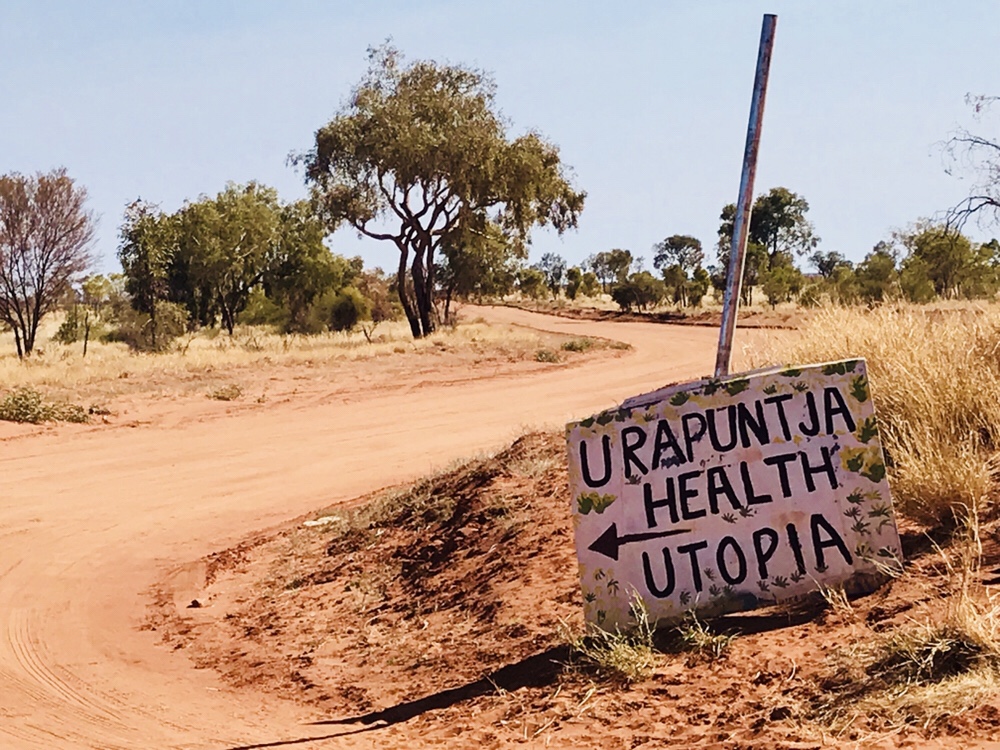
The Sandover Highway runs from Alice Springs NT to Mount Isa QLD and is 561km (349 miles) of sand hills and corrugations (courtesy of http://www.dangerousroads.org)

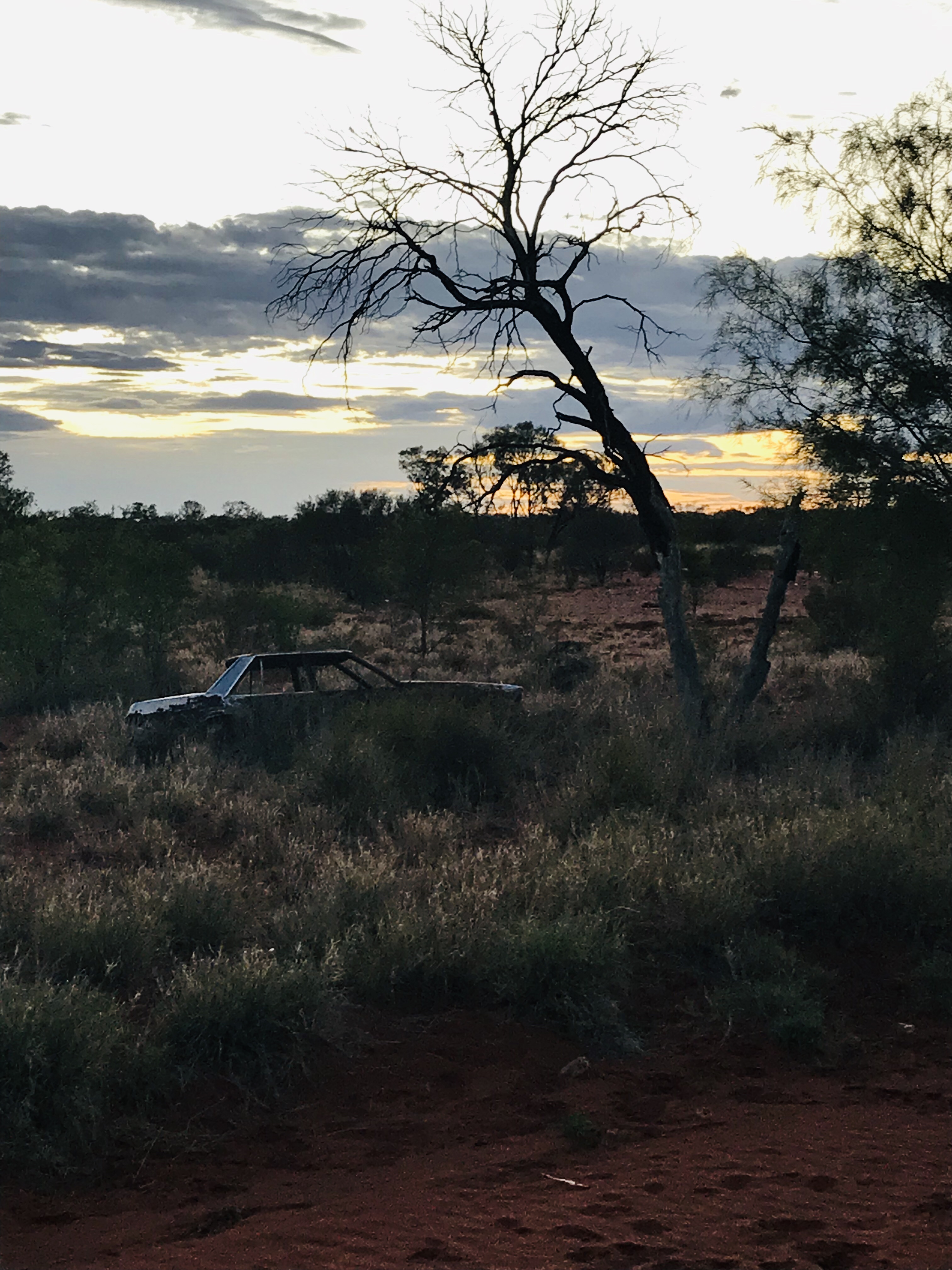
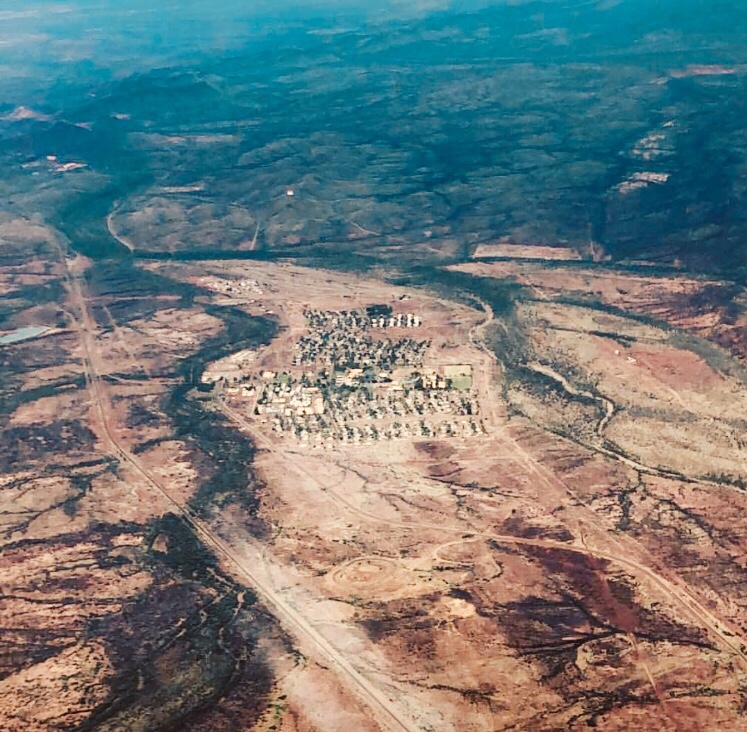
Right now, I am in the middle of nowhere, like slap bang in the middle. There is nothing much for hundreds of kilometres in either direction. It has not rained for over 7 months. Red sands swirl through the vast arid landscape between white ghost gums and over yellow parched grasses. The sky is huge. At the end of the day, as the cold chill sets in, a vibrant bright orange strip smoulders on the horizon to the west as the purple bruise of night creeps in from the east. There is neither a hill nor a river for miles and the eye can see as far as it can see.

Bush Sunset.

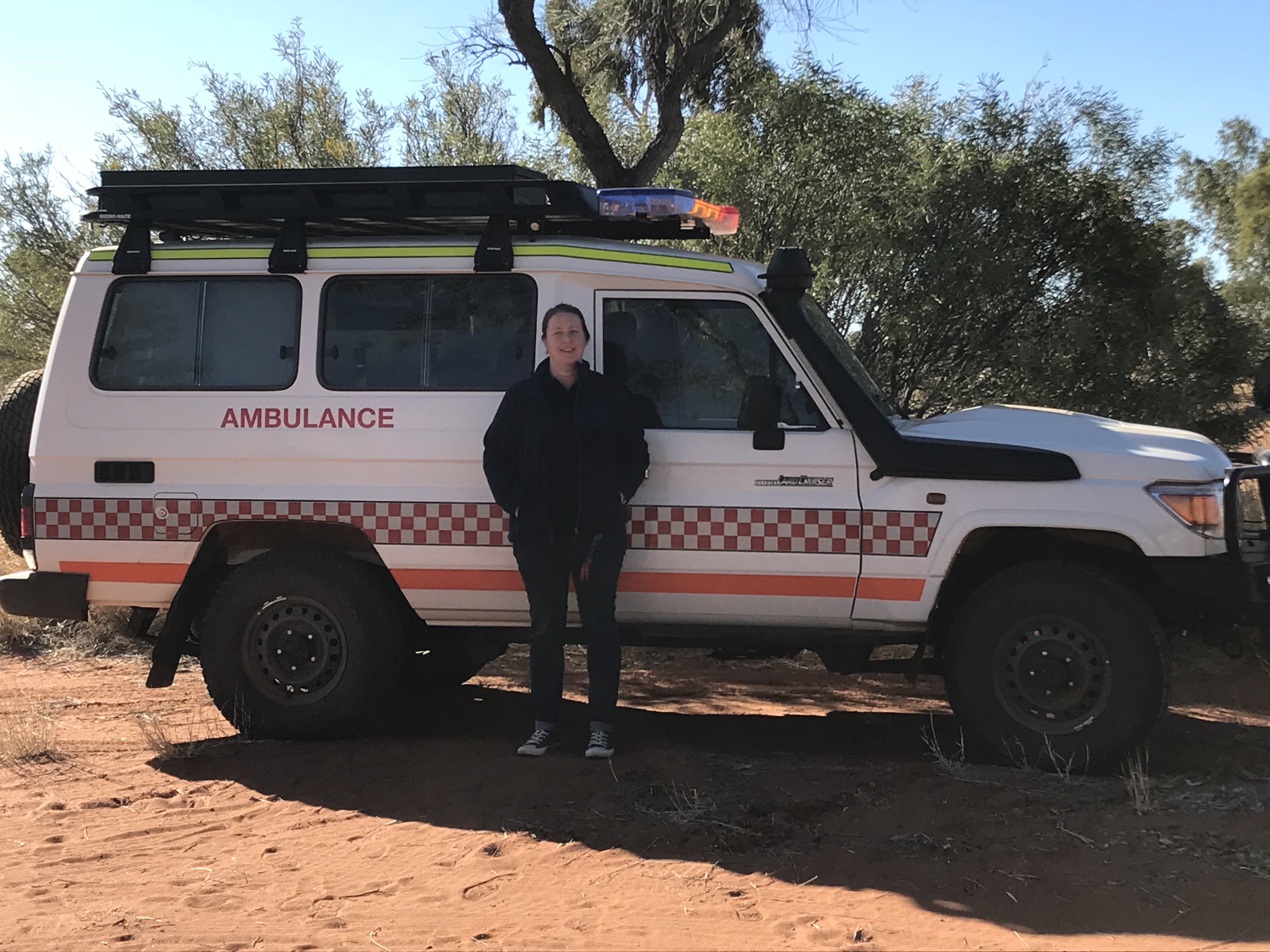
I’m working as a remote area nurse, one of five, who provide health services to the aboriginal population that call this place home. Almost every day we load the car with medications, immunisations, diagnostic equipment, treatments, dressings and laptops and head out to one of the 16 outstations in the area.

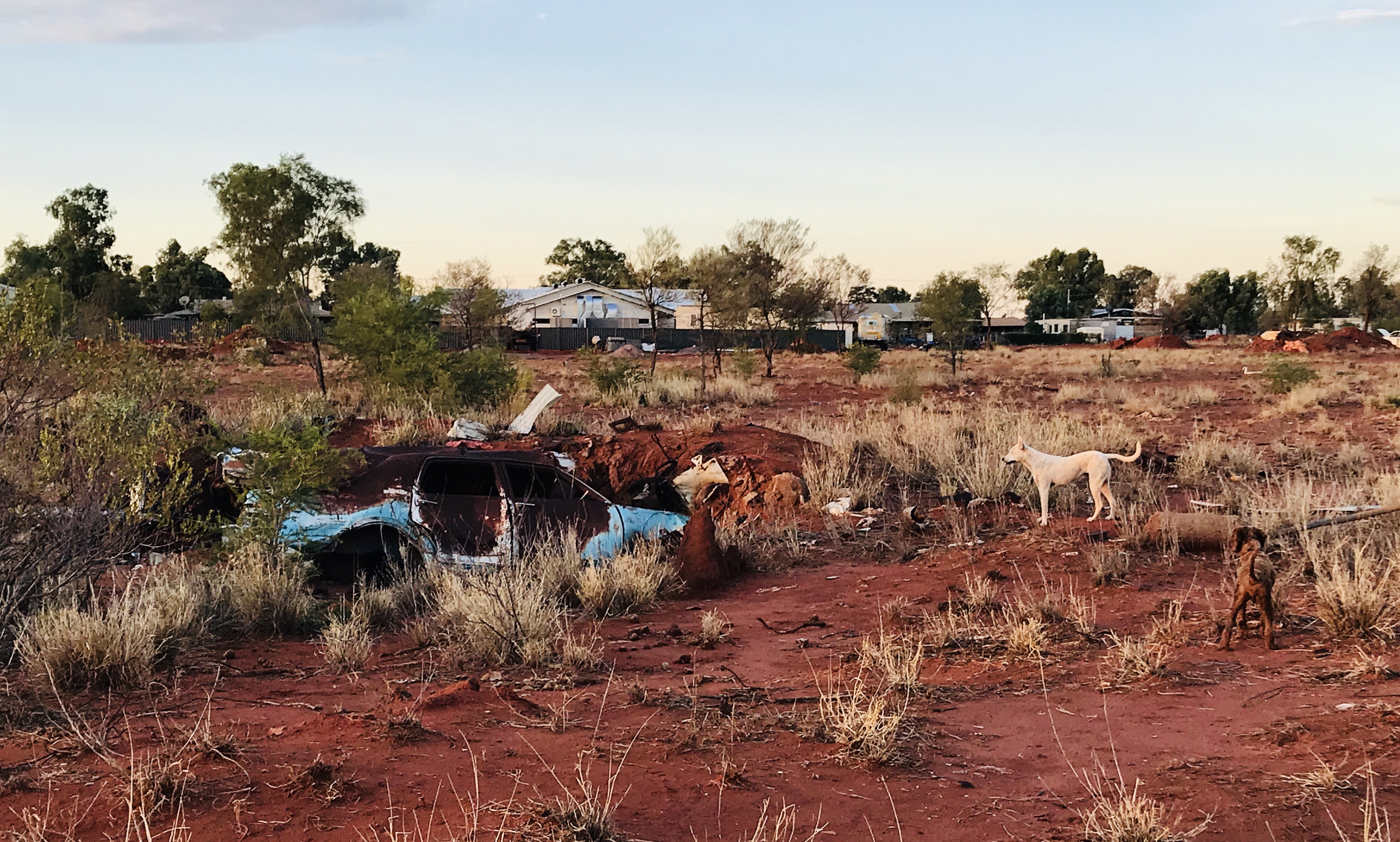
Each outstation consists of between five and twenty breeze block houses, most are fixed up with corrugated iron and blankets to hide the disrepair. They all have air conditioning, solar power, showers, toilets and kitchens. Maybe they are working but probably not. Otherwise they are almost empty with old mattresses and blankets covering the concrete floors. Outside is a graveyard of dismantled cars abandoned amongst a flowerbed of rubbish where hundreds of feral dogs roam. Everything is covered in a thick layer of red dust.

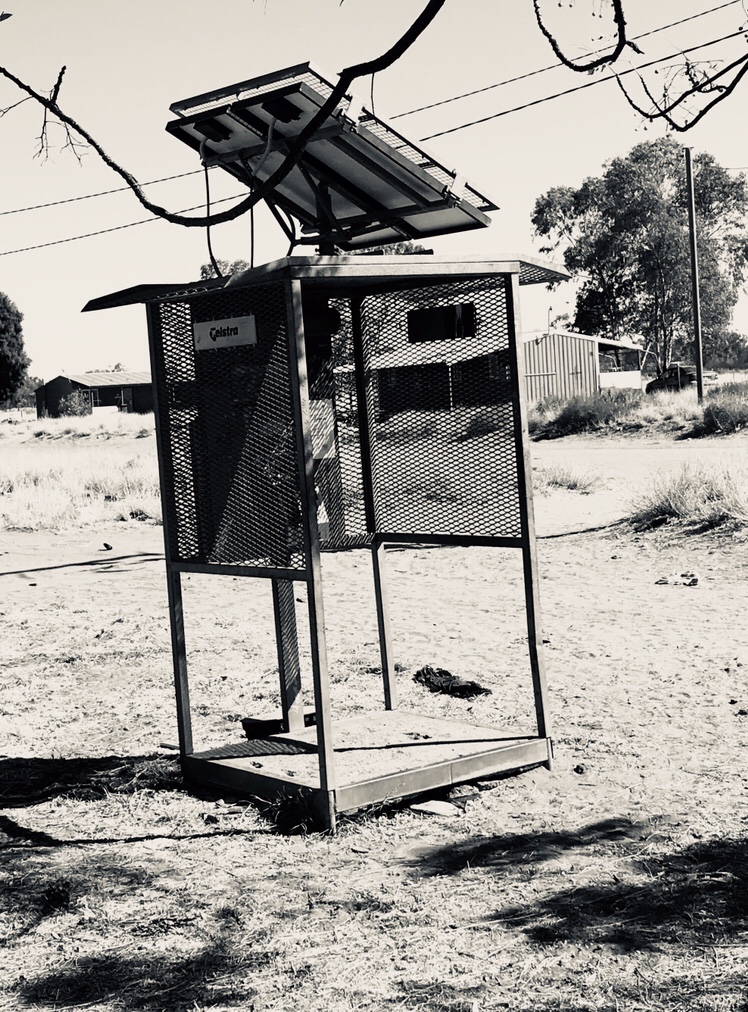
When we arrive, it’s like a ghost town. We drive around, beeping the horn to announce our arrival. The one phone box rings out into the silence, searching for a lost soul. In time, you notice the smoke from a smouldering fire as a curious face lifts out of a pile of blankets nearby. A lone figure leans in a doorway. Suddenly, the doors from the shell of a car are thrown open and 5, 6, 7 young children emerge from their makeshift playground. All the dogs come yapping at the wheels of the car as the place starts to come to life.
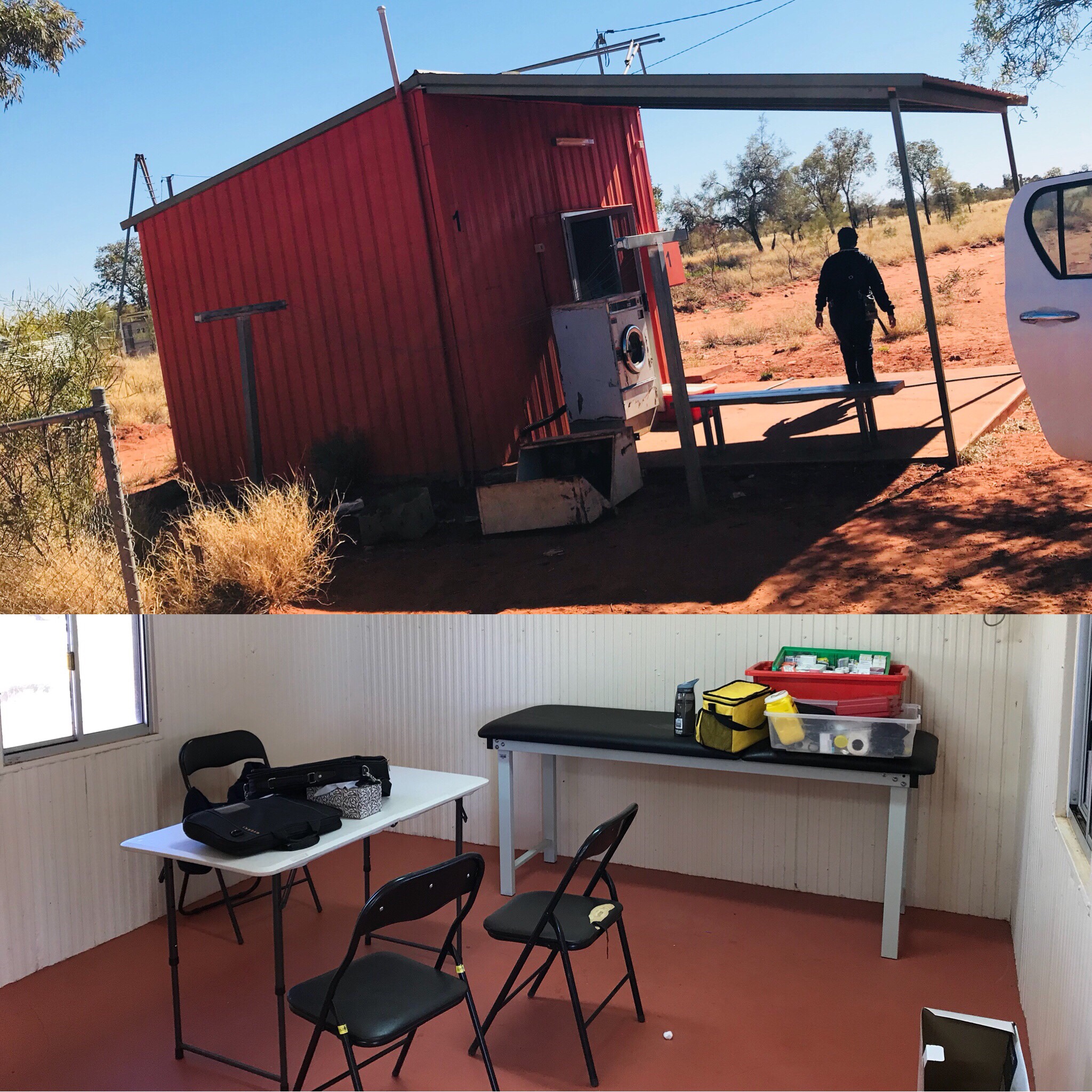
In a tiny room we call a clinic, we get to work. Usually there are just two nurses, occasionally a doctor, and up to three patients in this small space.

In this environment that is so totally unique, to people from a highly complex, fascinating and diverse culture, in a language that is not their own, we will discuss, assess, diagnose and treat what we can. After the chaos, after the claustrophobia, after the absence of privacy and the loss of dignity, what really, really gets to me is that we are delivering a healthcare service that just doesn’t work. It is a service that was developed to serve middle class urbanites. These are people who have access to education, jobs, services, infrastructure, housing, sanitation and good nutrition. They understand how “we” understand health, because it is the same. Most people think of health as a physical thing whereas the aboriginal people are much more concerned with the cultural and the spiritual. They are connected to each other and to the land. We keep trying though, because we care and because we don’t know what else to do. Is it because we don’t ask? Is it because we don’t listen?

I think I have always had a romantic idea that I wanted to save the world. Slowly I am coming to the realisation that this is all it’s ever going to be: a romantic idea.
When I was working in Ghana, Africa, I taught a session on optimal wound healing. I proudly displayed the many different types of dressings available to me. When I realised all they had was methylated spirit and cottonwool, I thought, what was the point?

In India we ran health clinics in rural areas where we saw so many people in chronic pain because of the hard manual labour they are required to do. We packed them off with a strip of paracetamol. Solving problems? Saving lives?
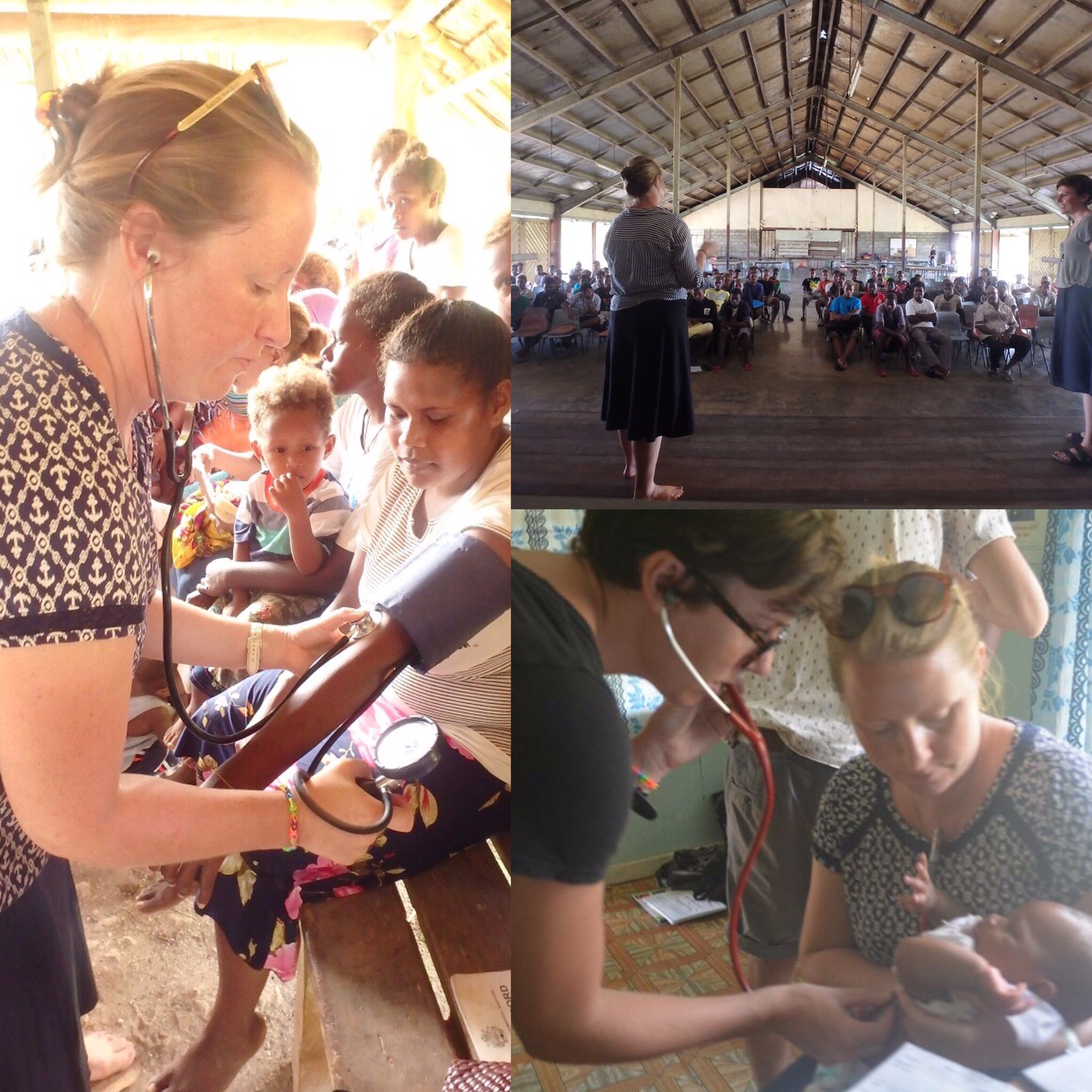
In the Solomon Islands I delivered hours of training, the same training I had received, to nurses in a developing country, in a foreign language and expected them to understand. Was I surprised when, after a year, I felt I had achieved very little?
On each of these occasions I have deliberated over my reasons for being there. Each time I have come up with the same answer: who am I to tell these people how to do their job, how to live their lives, in their country, with their people? It just doesn’t work.

But these are all examples from third world countries. I guess I never expected to feel the same in Australia.

I’m involved in tick box exercise. I dish out medications for chronic diseases that people don’t even know they have (tick). I lecture them on nutrition when they have no access to fresh produce (tick). We pack patients onto planes to a foreign place for procedures and tests they never asked for (tick). We have a 100% immunisation rate (tick) in a community where people are going deaf and blind from skin infections that could be resolved through better housing alone. And we collect data. Lots of it. We do this because it is the only way we know and we know it works for us (or does it?)

Let me ask you this: If you presented to a health centre with a headache and after being prodded and poked you had to give blood, give urine, have an injection, told to eat better, wash daily, smoke less, walk more, drink nothing but water and given a roll of tablets to take every day that make you feel sick, weak, bloated, dizzy, and, you still had a headache when you left. All delivered in a language you don’t understand by a person you have never seen before and will probably never see again. Would you go back? Would you trust it? I wouldn’t.

I am new to this and I still have so much to learn. I will get better, both culturally and clinically but I am not what these communities need. They need people who will be in it for life. They need people who will live within the community, who will learn the language and who will listen. Hopefully, eventually, they will not need us at all. Right now, I am filling a gap and it works for me. I want to save the world, but in my own time. 

My dad (AKA Bob: The Critic) say’s  that I need to put some positives in and do you know what? He’s right (as always).  I do tend to focus on the drama and the negative but honestly, I am having a great time. Everyday is a fly by the seat of your pants adventure. Out here, you are it: doctor, nurse, paramedic, midwife, pharmacist, educator, cleaner, driver. We will deliver your medications, we will pick you up and drop you home. We don’t have appointments. We will see you whenever you need us. Sometimes in your own home. Sometimes in the middle of the bush, in the middle of the night. Our consultations have no time limit and you can discuss more that one ailment at a time (imagine that!) and we will go above and beyond to do everything we can to try to save your life if you are unlucky enough to need it. As a nurse, my skills, knowledge and adaptability are pushed to the limit on a daily basis, everyday challenging. Sometimes its awful, but that’s nursing. Its the amazing people and the good times that pull you through. I certainly intend to stick it out a little longer.

The End of the Rainbow

The End of the Rainbow

This is one of the strangest places I have ever lived. And I have lived in some fair dinkum weird towns in my time.


Imagine a town, if you will, like Pleasantville. Then remove the pleasant.
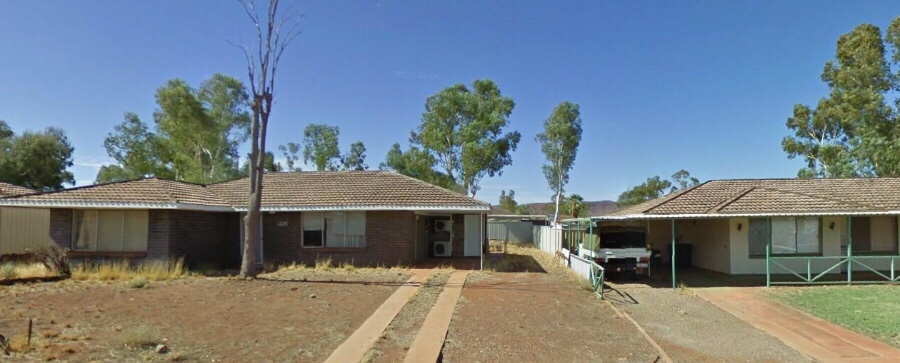
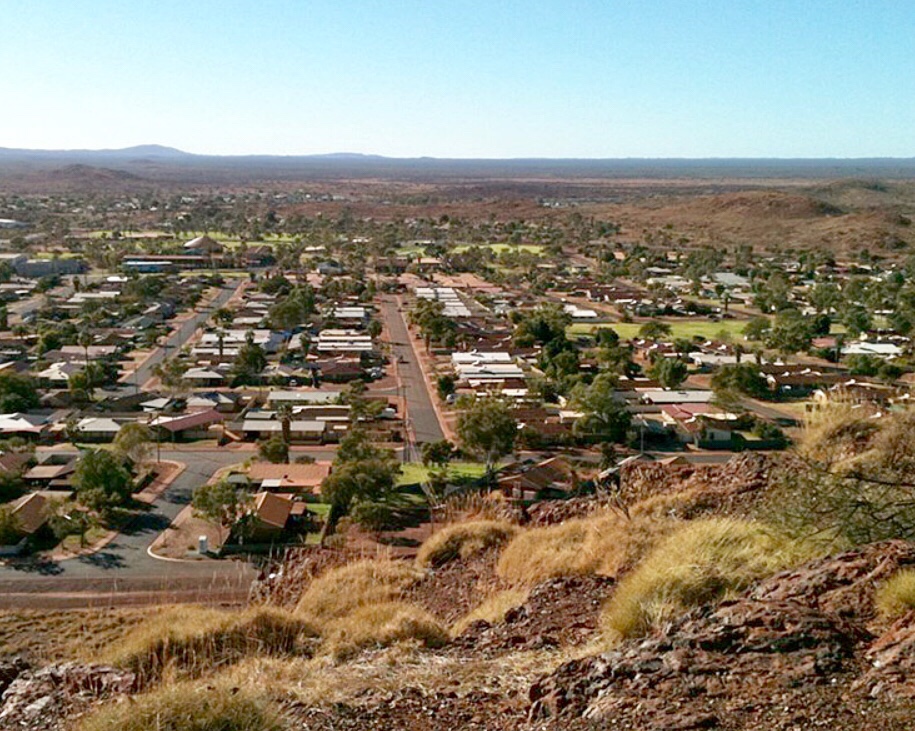
Uninspiring, desolate brick houses line identical streets, most of them uninhabited. Those that remain occupied are no less lifeless. From the post boxes to the cars in the driveways, there is no deviation from the norm. Even the clothes hanging on the washing lines are alike. There are no flowers planted in the front yards, no curtains framing the windows, no doorbells to announce the arrival of a friendly face. Silence fills the air. You won’t find teenagers roaming the streets or see the elderly and the infirm because they don’t live here. No one puts down any roots. For most people it is a means to an end and they all plan on getting out as fast as they can. Except that they don’t. Because this town can lure you in with a promise of something that we all want: Money.
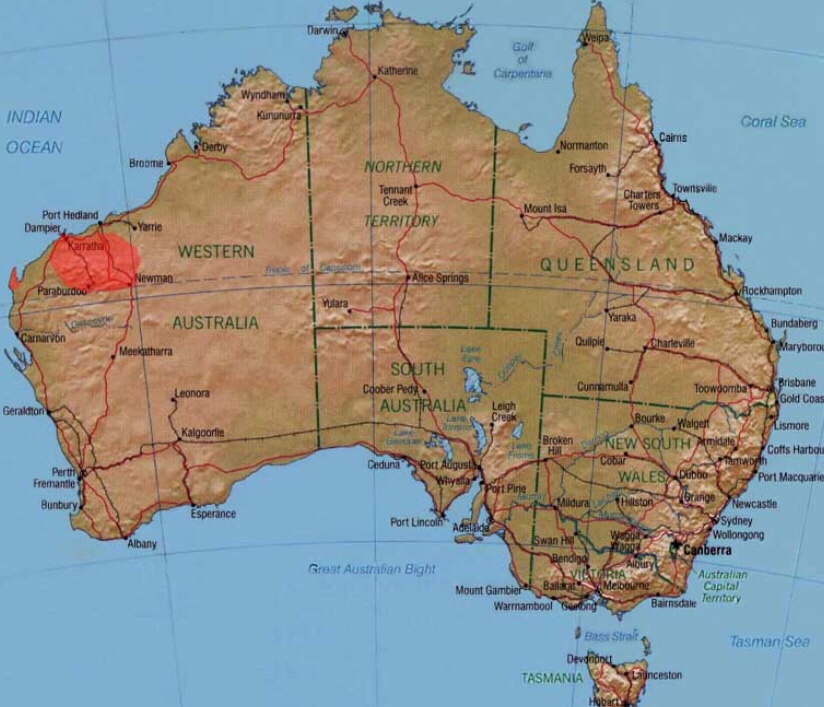
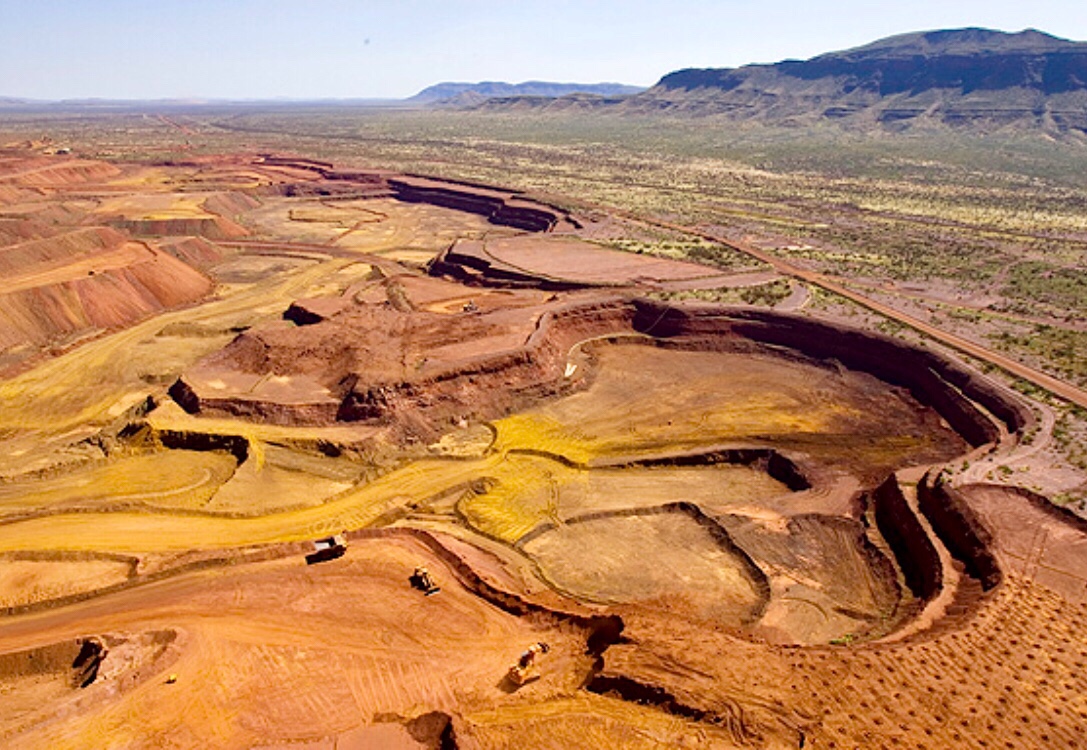
It’s a tale as old as time itself. For years people have been flocking to Australia in search of better life. Australians themselves have been leaving the cities and heading into the outback in search of their fortunes. There’s gold in them there hills. Or more accurately: Iron ore.
I first arrived in Western Australia at the height of the mining boom. The state was awash with the signs of a new found wealth and full of promise. Palatial houses were springing up in their thousands, spreading Perth both north and south at a phenomenal rate. Prestige cars zoomed up and down brand new freeways alongside high speed rail networks that connected the city to the sprawling outer “burbs”. Marinas expanded their births to accommodate fleets of leisure boats and yachts, designer shopping centres arrived, 5 star hotels moved in and top class chefs opened world class restaurants. Everybody was cashing in.
That was nearly 10 years ago now and, as is inevitable with every boom, there is a bust. Western Australia has been teetering on the edge of a recession since 2015. The price of gold, nickel and iron ore has crashed, the cost of running an Australian workforce has increased and countries like China and Africa can mine minerals for a fraction of the cost. The result is most mines have either reduced output significantly or have closed down completely. The economy is dwindling, unemployment is rising and construction has ground to a halt. Dream homes stand empty and prestige cars are abandoned as banks scramble to reclaim lost money.
The town was originally built to accommodate a population of up to 40,000 people and I believe in the heyday of the mining boom it was quite a bustling metropolis. It currently has a transient population of less than 1400 people. Everybody who lives in this town either works at the mine or is married to someone who works at the mine. They arrived with a plan: they will stay until they have achieved their goal. Only the goal posts keep moving. Most are paying off a mortgage or setting themselves up for a comfortable retirement. Then they have children, some have lots of children (not much else to do), so they save a little slower. Then they have to add school fees and collage funds. Maybe they would like a boat to go with their new house, a campervan to park in the driveway or to see the world before it’s too late. Some simply have no choice but to stay where the employment is. Either way, the town seems to suck you in.
Those who have decided not to relocate their families, opt for the Fly-in/Fly-Out (FIFO) lifestyle, working a two week on, one week off roster which sees them heading back to the bright lights of the big smoke as often as they can. Despite the fact that people are earning up to $200,000 a year for relatively low skilled, low risk jobs, the industry is not without its misery: Gambling, alcohol and drug addiction, workplace bullying, poor mental health, suicide and high divorce rates top a long list of concerns for the FIFO worker.
In 2015, the WA government conducted an investigation into the dramatic increase in suicides among young male FIFO workers. Despite the report prompting the government to support 14 recommendations to help combat this rising concern, two years later, nothing has changed. To add insult to injury, the government has again pledged a substantial amount to reinvestigate what they have already investigated despite doing absolutely nothing with the findings from the last investigation. The outcome being that FIFO workers remain in a state of declining mental health with no support for the next couple of years at least. Can I have a (slow) round of applause please?

Barry, Hannah (2017) “Miners are dying”: The human cost of WA’s FIFO economy. WA Today.

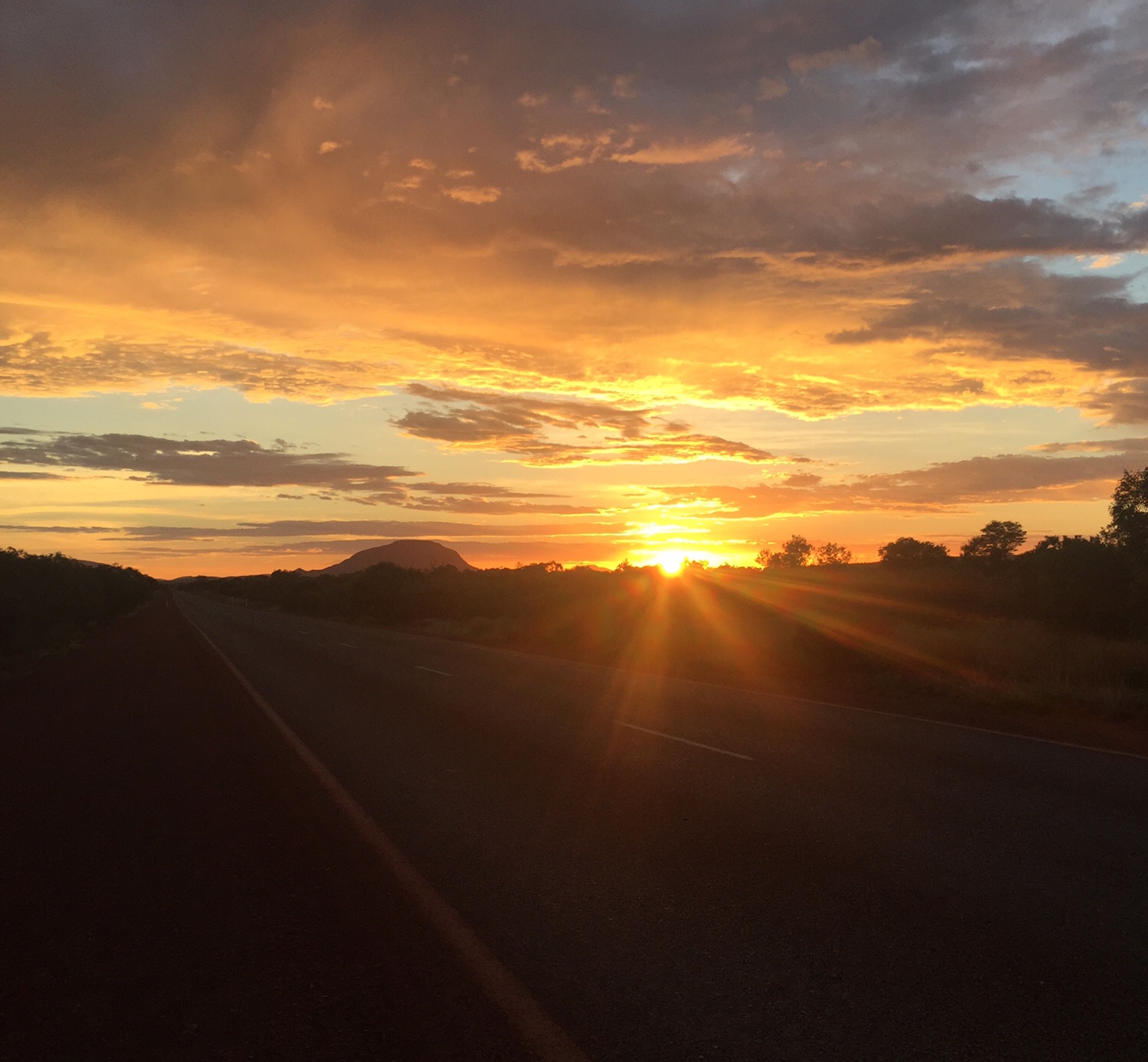
Despite the doom and gloom, the Pilbara is a magical place to live.Sunrise out on the open road
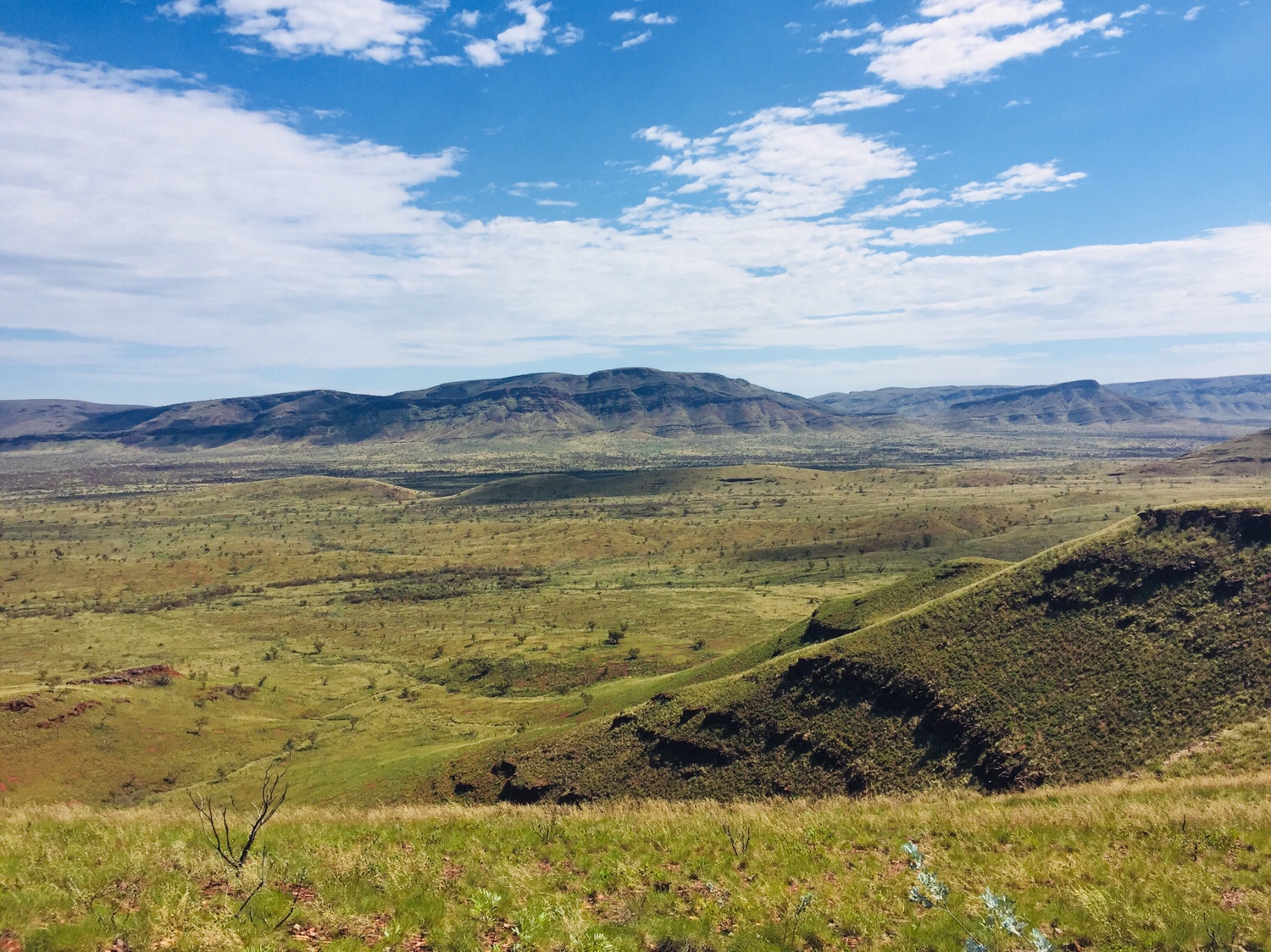
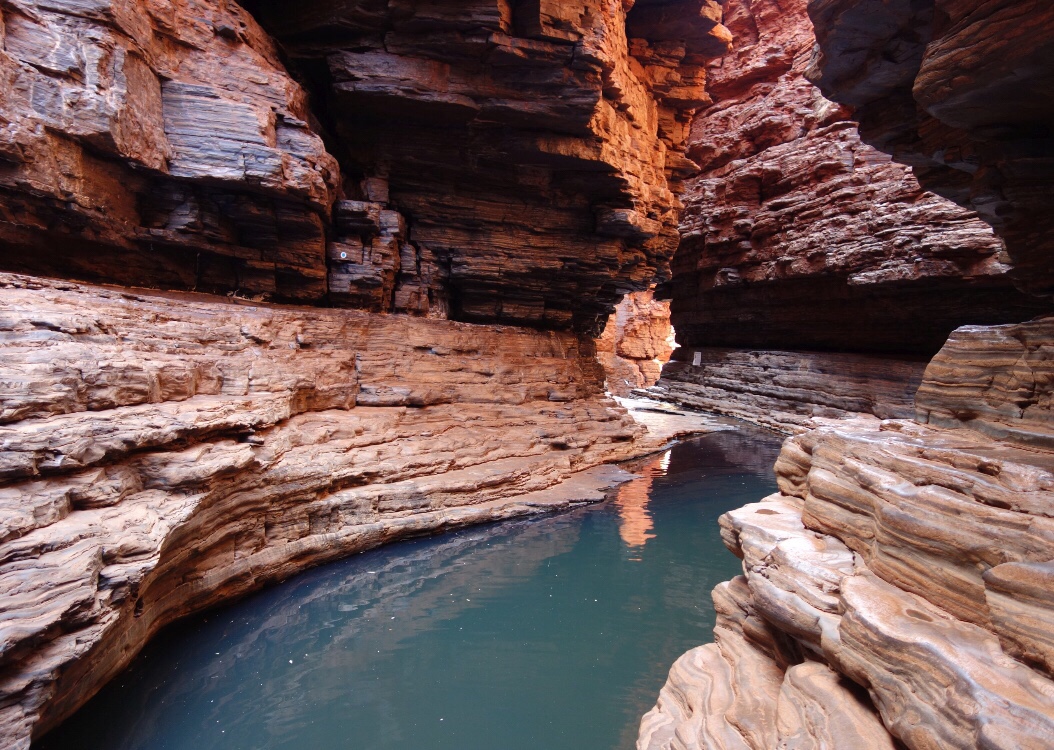
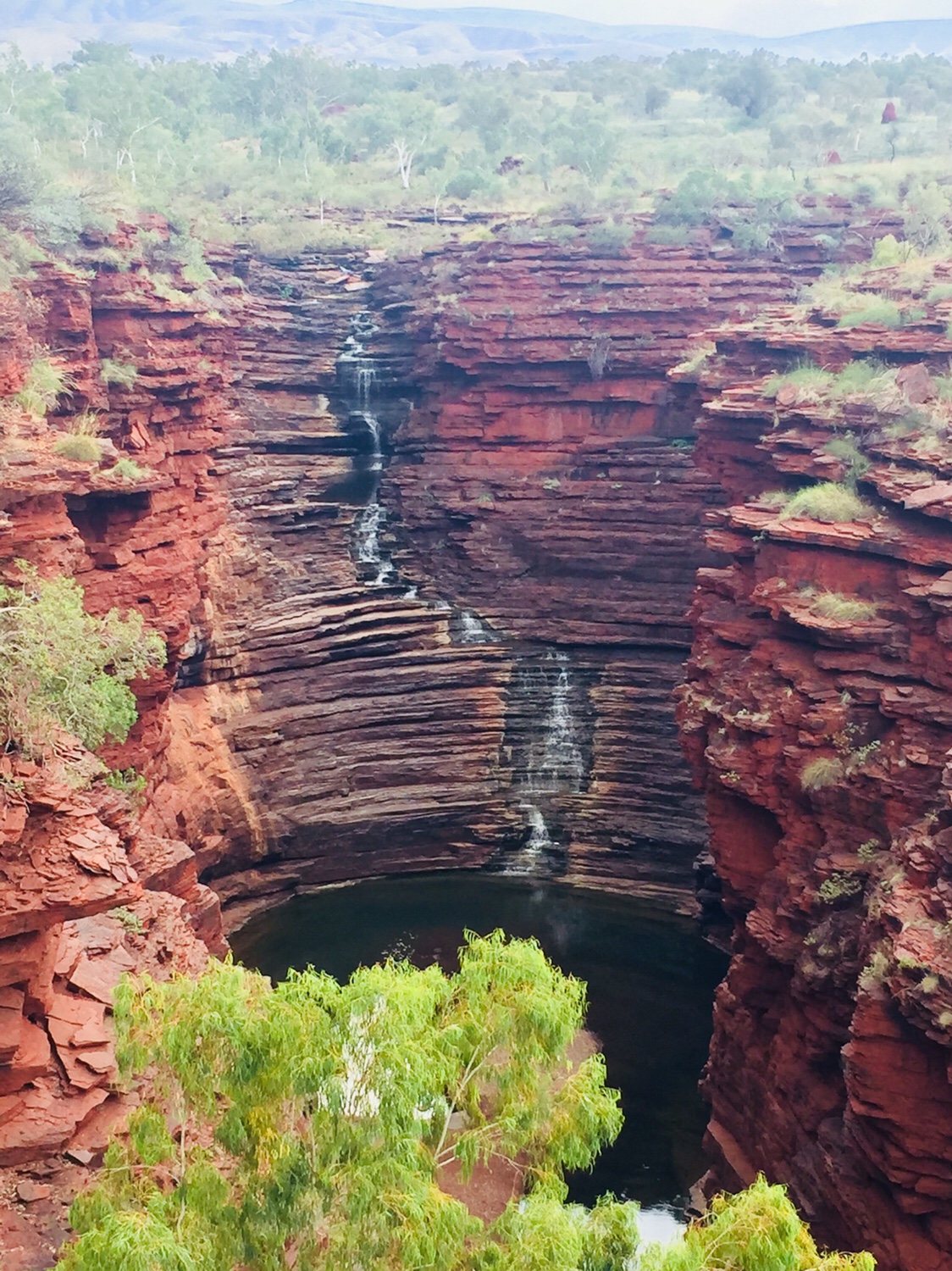
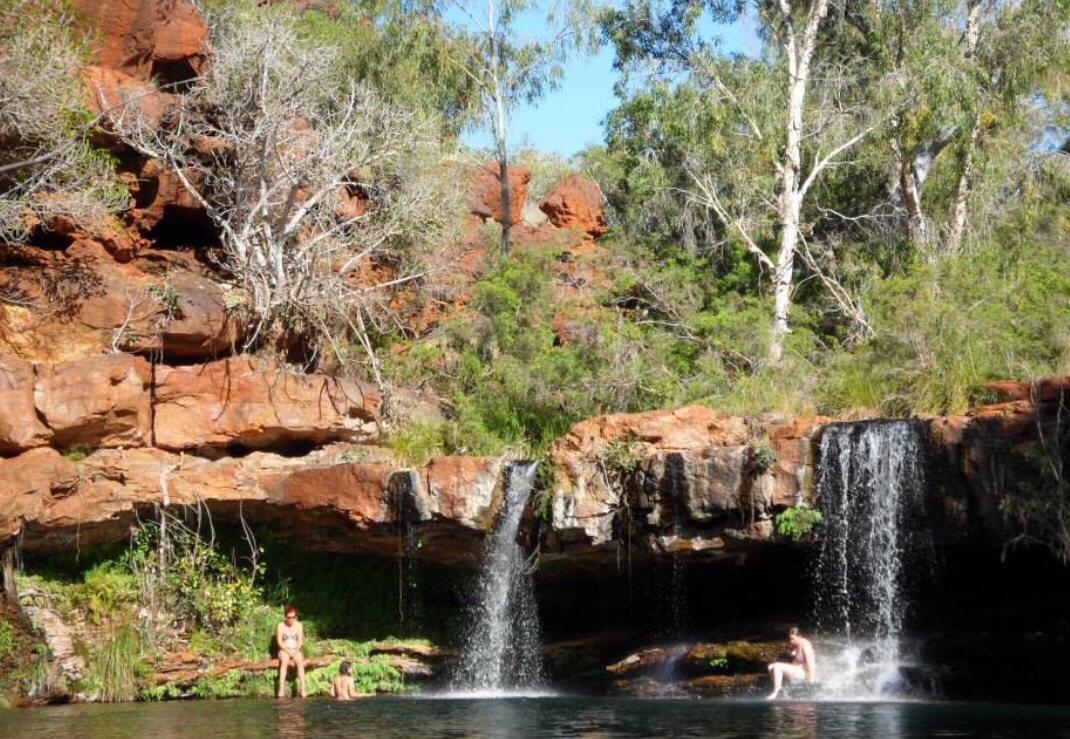
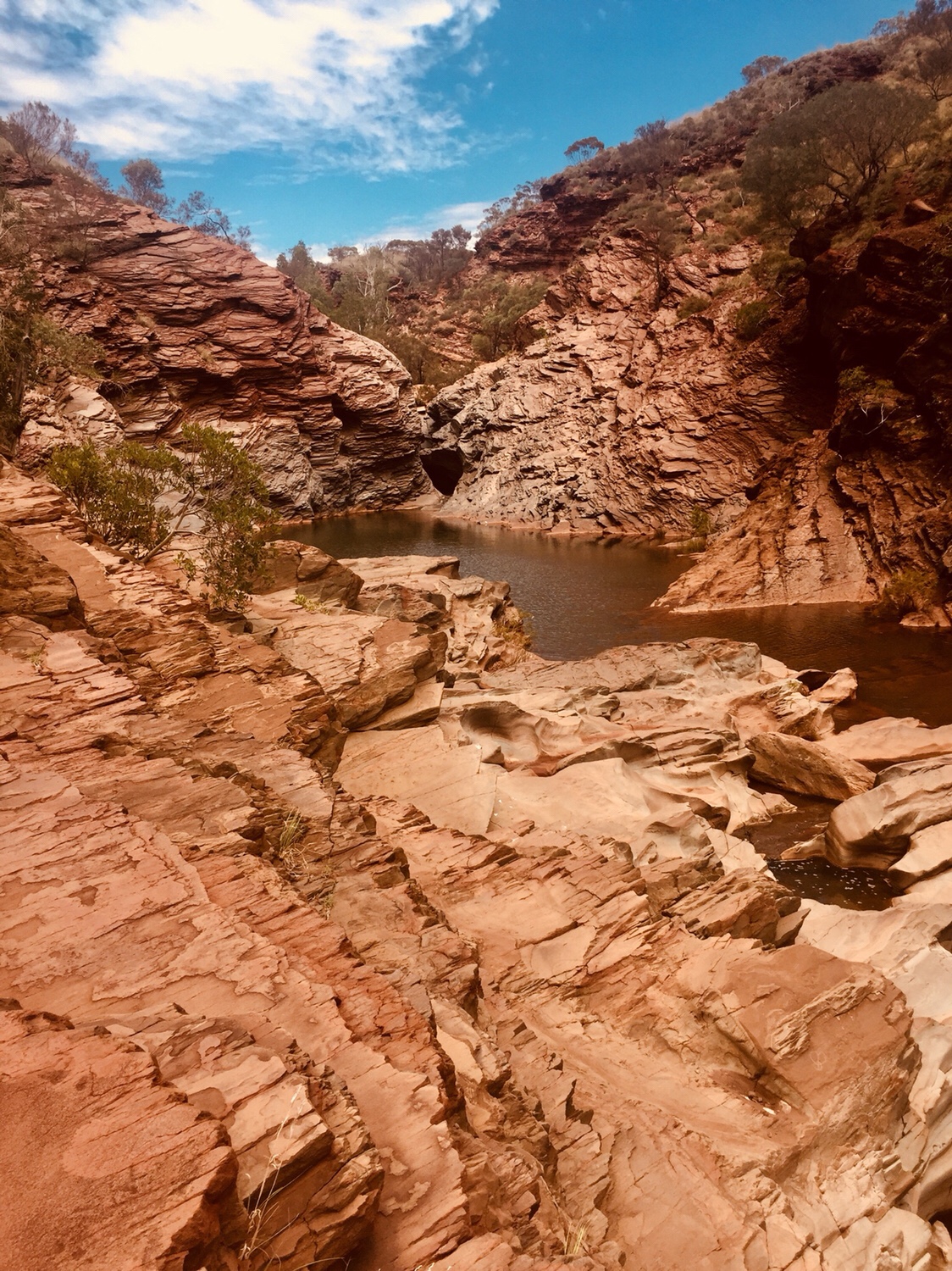
My days off are spent exploring. I pack up my car and head off into the wilderness. I barely pass a sole on the road so I set my cruise control to 110 and crank up the stereo as I relax back. Every corner, every crest reveals a new stunning vista that I will never tire of. Lush greens and burnt reds rush by. Small birds swoop and dive alongside the car. Dragons and lizards of every size and colour warm themselves in the hazy heat on the slate grey road and I marvel at how you can feel so trapped and confined in a town that is surrounded by a landscape that makes my heart sing out with the beauty of what I see and the freedom that I feel. A vast colour palette sweeps throughout this wild and ancient place. It starts with the white and golden sands of the west coast beaches, the turquoise blue of the ocean and the rainbow colours of the reefs that surround the Mackerel Islands and the Dampier Archipelago, providing a spectacular home for sharks, turtles, manta rays, huge whale sharks and shoals of tropical fish. It ends with the deep red gorges and the blue/green watering holes of the many national parks. It is summer at the moment and the sun blazes down, most days a hot and humid 40 plus degrees. The red rocks burn my hands as I scramble to the top of mountains or the bottom of gorges, searching for fern lined pools and cascading waterfalls to cool me down. Of course, with the hot sun come the desert storms and the torrential rains. Most nights the sky will come alive, like an amphitheatre of lights, the distant thunder rolling on into early hours.
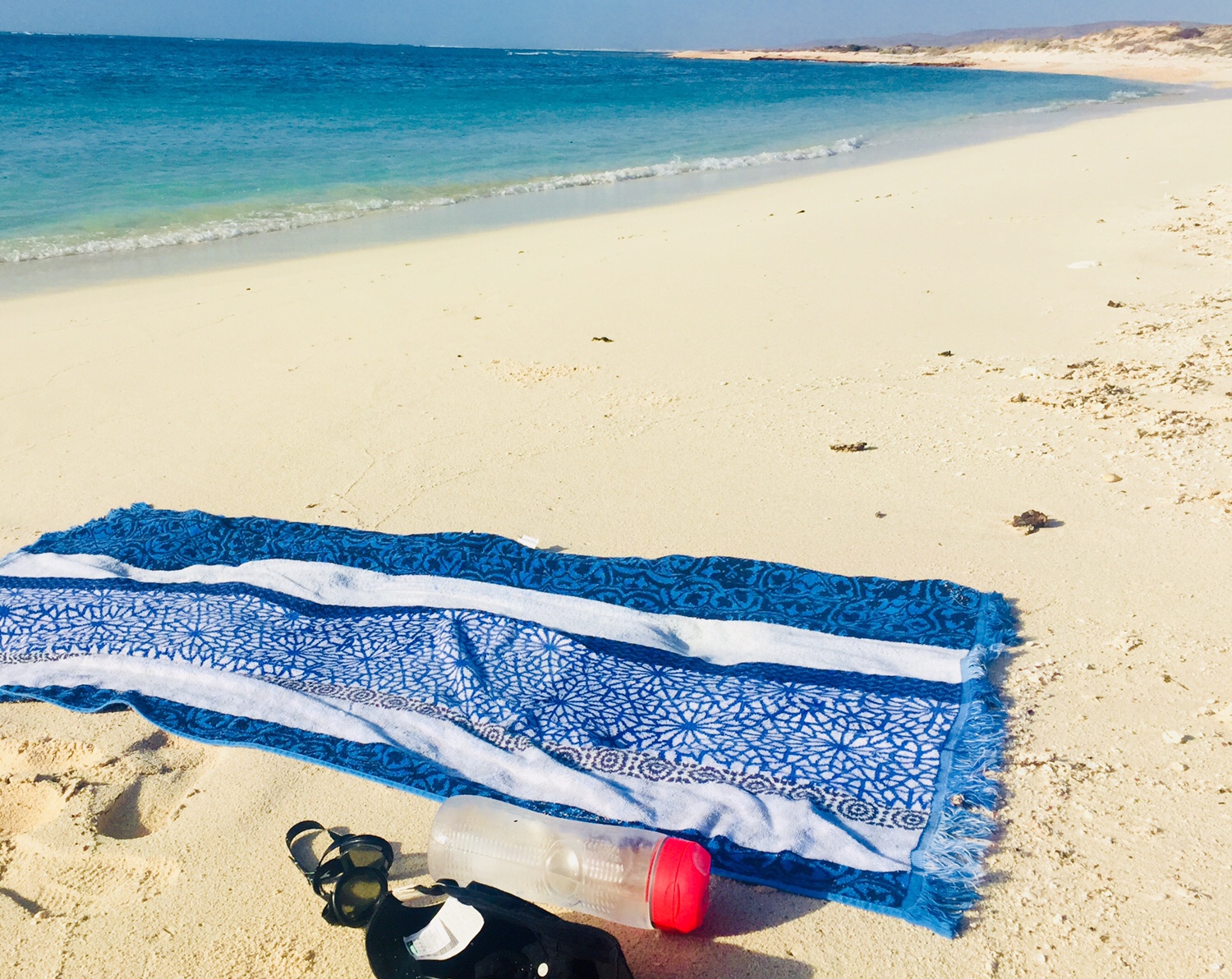
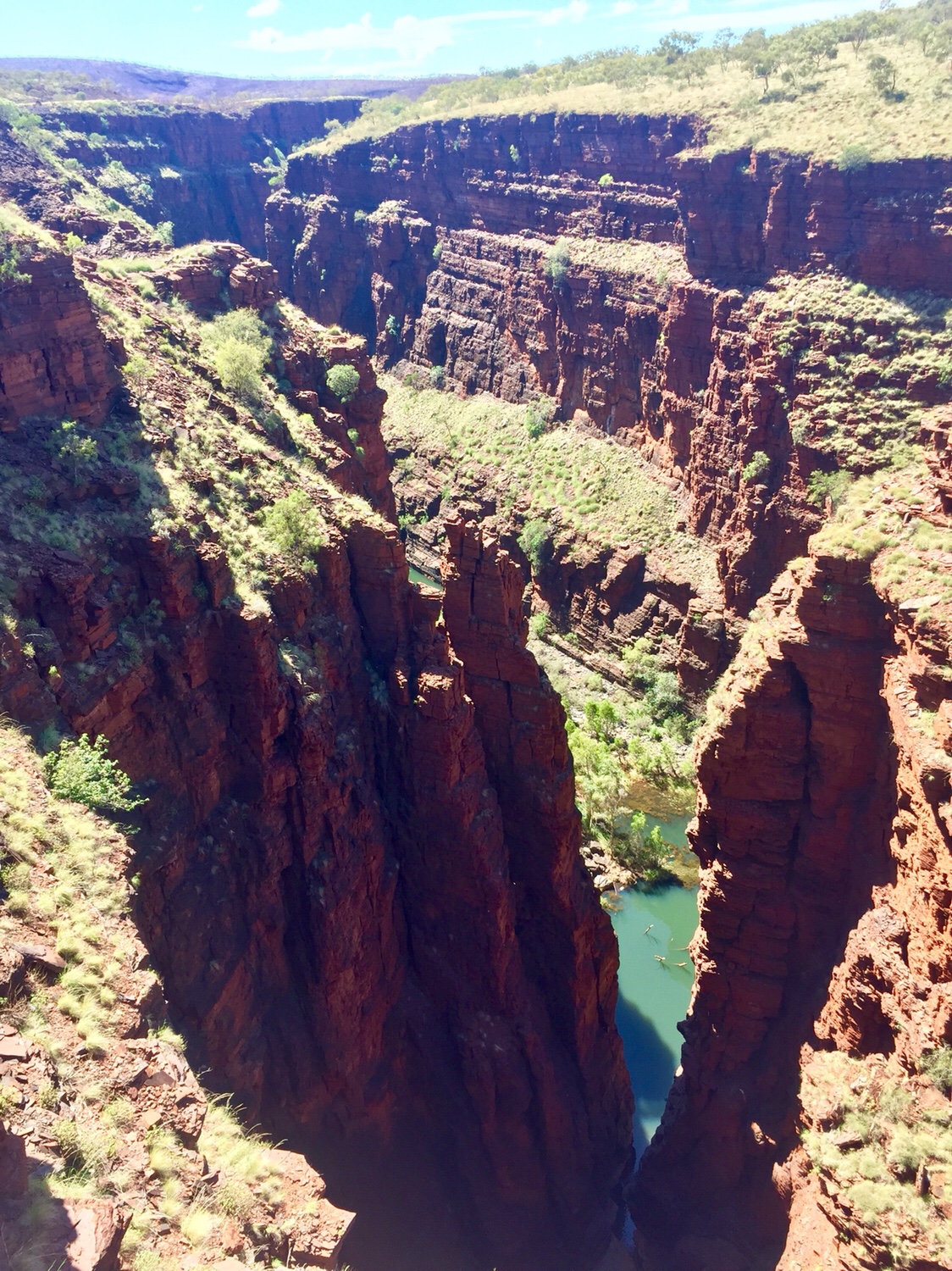
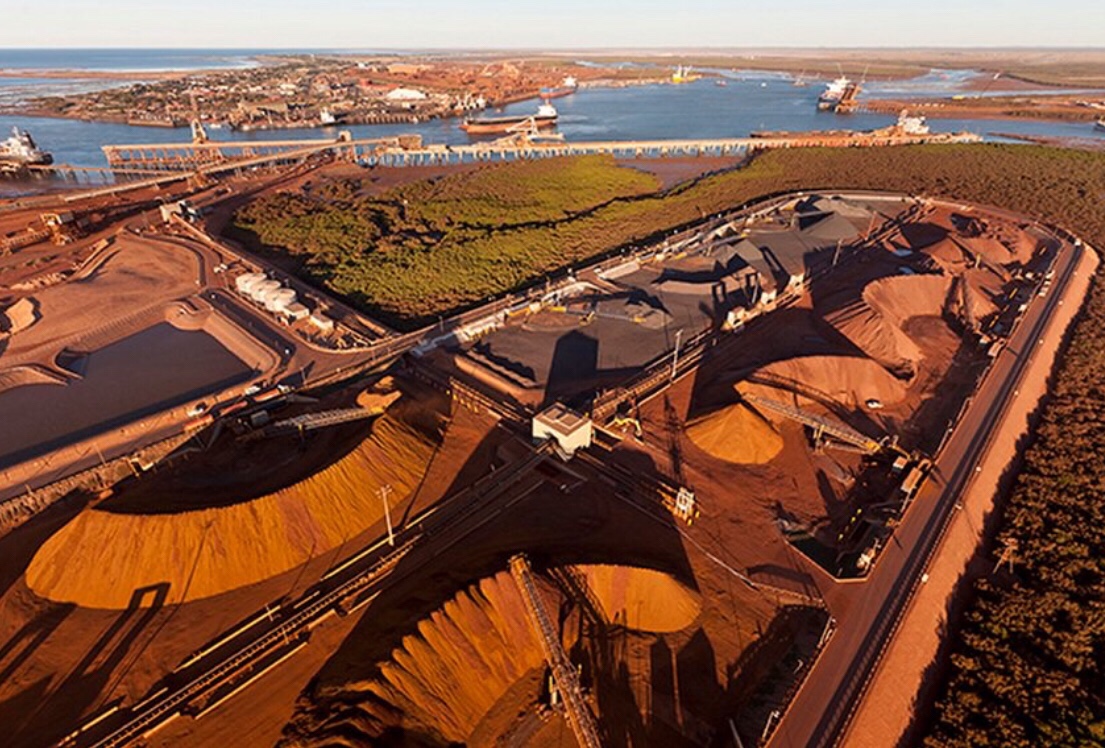
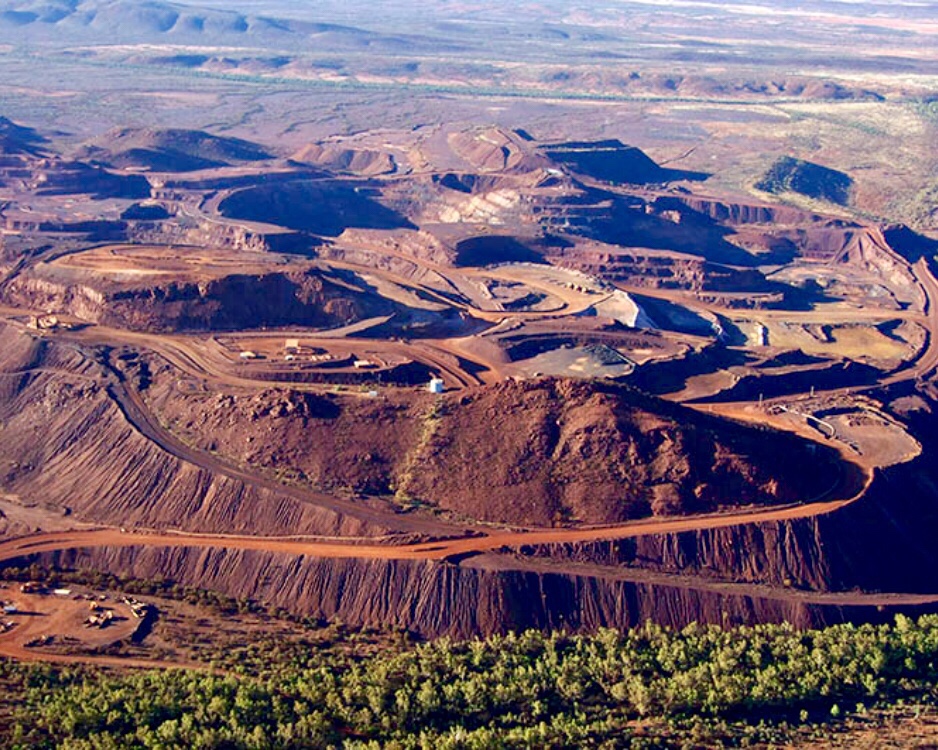
As expected, the mining has impacted the environment substantially. Huge diesel trains nearly 2 kilometres long chug up to 25,000 tonnes of iron ore from the “pit” to the processing plants to the ocean. Massive docklands at Dampier and Port Headland house huge cargo ships ready to set sail to the rest of the world. Road trains fill the highways and buses take a steady stream of workers back and forth, 24 hours a day. Everything and everywhere is coated in a fine film of red dust. The deep ugly scars inflicted on this amazing country will be left long after the minerals have gone and the miners have left. Huge holes the size of small cities remain, whole sides of mountains simply cut away, gone forever, and places like Paraburdoo become eerie ghost towns, abandoned as fast as they were built.
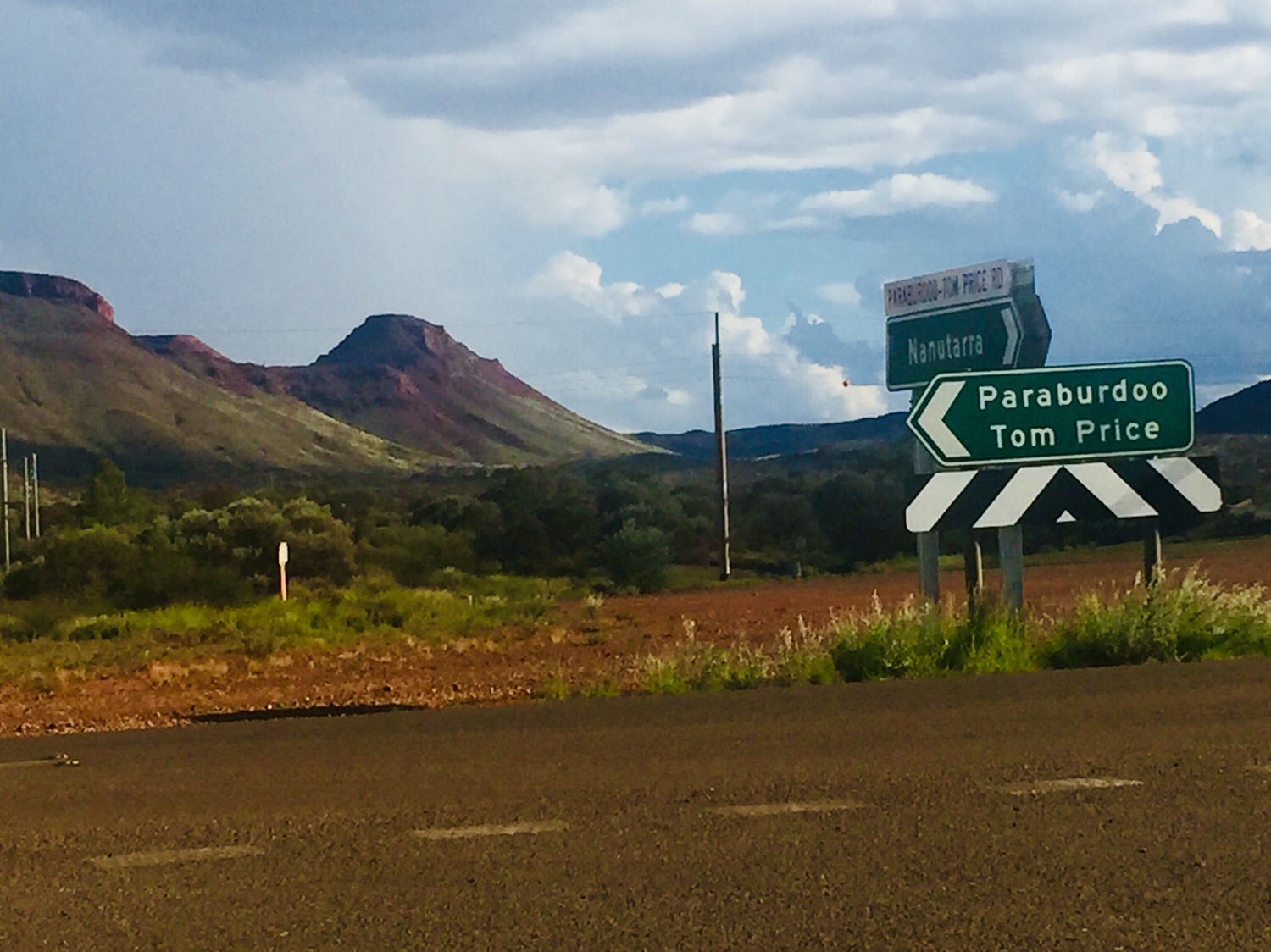
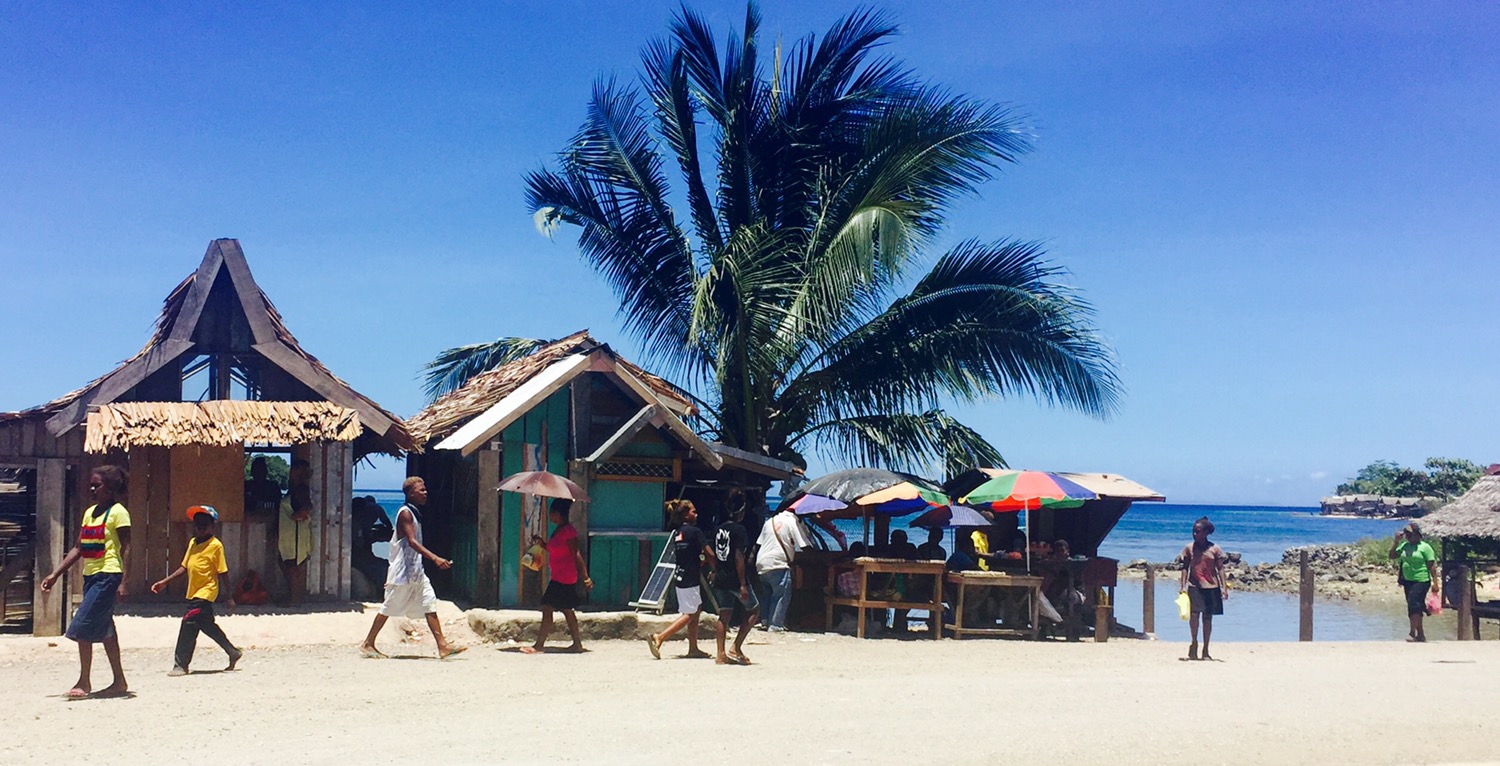
But there is a light at the end of the tunnel, for Paraburdoo at least. Prices are rising and the mines are increasing productivity. The town is having an upgrade and the population is set to expand. Who knows? Maybe it will return to its former glory. But I won’t be staying around to see it. In a town where everybody is employed, occupational health and safety is placed at the top of an employer’s agenda (everything except mental health that is) the oldest resident is 65 and the sick have long since returned home there is not much excitement to be had for an emergency nurse. It’s nearly time for a new adventure.
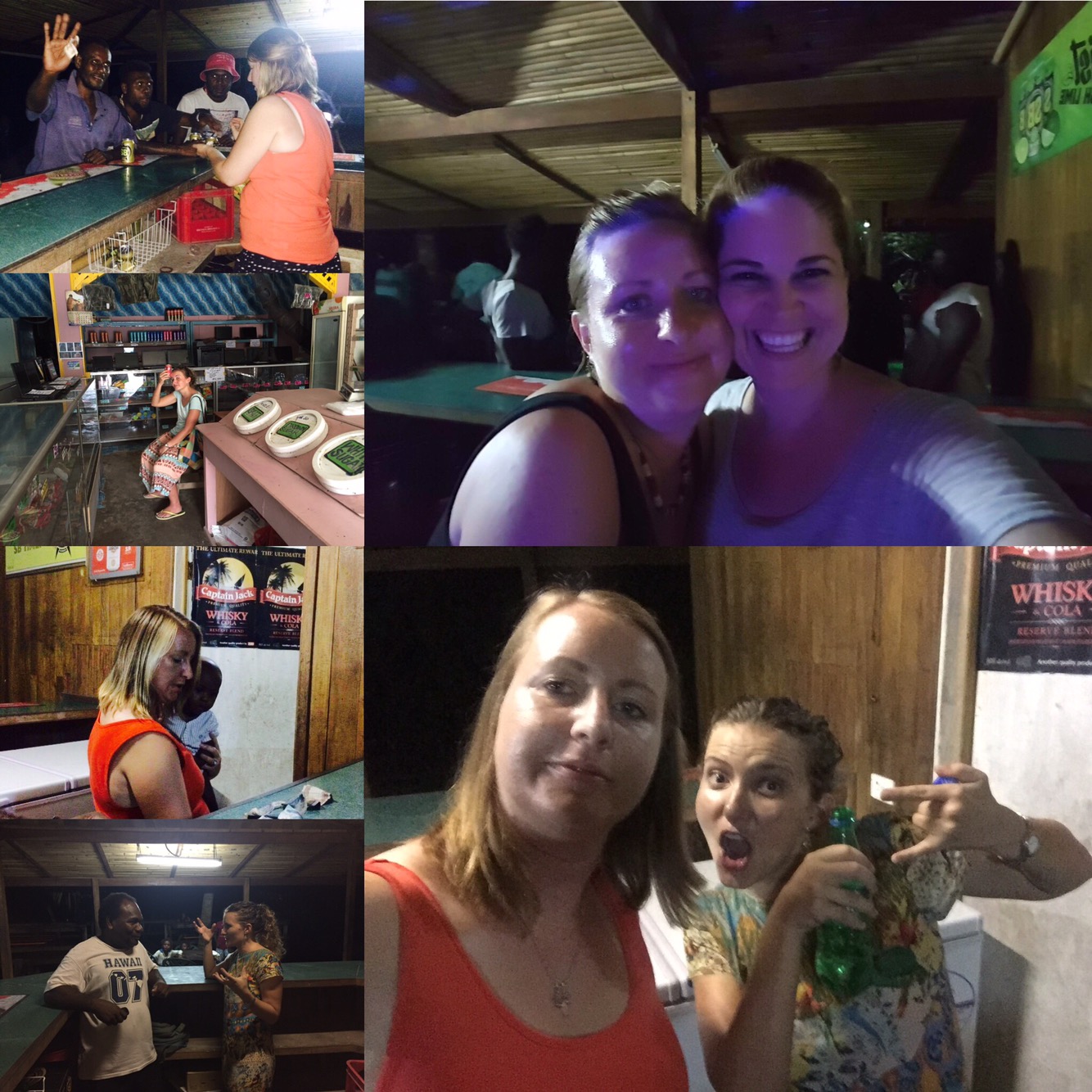
Everything you buy will be more expensive, shipping will be more expensive. Internet speeds will be slower and that, for some strange reason, is how they like it. If you want anything remotely sophisticated, forget about it. The height of social activity is collectively getting drunk.
I lived up there for 10 years, leaving was the only good thing that happened.

Captain Cynic had a great time. Www.forums.whirlpool.net.au

The Journey. 

They warned me to not expect to achieve anything. They said to get rid of any grand ideas that I would be the one to make a difference. I was never expected to make a change. 

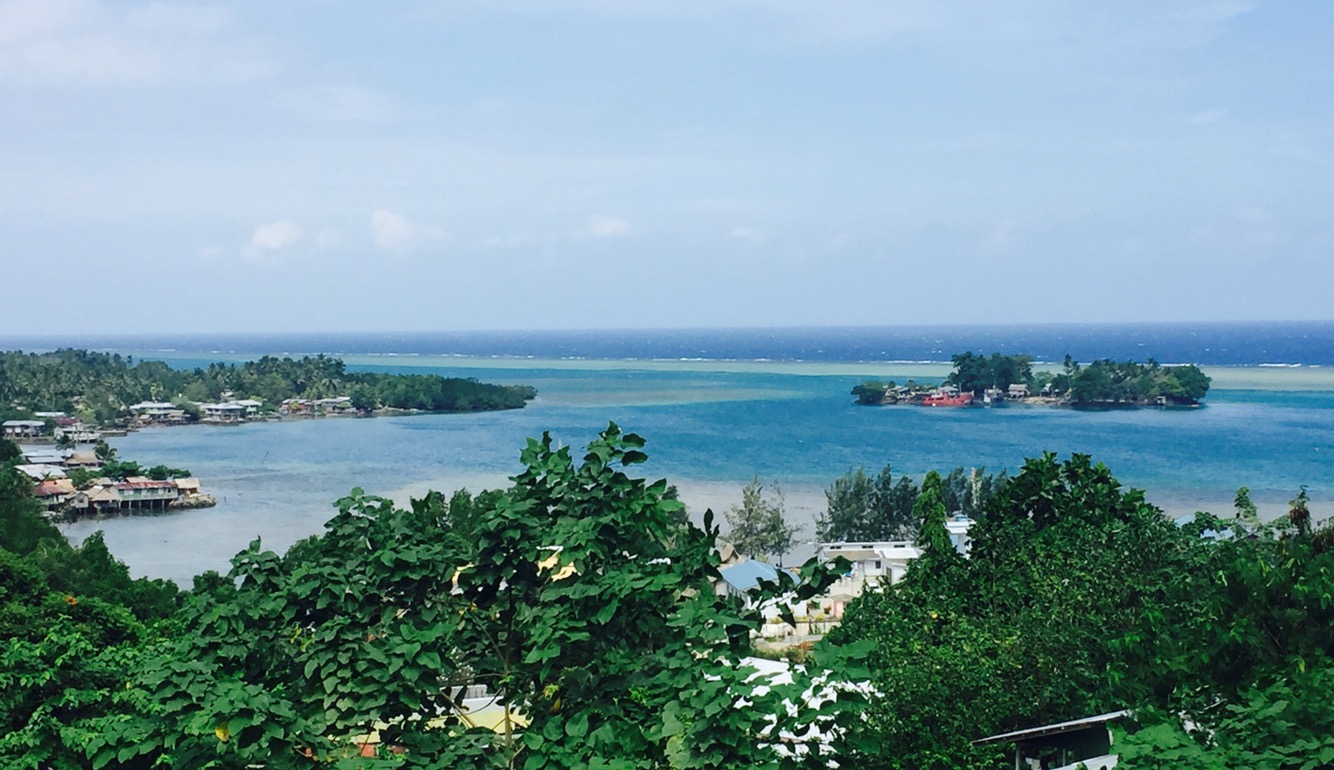
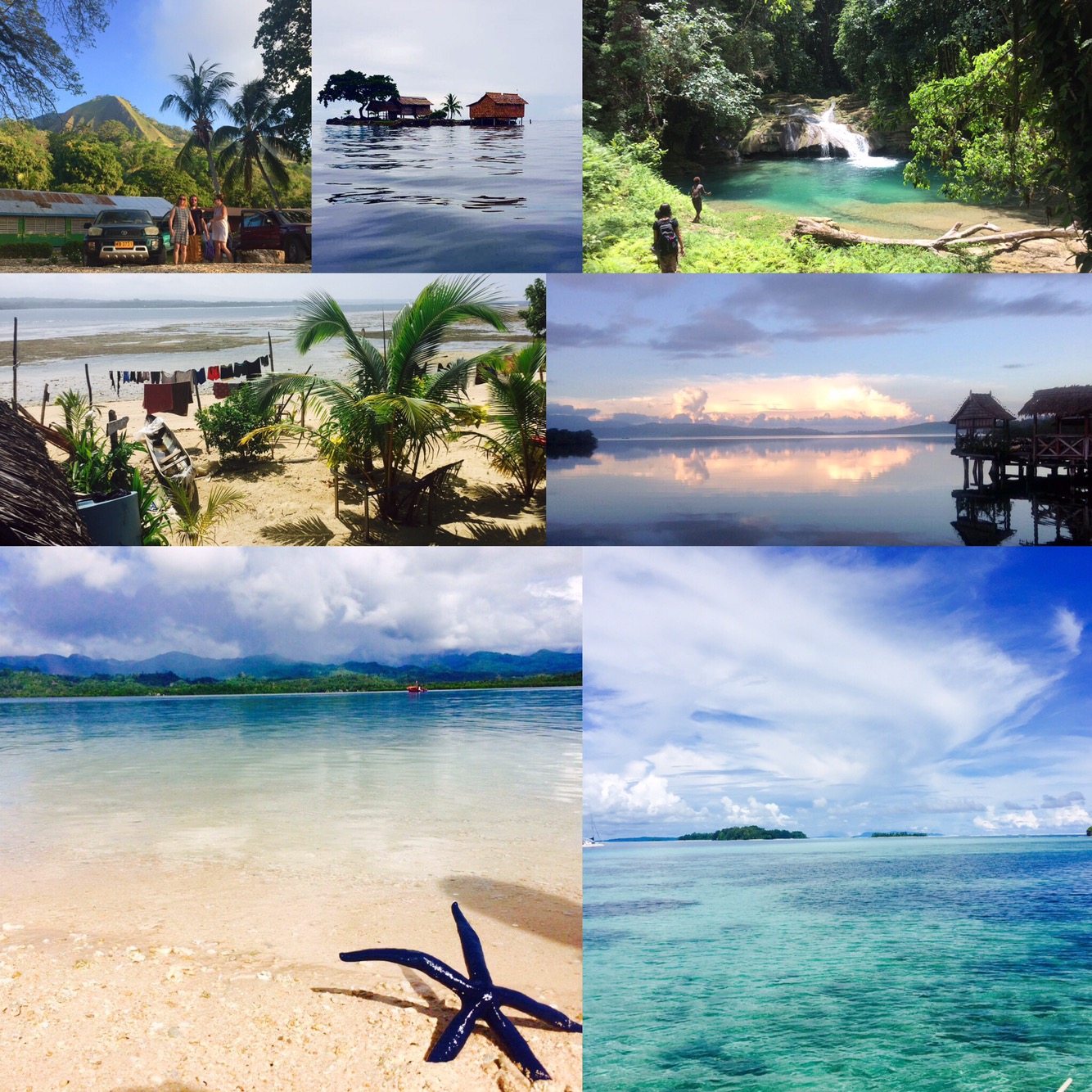
Photos of Auki……

Of course, I ignored it all. Selfishly, I hoped to leave a legacy. Naively I thought I would be the one who would be different, who would make a difference. 

But I am not special and I am not unique. My assignment played out exactly to the tune that we had all been told. 

Not all work……

My first three months were full of inspiration, my fourth a pit of hopeless doom and gloom, my halfway mark saw clarity in my role, by nine months time was running out, at eleven everything was futile, my goal unachievable. 

Zumba Auki Style…… 

About a month ago I received an email from my volunteer agency. I am told it is normal to feel a range of emotions. Sadness, guilt or regret about leaving, perhaps excitement about returning home or even relief that the experience is over. I am advised that I will feel lost. I will experience reverse culture shock and readjustment stress. Mostly I will have difficulty reconnecting with friends and family and it’s best that I don’t expect anyone to be interested in hearing about my time as a volunteer. 

Food in the Solomons…….. 

I remember thinking at the time that maybe I don’t want to go home after all. Home sounds like a horrible place to be, my life dull and mundane, my friends cruel and uncaring. Of course I ignored it all. This was not going to happen to me. My life is different, my friends are different, I am different.  

Travel in the Solomons (never easy) 

Again, I have been taught a lesson about my own arrogance and naivety. My emotions and my actions have been textbook. But my friends. My friends have been amazing and I’m not sure I would have liked to spend the last fortnight anywhere but here. 

Traditional Solomons……. 

The initial relief I felt was enormous. I had not realised how hard I had been clinging on to some hope that there would be a light at the end of the tunnel. Unfortunately the only light was an exit sign but I was more than happy to leave. There was nothing more that I could do. 

I have been back three weeks now. I spent two curled in the fetal position on a friends sofa. I watched back to back movies and ate all foods I have missed. I went on bike rides, road trips and long walks in the cold. I thought these were all the things that would make me feel better but I only felt lost, a huge sense of loss and I missed my crazy past life. 

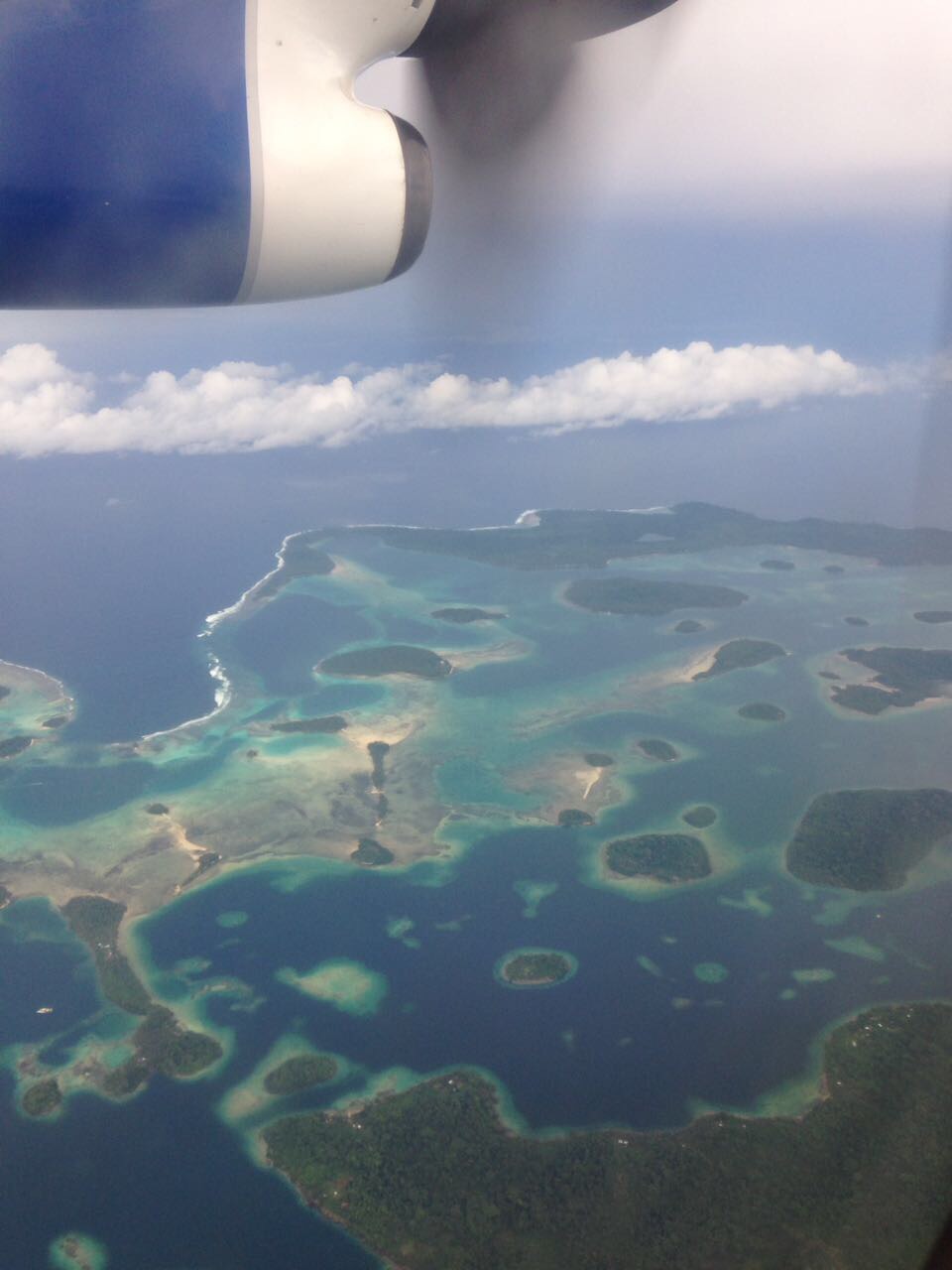
Views of the Solomons…… 

But it is, of course, all about the journey, not the destination. I maybe feeling weary and a little sore right now but I will soon only remember the good times. I believe that I have grown as a person, I have learnt that I am capable of more than I ever imagined. I have met inspirational mentors and amazing friends who I hope will remain in my life for a long time yet. But mostly, I am inspired to find out what is next on this crazy journey that is my life. 

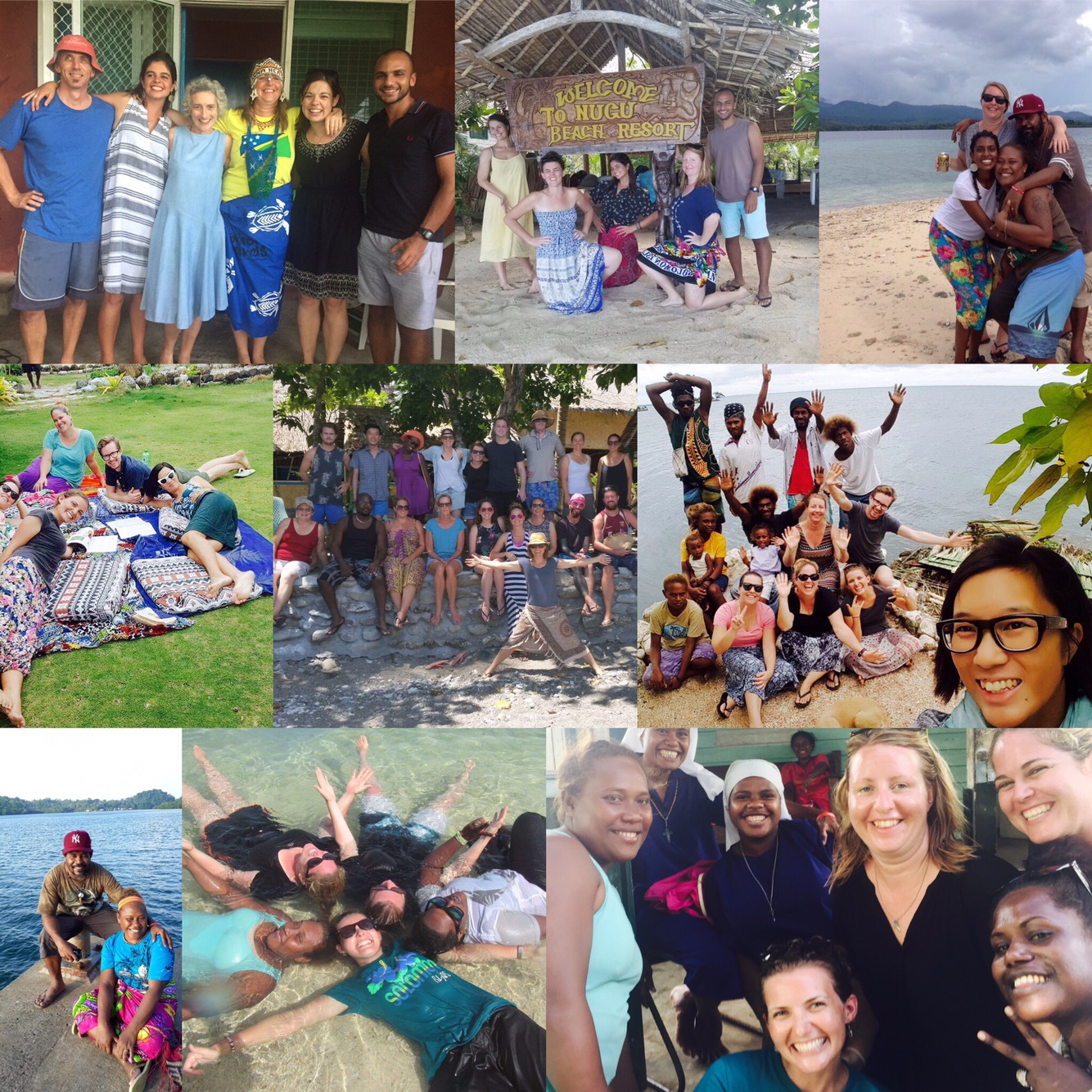
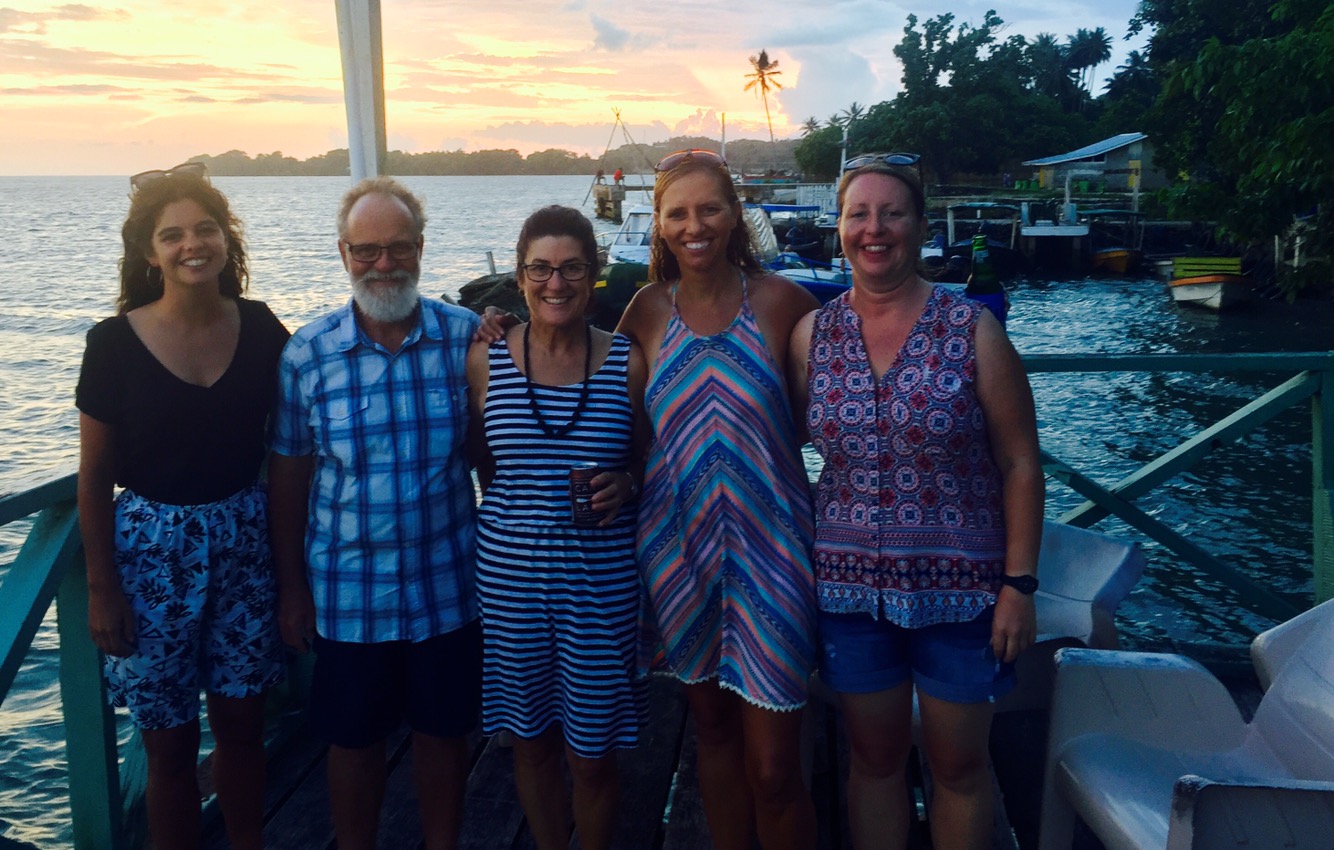
Its the friends you make…..

Onwards and upwards. 

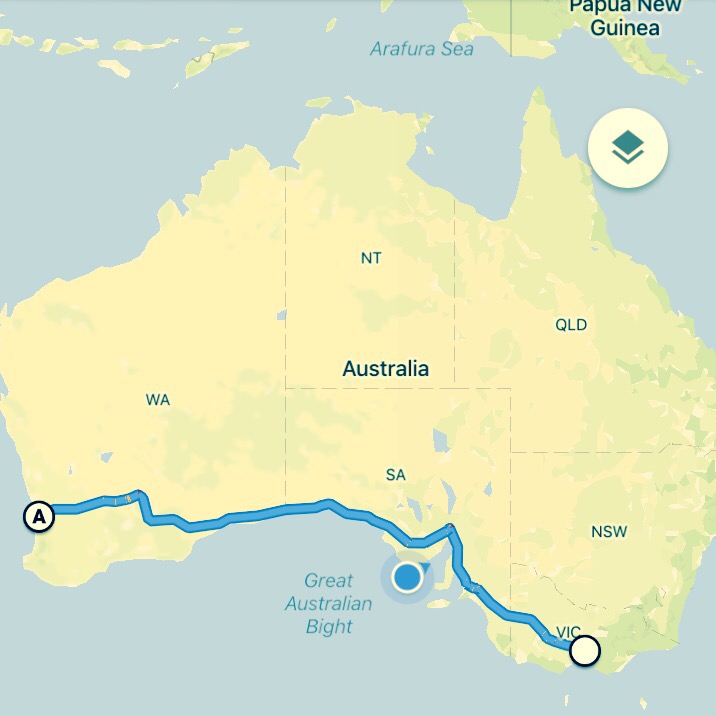
So what is next? I have my life packed up in the back of my car and I am five days into an epic journey that will take me from Melbourne to Western Australia, exploring the Eyre Peninsula and the Nullarbor along the way. I have a job in a small hospital in Southern Cross and I’m excited to be getting back to nursing. As I am writing this, I am washing down Coffin Bay oysters with a crisp Port Lincoln Sav Blanc, wrapped in a blanket as I watch the sun set over the bay. So please, don’t feel sorry for me. I am a survivor and as I always say: Everything is going to be OK. 

So, I will leave you with my farewell speech. I think it gives a simple summary of the last year: 

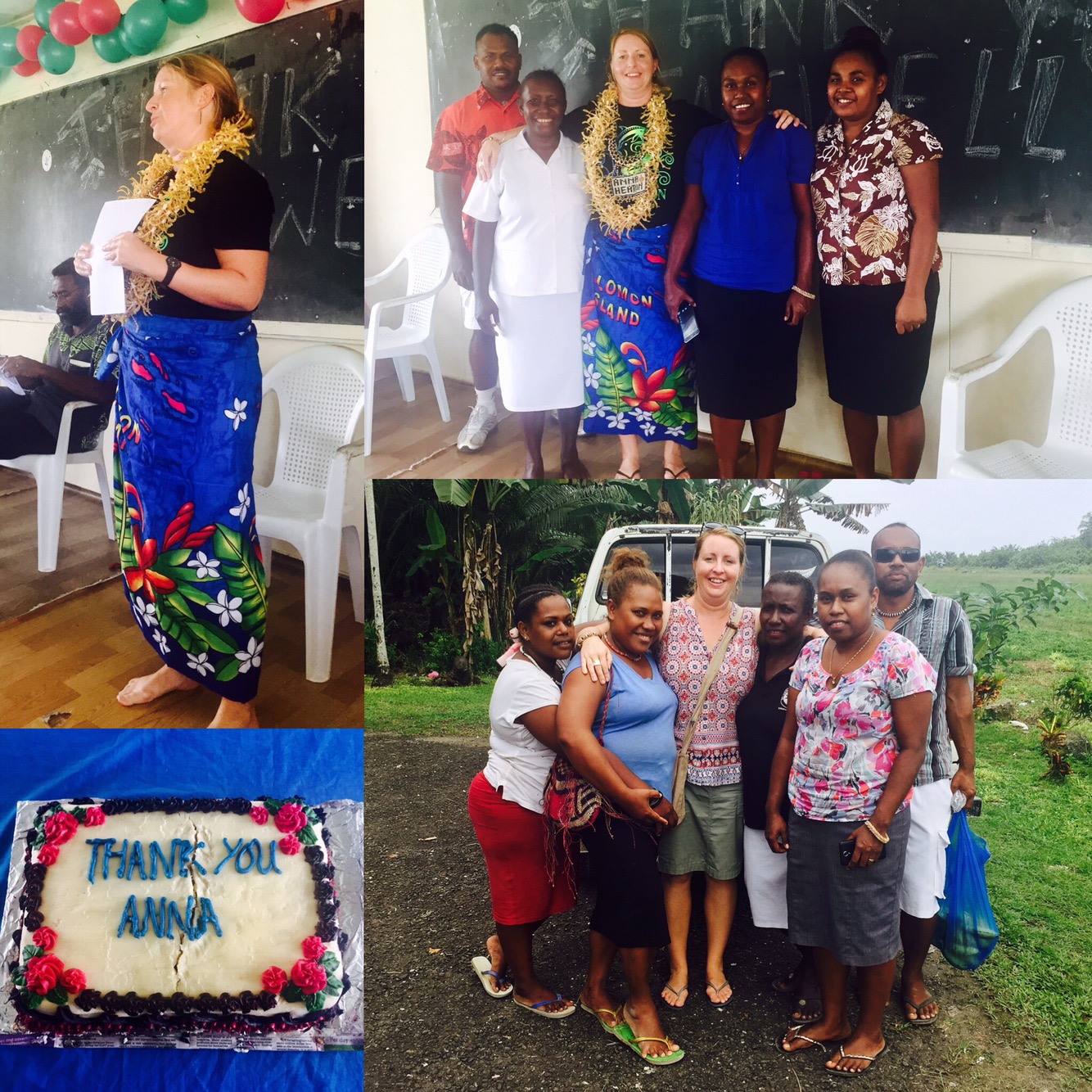
My Last Days ……..

For those of you who don’t know why I am here, my volunteer assignment was to develop an education programme to help build competency in the nursing department.

Building competency in healthcare is a mammoth task. It is a task which starts at the beginning of your training and never ends. It is a task that is not just about learning practical skills. It involves theory and ethics and morals and critical thinking and common sense and emotions and values and religions and beliefs. There are never two days the same. How do you teach that to a whole hospital in one year? 

I went back and forth between the Solomon Island Nursing Council and the Ministry of Health to find out how they wanted to assess competency. Nobody had any idea so I decided to look at my own experience. I am registered in both the UK and Australia. Every year, I have to sign a declaration to say that I have completed at least 150 hours of Continuing Professional Development. 
Healthcare is forever changing. We are constantly discovering new treatments, new procedures, new diagnostic tests, new cures and unfortunately new infections and new diseases. As a nurse, when we qualify, we commit to a career of lifelong learning. How can we deliver the very best care to our patients if our knowledge and expertise is not kept recent and relevant? This is an essential and fundamental part of the nursing pathway and it is one, that by the true nature of our calling, only we are responsible for.

3 hours a week. That is all they asking for. Sounds easy. Right?

This year has been the most the most frustrating yet the most wonderfully fantastic year I have had in my life so far. It has been a rollercoaster of emotions, a year of high highs and low lows. As I have been teaching over the last year, all feedback should be constructive and should  always end on a positive note, so bare with me as I share my frustrations. It gets better, I promise.
I decided to start with clinical placements. The main purpose of this was to get know you, to understand how you work and to hopefully discover the best ways to help you learn. Your shyness was so painful to see, your discomfort at having me there so palpable that I struggled to break through. This I believe has been my biggest and highest hurdle and I am aware that many of you are still unsure, possibly even afraid of me. Even now, as I walk into a room, the silence is deafening. I am just an ordinary nurse like you and I promise, I don’t bite.
The next plan was to motivate and empower the ward supervisors. The education team sit in an office, we are removed from the clinical environment. We can give you the training and the tools you need, but we need someone to take responsibility for delivering education on a daily basis in the clinical area. We ran a three day workshop on assessing competency, clinical teaching, constructive feedback, reflective practice and the importance of CPD. We gave you the tools and the response was brilliant. Then nothing.
You all said you wanted help in understanding research papers. I started a research reading group and posted papers on the board every week. Every Friday for 6 weeks I sat in the classroom and no one came.
I tried to increase motivation for CPD in the ward areas by developing Education Link Nurses. I would train them in research and help them to develop short trainings that were relevant to their own ward area. A fantastic response was received but once again, no-one came.
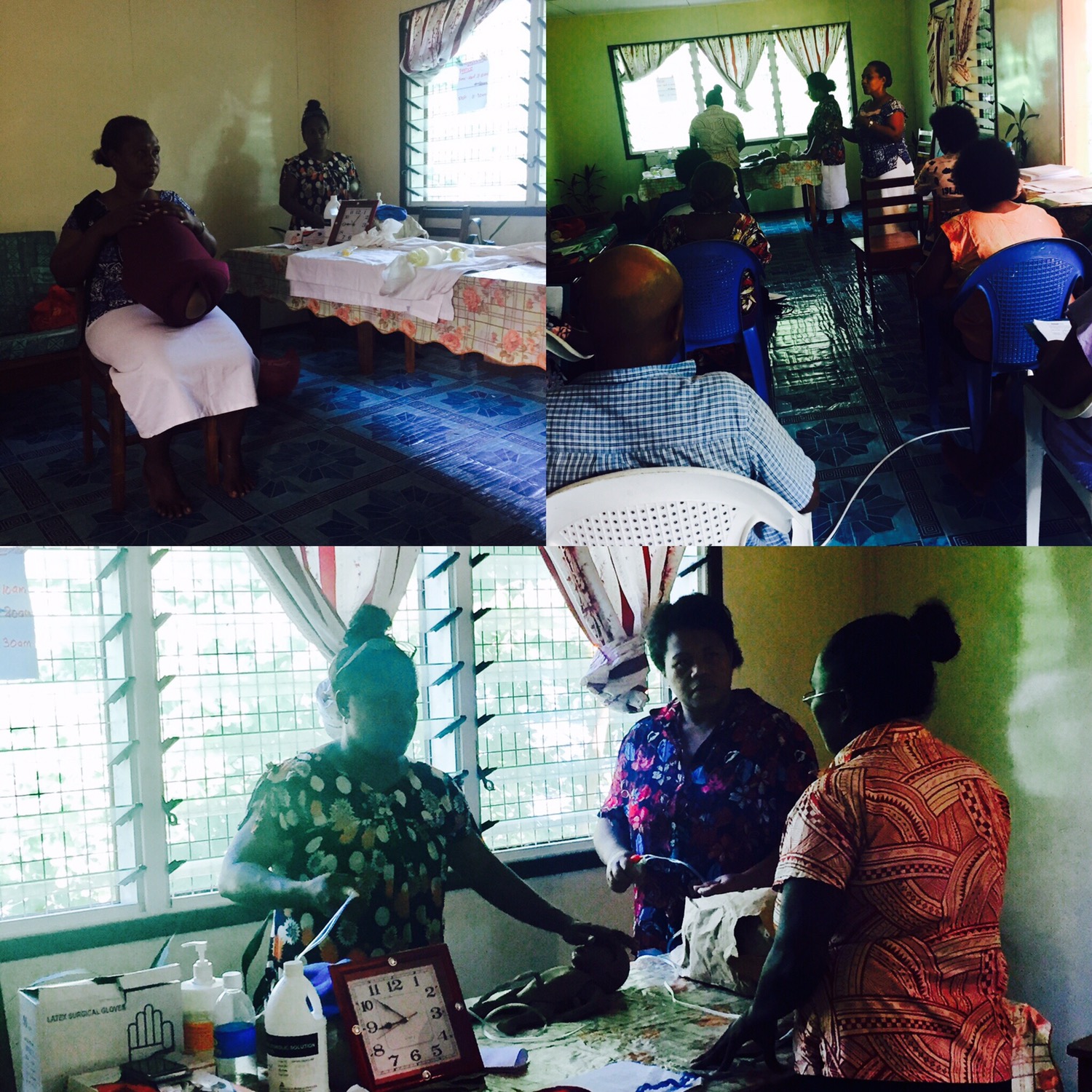
I trialled clinical skills workshops in the maternity classrooms. A drop in session that would take less than 30 minutes that would run whenever you were free. Nobody came.
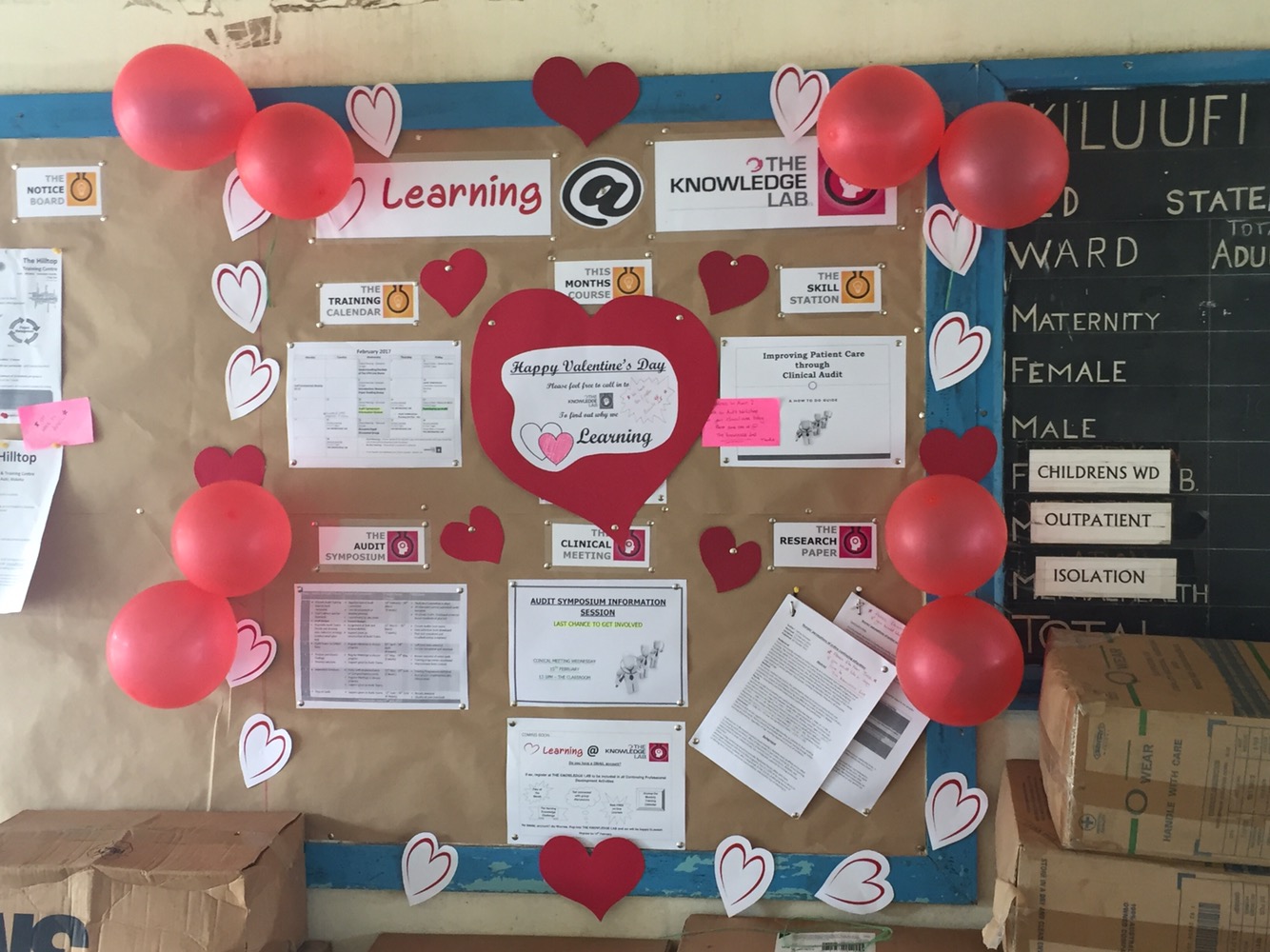
I tirelessly encouraged staff again and again to come to The knowledge lab and sign up to one of the hundreds of on line courses we have. A wealth of knowledge is waiting at your fingertips, an amazing resource that I can’t believe is wasted. I know you are unsure of computers but I was always there, happy to teach, happy to help. To the few that came, I applaud you. An hour is all it takes. Don’t be shy, give it a try! I have prizes.
Every Wednesday I held a clinical meeting for an hour. Time and again, I sat alone in an empty classroom. Those times when people did come the feedback was always positive. I was told: we need to know this. We should be doing this in our clinical area.
But I’ll leave it there, I think by now I have made my point. 

But it has certainly not been all doom and gloom. Far from it. I would like to mention that there are a few good tales to tell.
We have four nurses, and it’s been a tough start, but if they work hard and put in the time, they will end 2018 with a Diploma in Child Health.
We sent more than 10 scholarship applications off for nurses to study for post graduate diplomas and masters in Australia and I look forward to hopefully meeting some of you over there next year. 
I have been motivated by the enthusiasm that the younger nurses have for education. I hope you keep this up and I hope that everyone encourages them in this, especially the ward supervisors.
Our ADON, Richie, has completed many online education courses and is the only one who has taken not one, but two prizes. If he can do it, so can any of you.
And I can’t leave it without mentioning Leon and the upcoming Audit Symposium. Leon has shown a drive and a passion for improving practice through research and has been instrumental in the development of this programme. I am proud to say that we have completed stage one and have 5 audits already included. I’d like to share some of the results with you.
Joana and the children’s ward have been using reflective practice to learn from each child death. It has been a great learning experience and we have already seen improvements in the care given. We highlighted lots of areas for improvement and education. As a result, we have arranged a team of Australian paediatric doctors to deliver workshops in August.
In the Education department, Isaac and Julie have found huge gaps in our documentation and handover practices. This was resulting in clinical errors and harm to our patients. Hopefully the workshops they are about to deliver (if anyone shows up) and the development of hospital polices will improve this vital part of nursing practice.
Morris looked at absenteeism in the psychiatric unit and found that over a two week period more than 40 work hours were lost due to lateness. This is the equivalent of 5 shifts not worked. I think you’ll all agree that is a huge problem that exists througout the hospital. Hopefully Morris and his team will be able to improve this by next year. Finally, Leon and Roland have been working together to improve the quality of sputum sampling for TB patients. Leon found that nurse’s knowledge on the standards of practice was extremely low, with nurses unable to say how, when and why we take sputum samples. Possibly as a result of this, Roland found that less than 35% of samples received in lab were collected according to guidelines and that 65% were of an insufficient quality to process. They have developed a new policy and hopefully through education and training we will start to see a reduction in the mis diagnosis and mis treatment of TB patients. A highly worthwhile study.

I’d like to mention that as a result of this, both Leon and Roland have applied for a research fellowship to be completed here, in Malaita province. With the help and support of James Cook University they have a real chance to start reducing TB rates. I’m sure you will join me in a huge clap and wish them the best of luck.
Of course, I can’t go without sharing the fun times and the happy memories we have shared along the way.
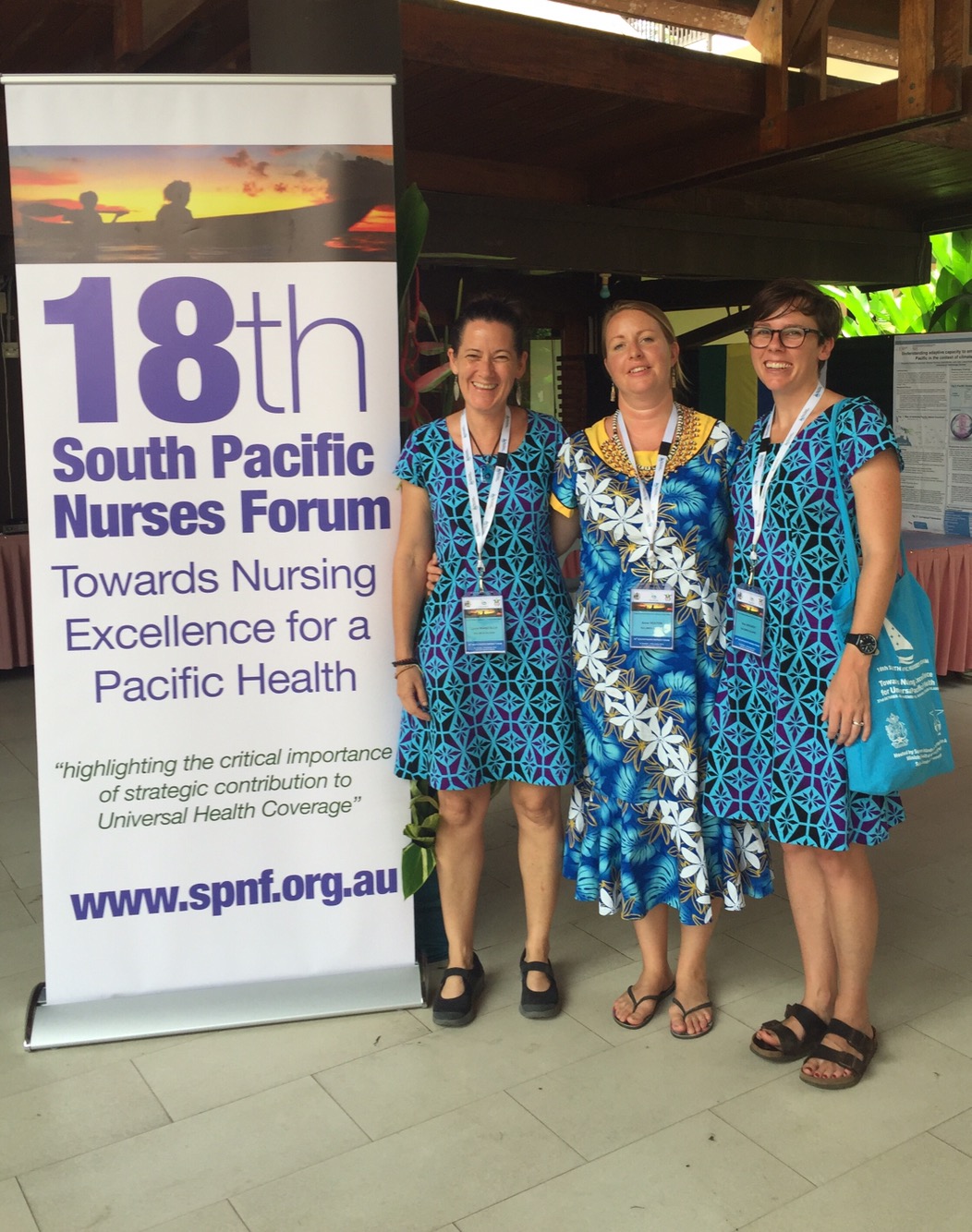
The first has to be the fundraiser. It’ll be fun they said! A good laugh they said. All I can say is it was an experience I am not sure I want to repeat. Drunken men licking my hand is not my idea of a fun evening. But! We raised enough money to send ten of us to the south pacific nursing forum.
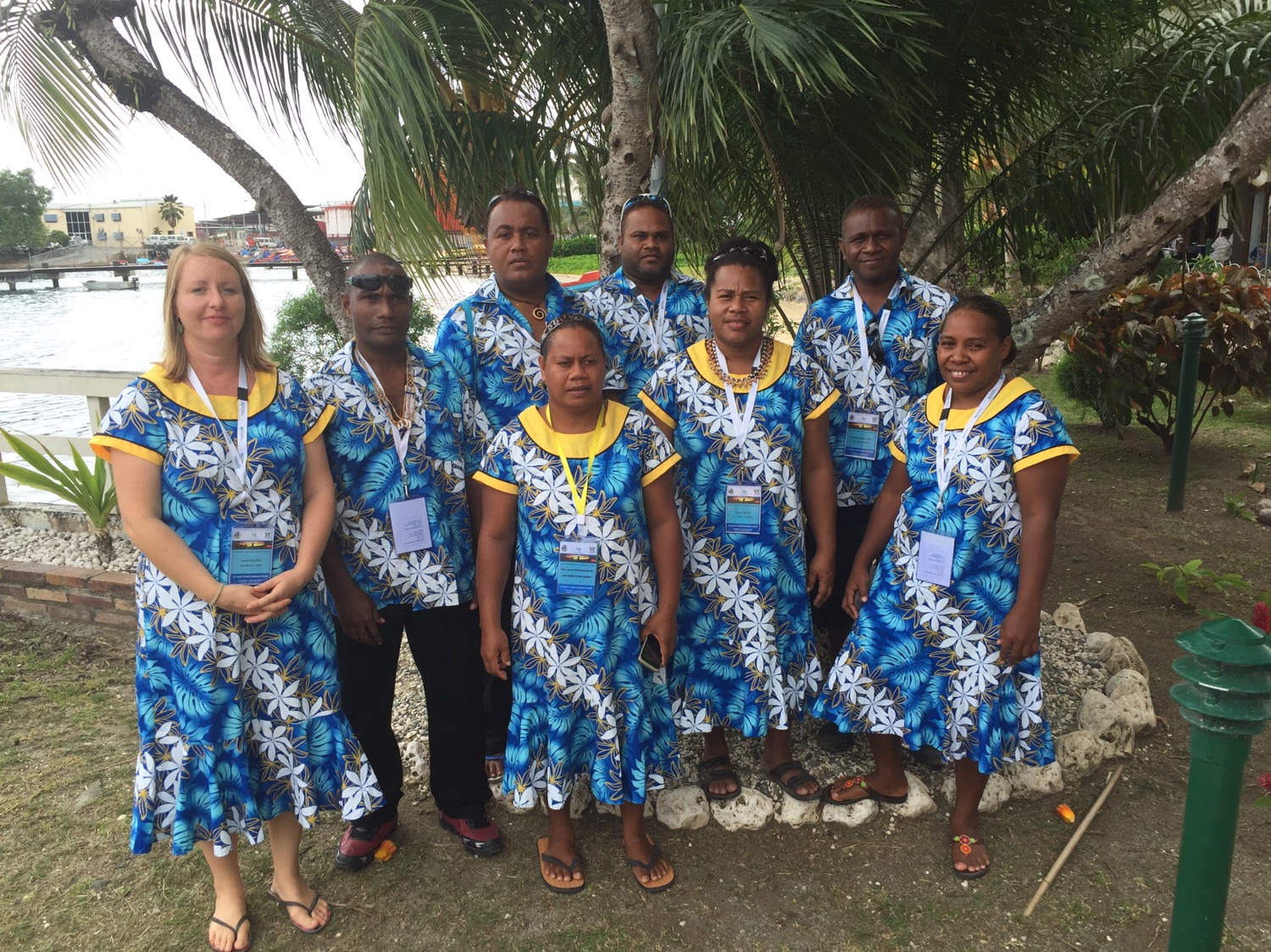
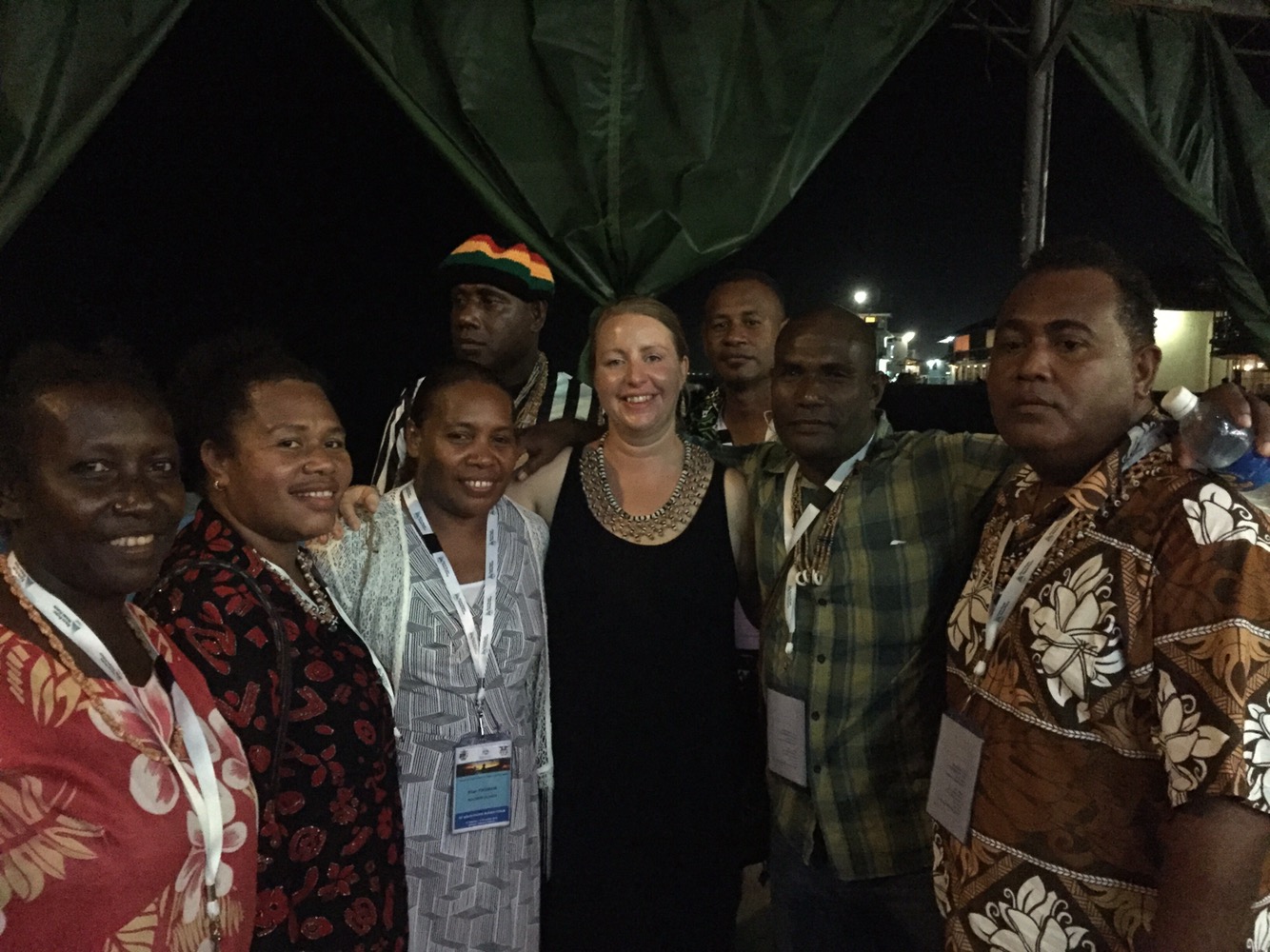
This was a great week, in particular was the chance to be involved in the custom dancing. The pictures and the memories from this I will keep and share forever.
The trip to south Malaita with the Maternity team. Malaita is one the most beautiful places I have ever lived and to see it with you guys made it extra special so thanks, for an amazing adventure. I will not mention the horrendous journey home but I do recall lying on my back, on a jetty, singing songs to the sky as the sunset. Happy memories.
And last but not least was collecting the pigpig for my leaving party. I laughed until I cried. Thank you all for making this such a good night to remember you all by.
So, I think I am finally done.
But I cannot go without a massive thank you to both Julie and Isaac. It has not been an easy year for you. I have invaded your office space, increased your workload and continuously moaned and complained. You have taken this all in your stride and I thank you for that.
Isaac, I apologise for always bossing you about and I can imagine you have had many an evening letting off steam to Nester. To Nester, I apologise for sending your husband home grumpy. I hope I have managed to teach you at least something and that you remember me for the times we laughed and the fun we had. I wish you all the best in whatever journey you choose to take from here
Julie. You have been my guide and my mentor. I have been warmed by your friendship and humbled by your humility. Although my role here was to help you, I believe you have taught me so much more. I appreciate your vision, your drive and your motivation. I see you work tirelessly to try and improve things here, I feel your frustration and I am amazed at your resilience. A huge thankyou to you. I will always sing your praises and I will never forget you.
And here, at last, I will finish and I will bid you a fond farewell and an assurance that you will always be in my heart and never forgotten. Thankyou.

The exception or the norm? 

The exception or the norm? 

After nearly 12 months of dealing with the chaos that is life here in the Solomon Islands, I thought that maybe I had developed the skill of being able to pre-empt everything that could go wrong and hopefully troubleshoot it before it happened. Turns out I was living in La La land (literally). This country has a way of keeping me constantly flabbergasted that the wheels keep on turning despite the fact that all of the cogs are broken.

Check in for Munda-No wonder everybody is confused

We were supposed to get on the Thursday morning boat to Honiara to catch a flight to Western Province that afternoon (1st mistake). At midday on Wednesday we were informed that the boat had not arrived in from Honiara and therefore, would not be leaving tomorrow. Que frantic phone calls to Solomon Airlines. There was a flight leaving tomorrow but it would land 15 minutes after our flight to the west, the plane today was just about to leave the runway and was fully booked. Damn it! I had booked to do my open water dive certificate and the course started on Friday morning (2nd mistake).
The saga ended with an expensive Thursday afternoon flight, a great night catching up with friends at trivia night in Honiara and a Friday morning plane. Not so bad. 

By Friday afternoon, I was partaking in my first dive and by Friday night, I was three sheets to the wind putting the world to rights with my mate Kate.
Thankfully, the dive course went by with only a few minor hitches. My dive instructor was Belinda from http://www.mundadive.com and I couldn’t have asked for anyone better. She was cool, calm and collected and I think with my spluttering and flailing around in the depths, this was not always easy to maintain. She made sure that it was an epic adventure I wouldn’t forget. I’m told the diving is among the best in the world in Munda. Although I have nothing to compare it to, I still feel able to say that it was pretty fantastic and definitely something I am eager to do again and again.

Belinda and my dive buddies

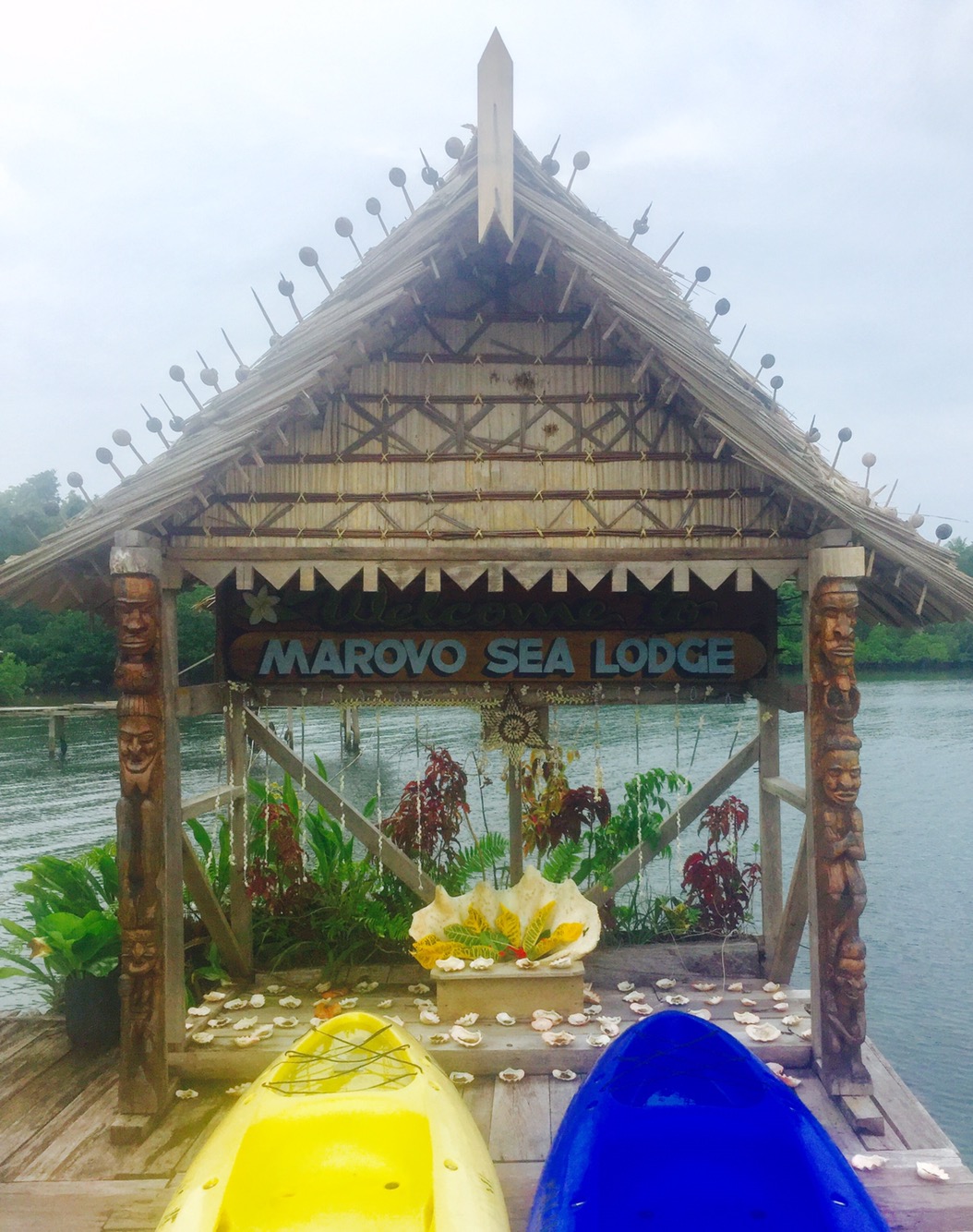
We spent four amazing nights at Agnes Lodge in Munda before heading off to “the world’s finest double-barrier-enclosed lagoon” (www.lonelyplanet.com/marovo-lagoon). This was a three hour and $3000 dollar trip by OBM so we decided, as intrepid pijin speaking travellers on a budget, that we would get the local passenger boat. We had done it a hundred times to and from Auki, surely this would be the same. We were so convinced in fact, that we even persuaded some fellow travellers that this was the best way to travel and they should come along too.
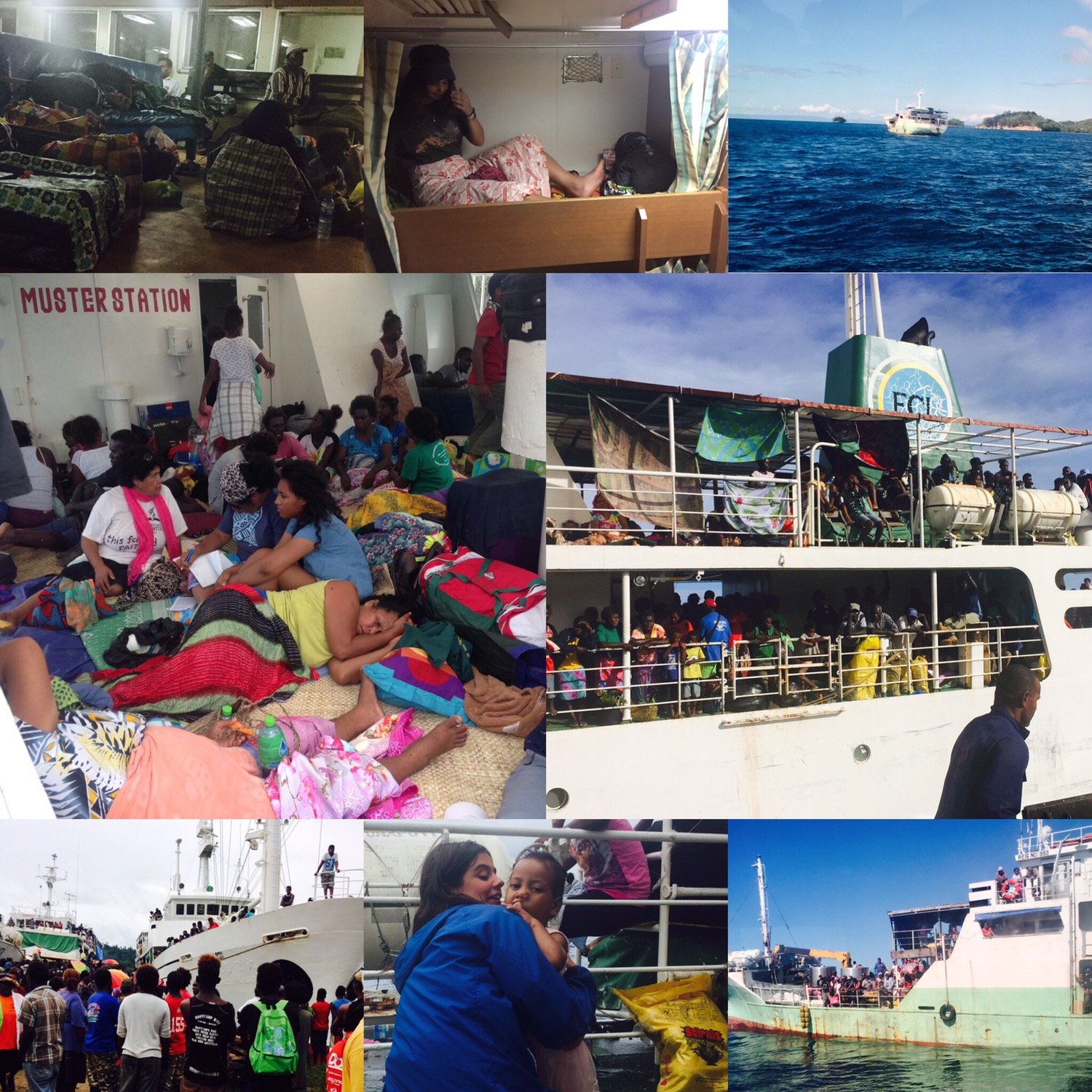
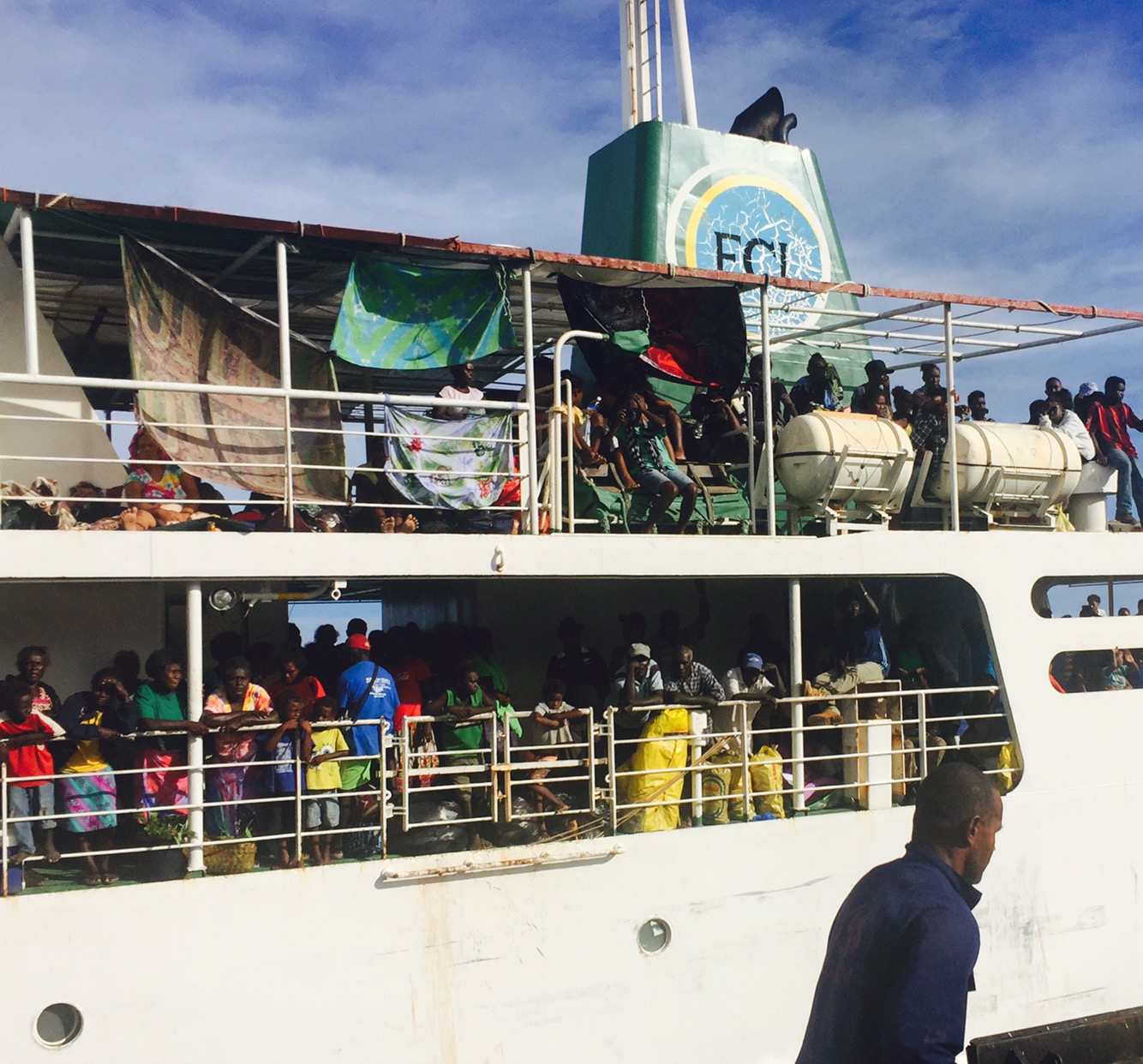
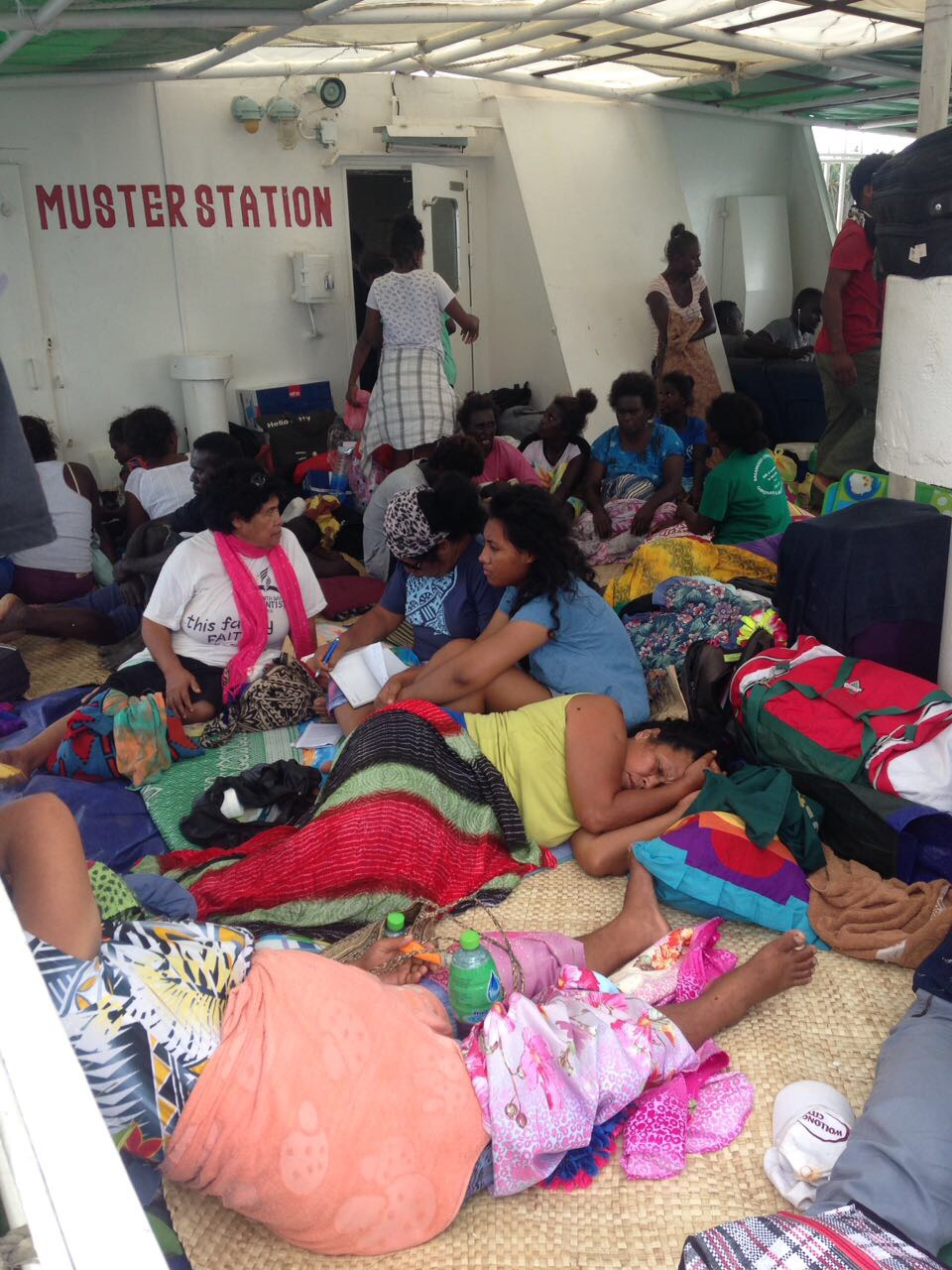
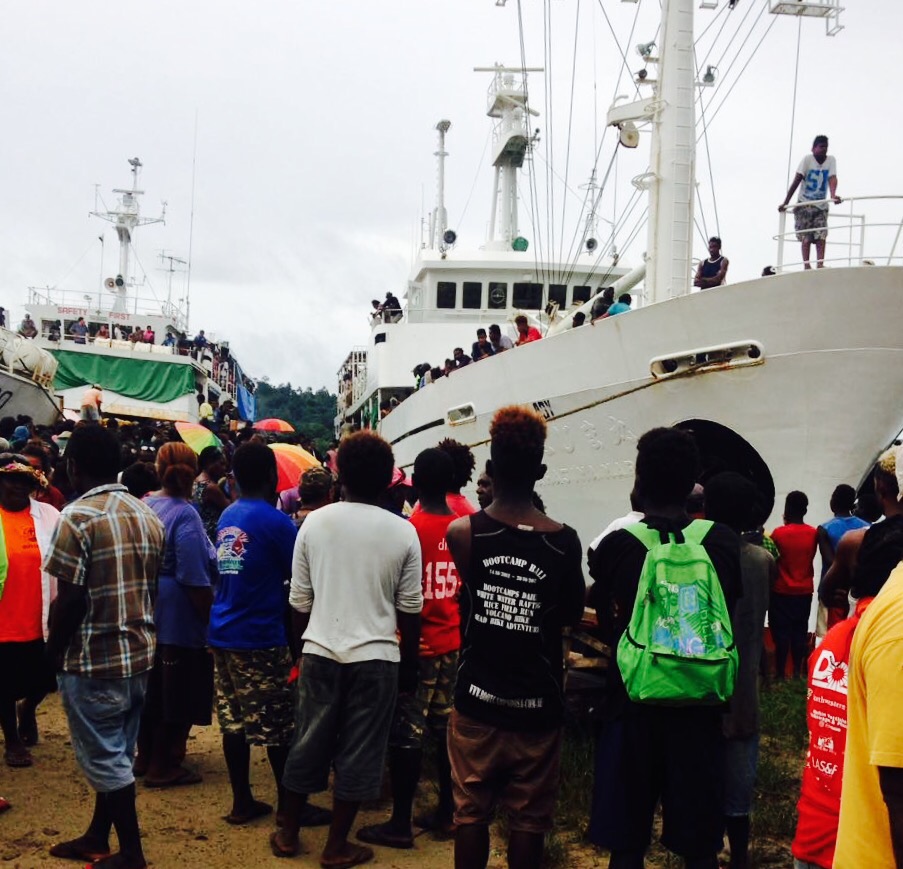
Getting on a boat in the Solomon Islands is one of the most disorganised, unruly, frenzied experiences I have ever had. As the ship pulls up alongside the jetty, we can already see that she is jammed to the rafters with every inch of deck space taken. I am hoping that this is because everyone is getting off or is outside enjoying the view. I am, again, wrong. Nobody wants to wait for the boat to properly dock. Nobody wants to wait for the gates to open and gangplank to be put down. Before the boat has even stopped people are climbing up the sides of the ship, or jumping the distance to shore. Babies, bags and cages are being passed across the fluctuating drop into the sea below. I can’t watch. After about half an hour we are on the boat and the only thing I can think of to compare it to is the London Underground at rush hour. Except we need to move. It is a big ship and every room, every step and every corridor is filled with bags and bodies. After a long fight we have stored our bags in a corner and have found standing room only on deck.
Packed in like sardines

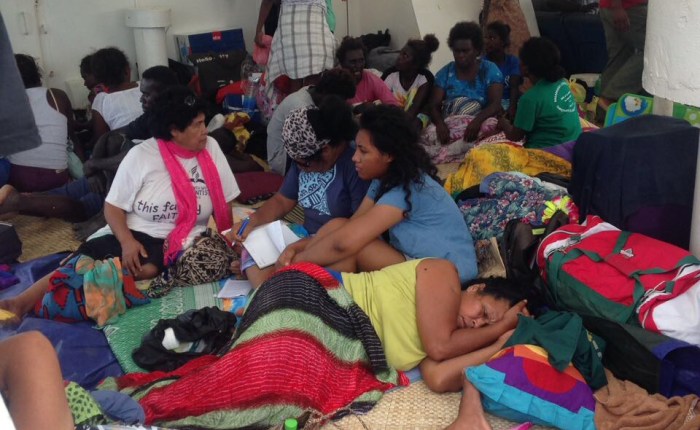
The boat is supposed to take five hours but due to the overloading she struggles in the water and takes eight. The trip is far from boring. At one point the loud speaker announces that the boat is dangerously tilting to one side and we are all made to squash into one half of the boat to even her up. At times, heavy rainfall causes us to all huddle under the small sheets of tarpaulin that cover the deck and a fellow traveller comments that she feels somewhat like a refugee. There is an atmosphere of camaraderie as we battle to keep the water from forming large puddles that threaten to pull our tiny shelter down.

Kate, always making friends
 Finally, we limp into Seghe as the light begins to dim and are found damp and exhausted by our host Dixon. We are informed that it is only an 8 minute transfer to our accommodation and the boat is waiting. We smile at each other, thankful that at last something is going right for us.
We sit on the boat in the spitting rain in the doom and gloom, petrol fumes penetrate our nostrils but the engine does not roar into life. We both stare straight ahead, not speaking. Neither of us want to acknowledge what is blatantly obvious. The boats engine is not working.


Eventually, we arrive at our accommodation and I for one, am definitely ready for a strong drink. Except they don’t have any, nor do they have any soft drink or cold drink. We eat and then we collapse into bed. Tomorrow is another day.
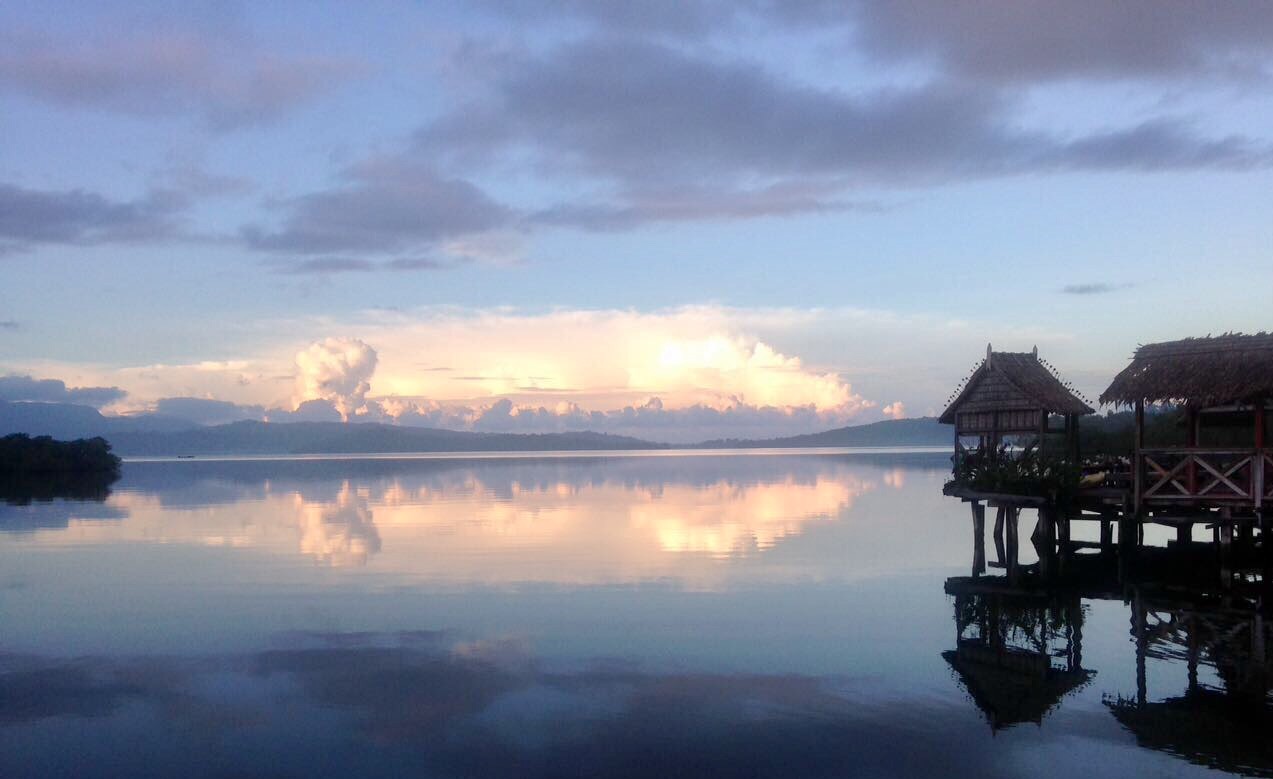
And it is a beautiful day. I am up to see the sunrise over the lagoon. A spray of low cloud hugs the mountains opposite, their reflection clear as glass in the still waters as the fish chase each other under my feet and the birds sing to welcome the day. I am refreshed and ready for the day ahead. Today we are to set off on a kayaking adventure.

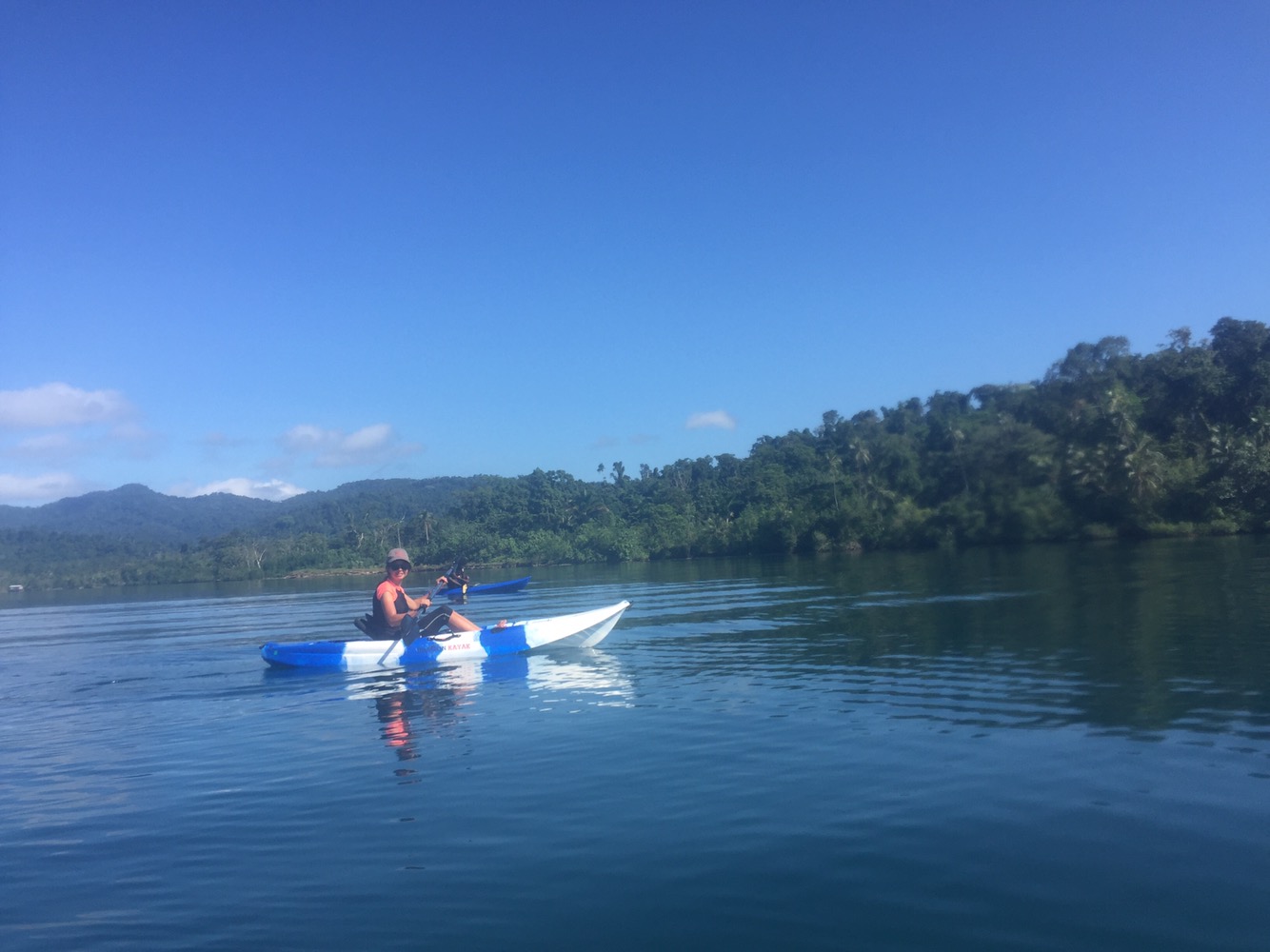
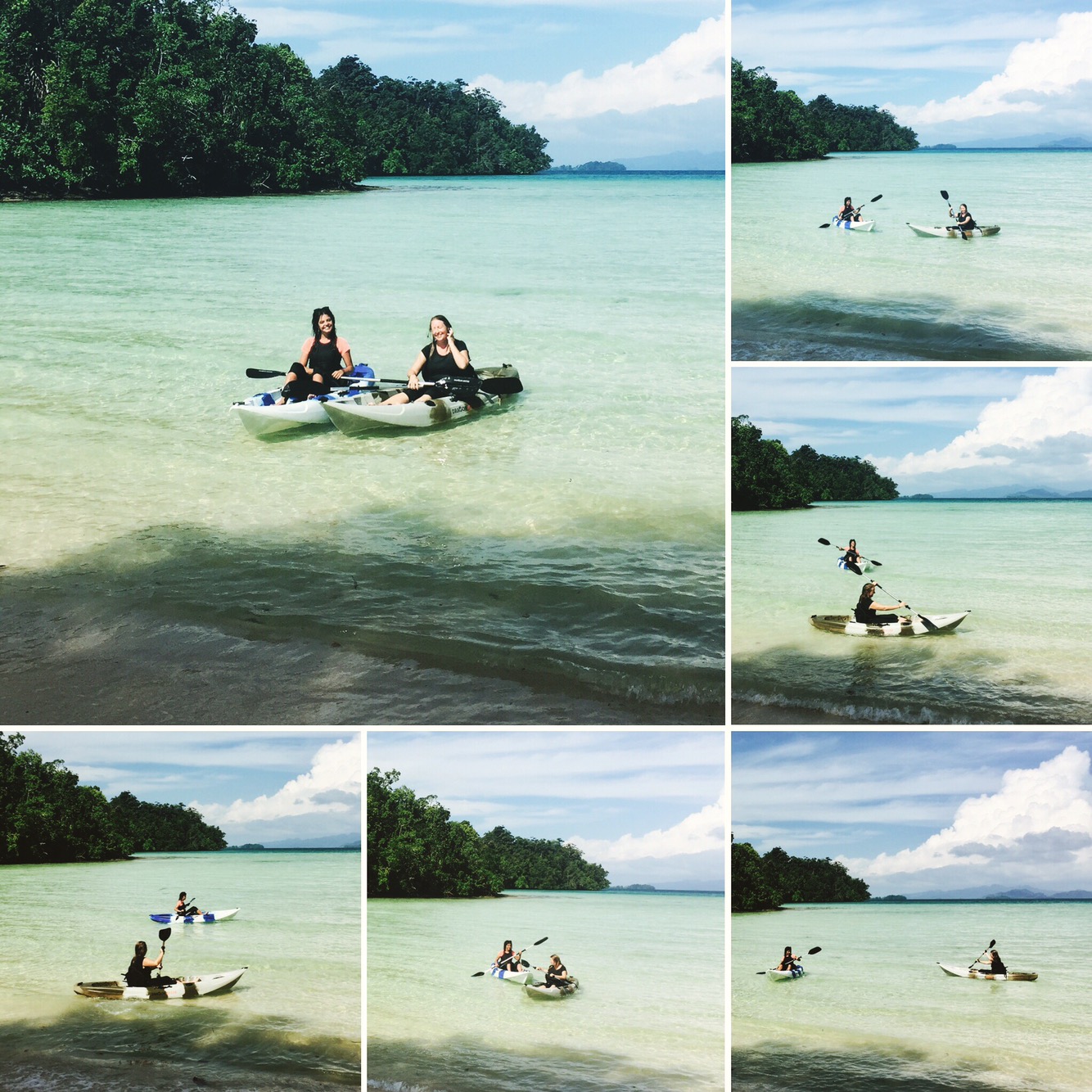
I hate kayaking. I don’t think that this is the first time I have come to this realisation but for some reason, I keep feeling the need to give it a go. I like the idea of it but the reality sucks. I am constantly about a km behind everyone else no matter how hard I try. Each stroke of the paddle seems to get me nowhere as I am buffeted around by the wind and the waves. I very rarely use my arms which means I am weak, I am sore and I am pathetic. We kayak for four whole, wearily long, boring hours and I hate Kate, I hate Dixon, I hate Kayaking, I hate Marovo Lagoon and I hate the Solomon Islands. But when we arrive at a private pristine white beach with clear blue seas I find that I am, again, friends with Kate, friends with Dixon and very happy to be here. I do, however, still hate Kayaking.
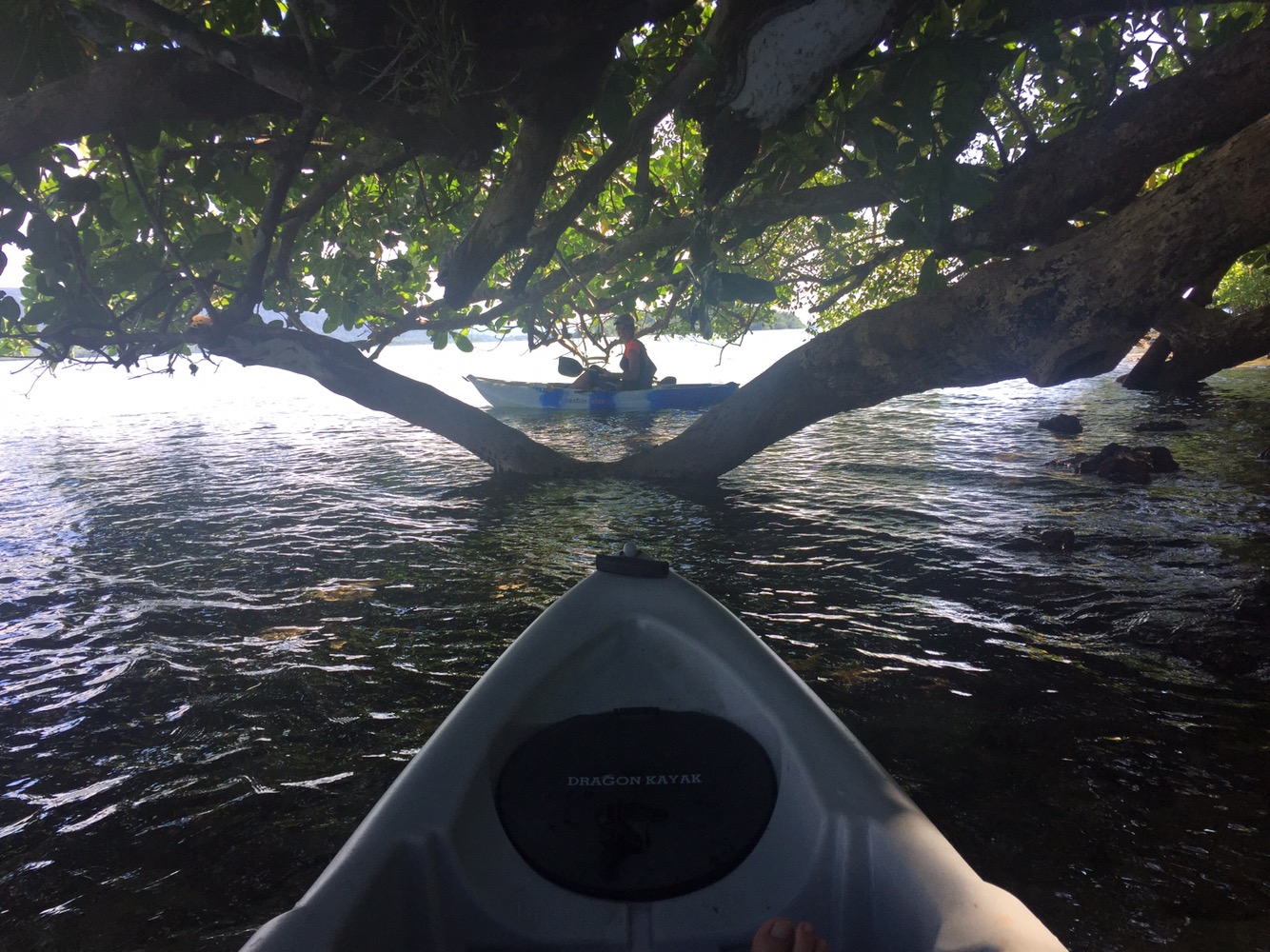
I try again on another two occasions. This is a kayaking trip after all. The first is down a jungle river and I find that because I am not battling against anything and I actually move when I paddle that I enjoy myself. It’s a small, winding river that cuts through dense thick green foliage. As the heavens open and the rain pelts down on us I feel free and slightly delirious. 

The second time is again, hateful. We paddle the opposite way down the coast and as we pass over shallow reefs I become lodged having to jerk and thrust myself energetically and artfully around in my small Kayak to dislodge from the rocks. The shame. I am happy to hang up my paddle and proudly say that honestly, I gave it a good shot but I just do not like kayaking.


As I walk along the boardwalk back to our leaf hut, Kate is chatting to Dixon. She looks up at me, smiles and then informs me that Seghe airport shut yesterday for repair. I laugh. Great Joke, funny. Except it’s not and it’s true. We are due to fly back to Honiara the next morning. As I exclaim disbelief that we have not been informed, I remember where I am and all the crazy things that have happened over the last twelve months and I believe.
I make it back to Auki, eventually. We ended up getting a three hour boat transfer, at a huge cost, to another airport and we were back in Honiara by lunch the next day. I was supposed to get on the same boat we travelled on from Munda to Seghe but I hear that after a long and heavy journey back to Honiara she is need of some TLC having lost an engine along the way. I try to board another ship but it is fit to burst with people and I cannot face it again so I take a risk and book a flight for the next day.


I have another two weeks to go and I am ready to leave. The story I have just told is a travel story and the only real risk is to our personal enjoyment and to our bank balances. Unfortunately there are many similar stories that can be told about healthcare, teaching, policing, government, law, politics, economics and infrastructure. These stories are not as amusing as they strongly affect the Solomon Islanders health, wealth, wellbeing and happiness.
As I sit here, writing this, I am supposed to be running a full day workshop for 20 nurses, only nobody turned up. Kate is waiting for a flight back home because the ship she planned to catch was cancelled.
This is not the exception. This is the norm.

Party Pig

Warning: Some vegetarians may find this blog distressing

I needed to say thank you to everyone who has been an amazing friend to me during my time here in Auki. How better to do this, than a party.
A good party in the Solomon Islands is all about the food and if you want it to be special, then you have to buy a pig. This was the start of an adventurous weekend that was more about the pig than the party.

My amazing boss Julie and her 7! Yes 7! Children
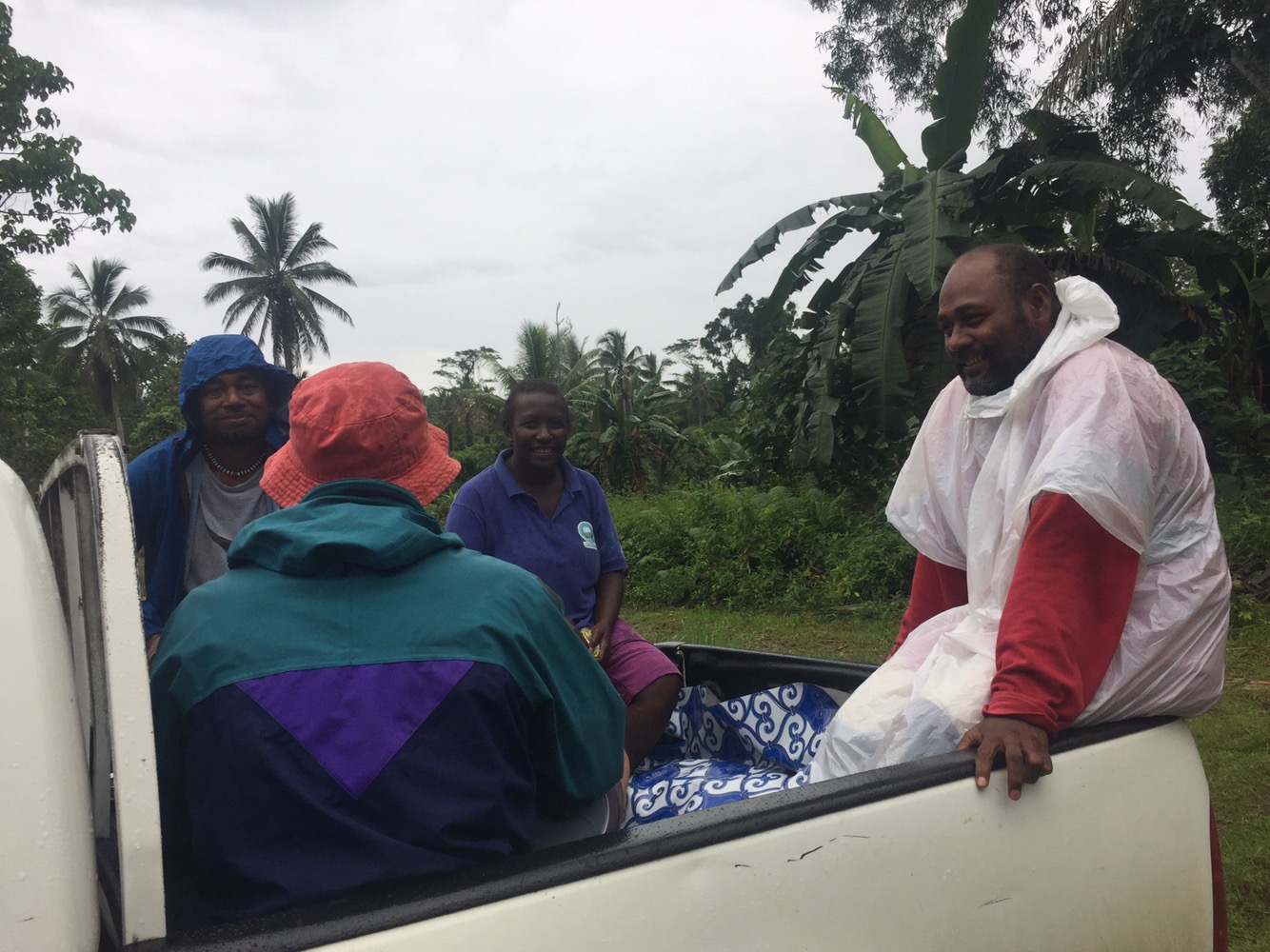
It had taken a couple of weeks to arrange and by the time the great day of the pig collection arrived it had turned into quite an adventure that seemed to involve most of the hospital. We were planning on bringing this pig back alive so as nine of us packed into the hospital truck, we joked about where we would put it. We were driving to a village in West Kwaio, a two hour journey up mountains and across rivers along a muddy, bouncy dirt road. Everyone was in a great mood and the laughs were plenty as we jostled along.

Carrying on like a pork chop.

We arrived at the village and were led down to the pig pen to the adlib words of Shaggy: “baby you’re my pigpig, you’re my darling pigpig”, everyone laughing and dancing to the beatbox sounds as we slip and slide through the mud. The whole village stand at a distance to watch, possibly in fear. Never have they witnessed such a spectacle.

The pig pen

The pigs begin to squeal and panic as the heavens open. They understand that this is the beginning of the end. As if struck by a force of lightening, the mood shrivels and burns as reality sets in. Suddenly it is not quite the joyous occasion we thought it would be. This pig is going to die today and by the sounds of it, he knows it.
There is silence as the pig is finally tied to a long stick and lifted slowly out of the pen. The tension is finally broken by Kate who, up till now has been the most excited of the group, laughing and singing all the way. She has hit something. To be honest, I am unsure what she has hit but it looks confusing. Her face and body has crumpled as if in pain, half laughing and half crying. Tears are spilling out of her eyes. Slightly hysterically she is muttering about how she was a vegetarian before she came here. Why did she think that this would be anything less than a nightmare? The villagers continue to stand at some distance, some hiding behind trees, as if afraid that this bizarre behaviour may somehow be contagious.

Luckily the pig remains quiet as we all load back into the truck in the pouring rain. Kate sits inside the cab, hands wringing, head slumped as we start a very different journey back to Auki.

The return journey – not so much fun

Between a rock and a hard place

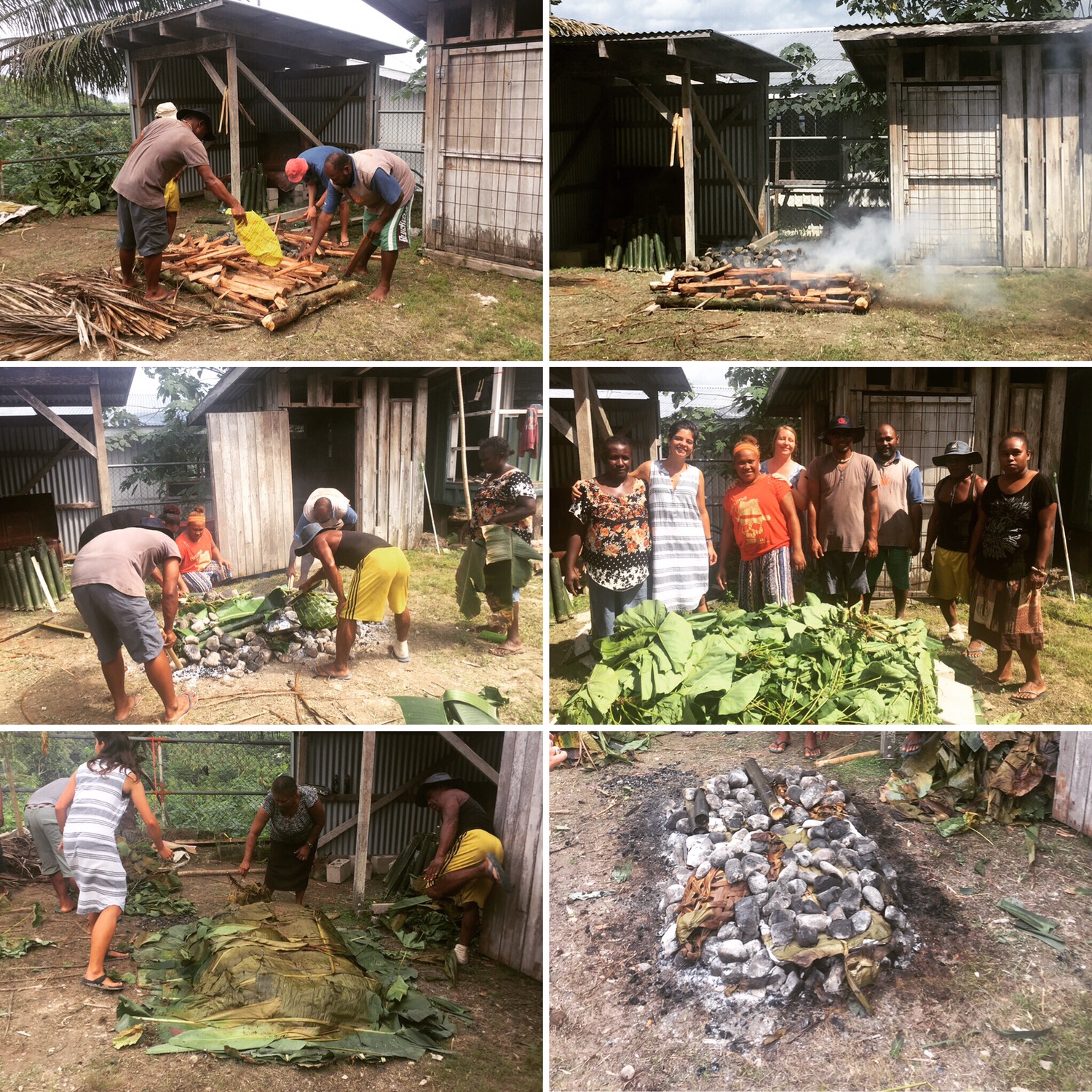
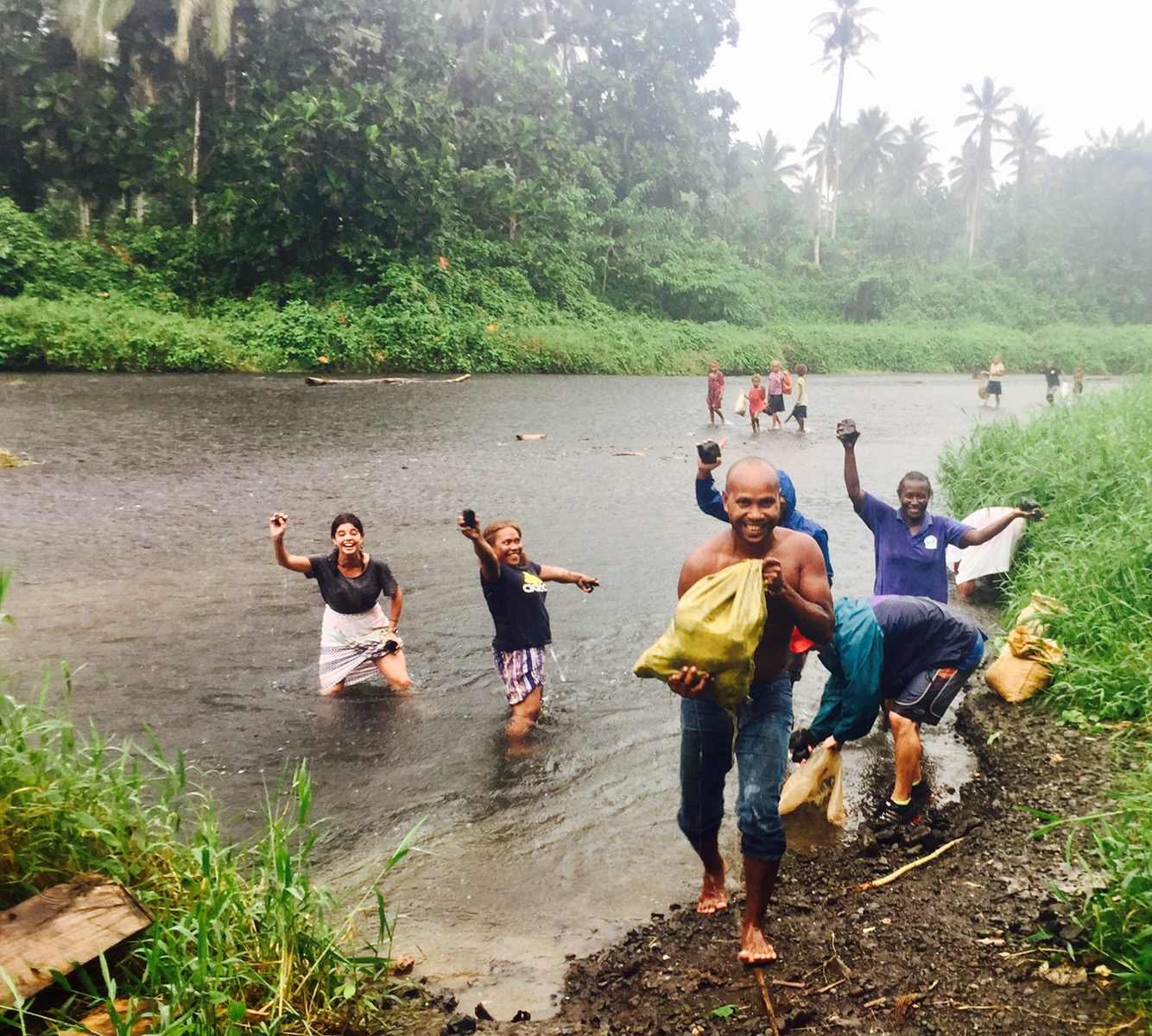
We plan to cook this pig in a traditional moto oven. To build a moto oven we need rocks and apparently the only place we can get the right rocks is from the river. Luckily, Kate is back, does not need to be admitted to the psychiatric unit and is keen for the challenge. We have driven passed plenty of happy pigs having a lovely time frolicking about the country and she has convinced herself that this is OK. The pig has had a happy life. So we dive into the next task with positive enthusiasm. Within about 5 minutes, we are knee deep in a torrent of water as the rain pelts down on our backs, hands grappling the floor of the riverbed for large rocks to build our moto. A group of children crowd at the far bank to watch the show. Someone mutters that possibly considering catering next time would be a good idea. Kate, again, loses her shit and this time, we all join in. Thankfully, the absurdity of the situation striking everyone as totally hilarious. 

The rest of the journey is uneventful and quiet. It has already been quite a day and we still have the worst to do. The pig is still alive. In a wise move, we pack Kate off to see some friends for wine and therapy.

Slaughter: the killing of animals for food


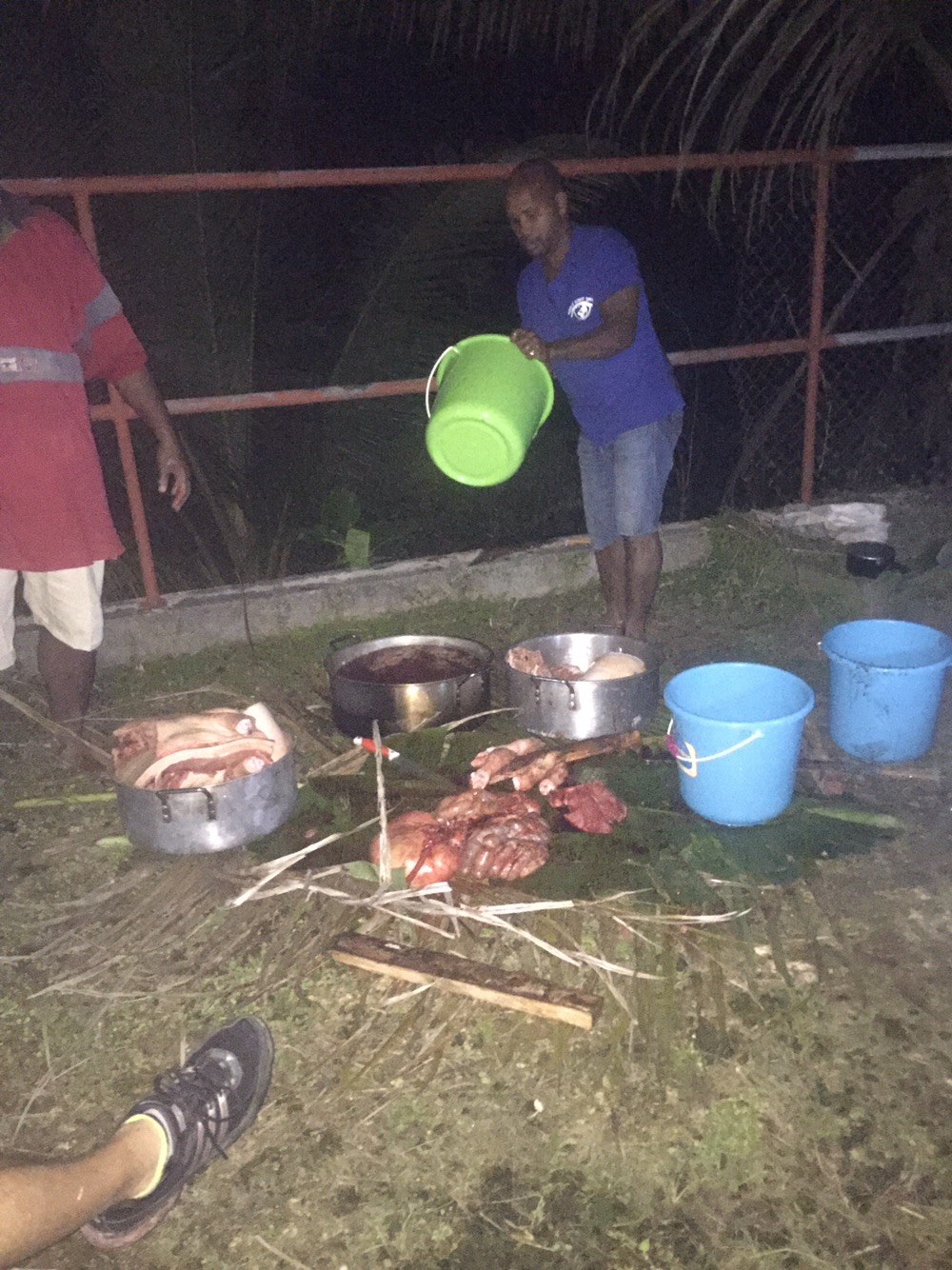
The men are keen to crack on, doing manly things and I can tell they are in their element as they build bonfires and talk tactics. When the time comes, I wimp out and head to the kitchen to make food. I am told it was sharp and sweet and our happy pig felt nothing. I do, however, return to watch the butchering and I am amazed at the deftness in which this is accomplished.

 In less than 20 minutes it is all over and the rest of the evening is spent telling tales around the campfire. I am told that the next day is a big one and the boys will back at 7 am sharp to build the moto.

Solomon Time

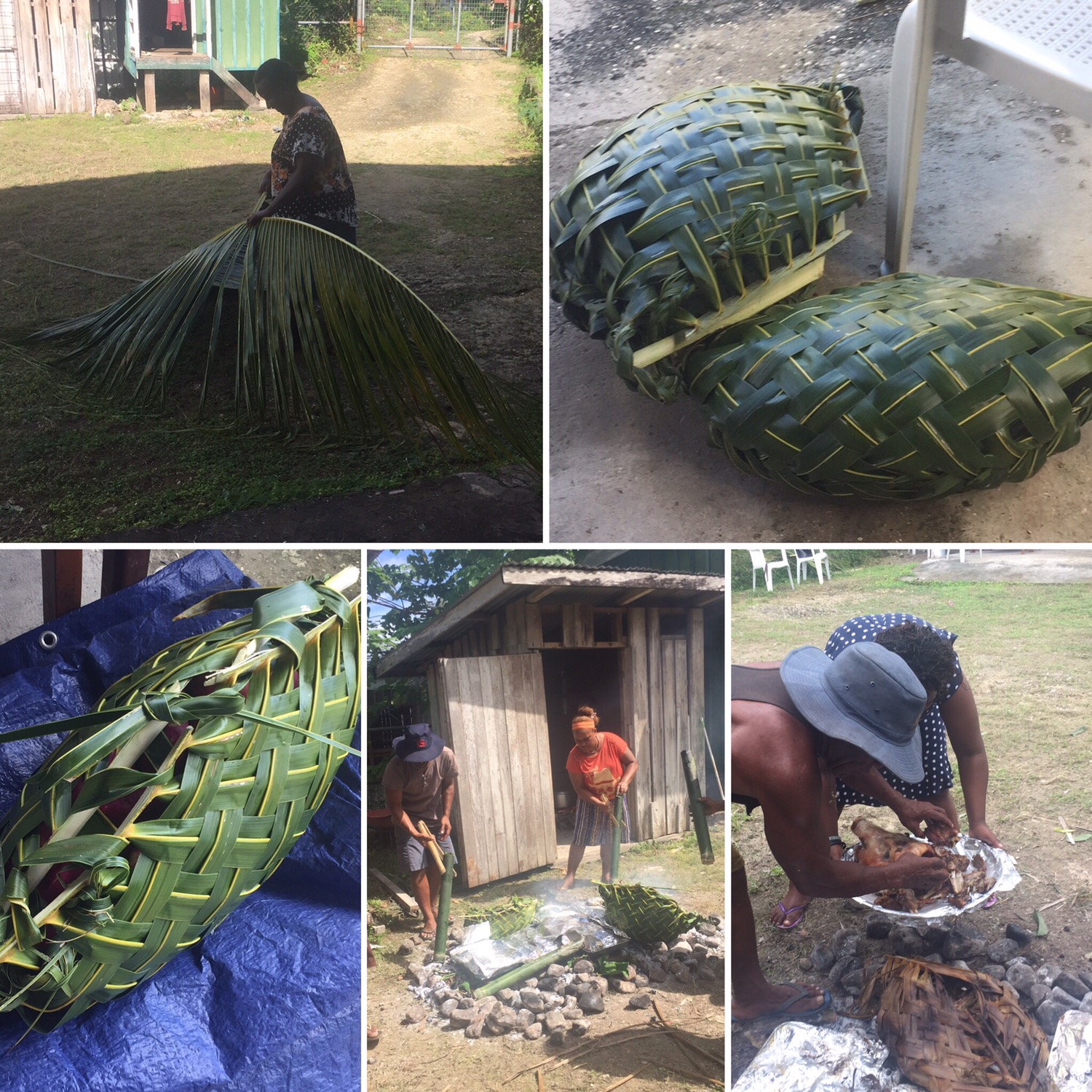
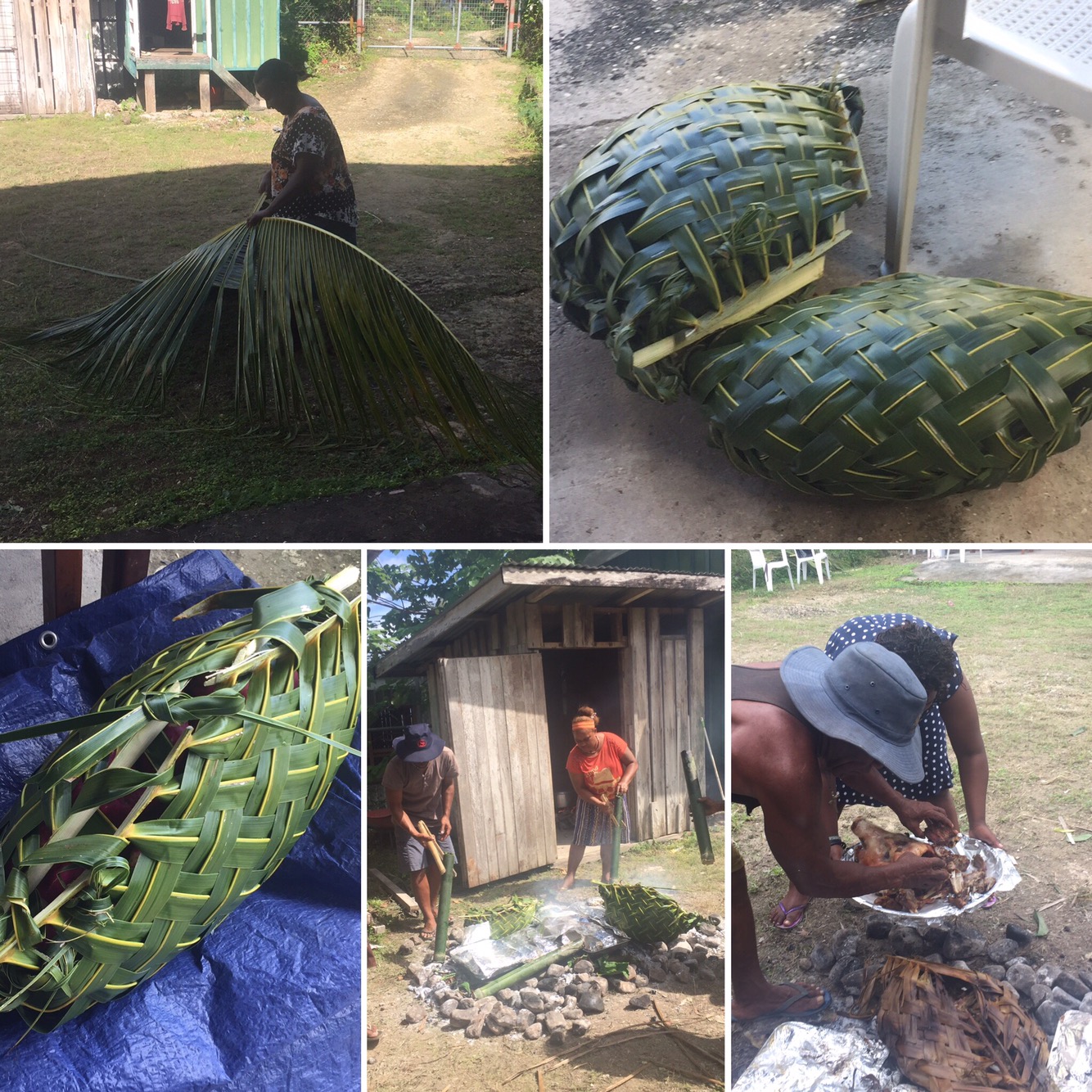
Julie, making her own baskets

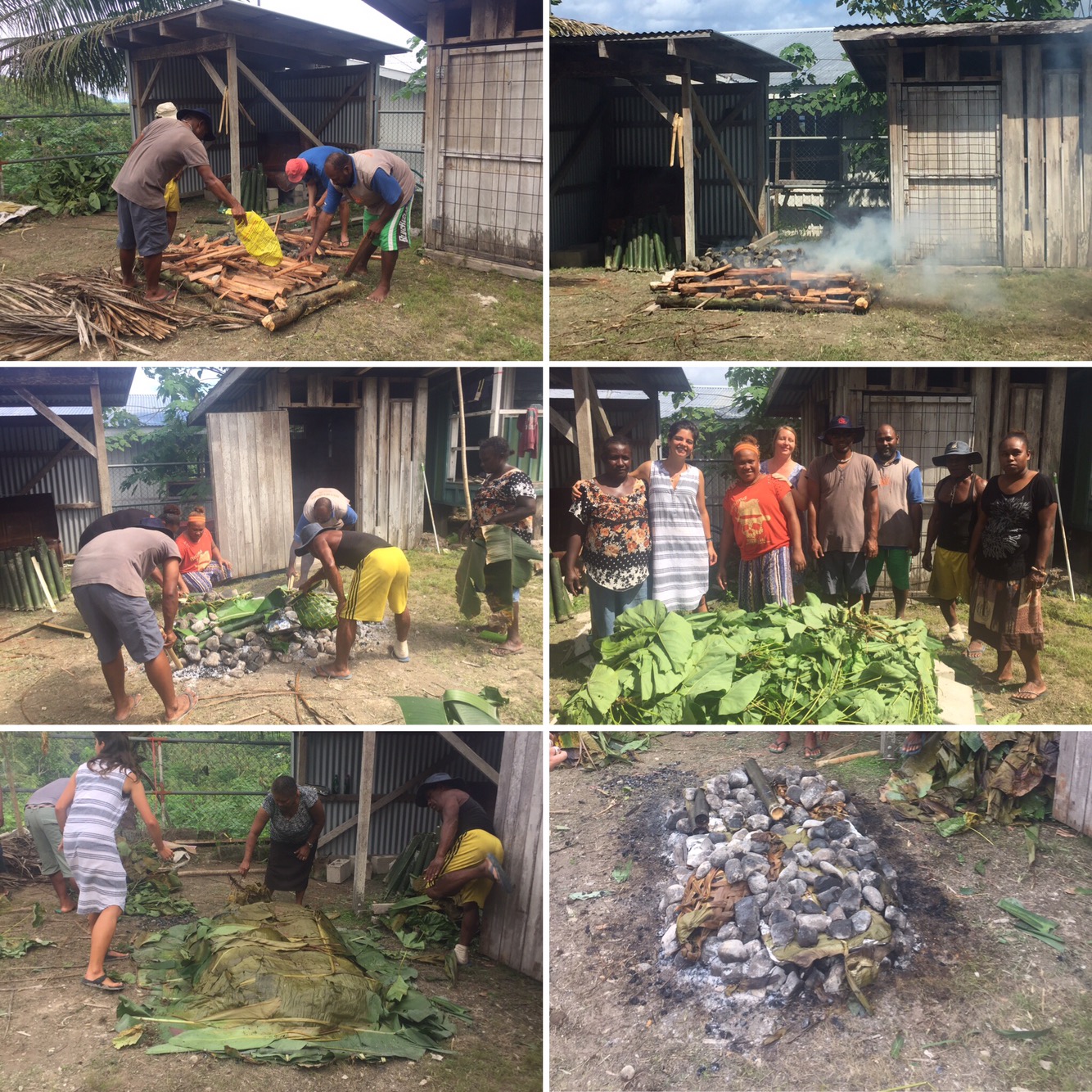
Despite grand words the night before and in true Solomon style, we actually start to build the Moto somewhere around 11.30. It is built on the ground with a layer of stones, then wood, then stones, then wood. This is then set on fire and left until all the wood is burnt and the stones are like hot cakes. We have so much food it is ridiculous.
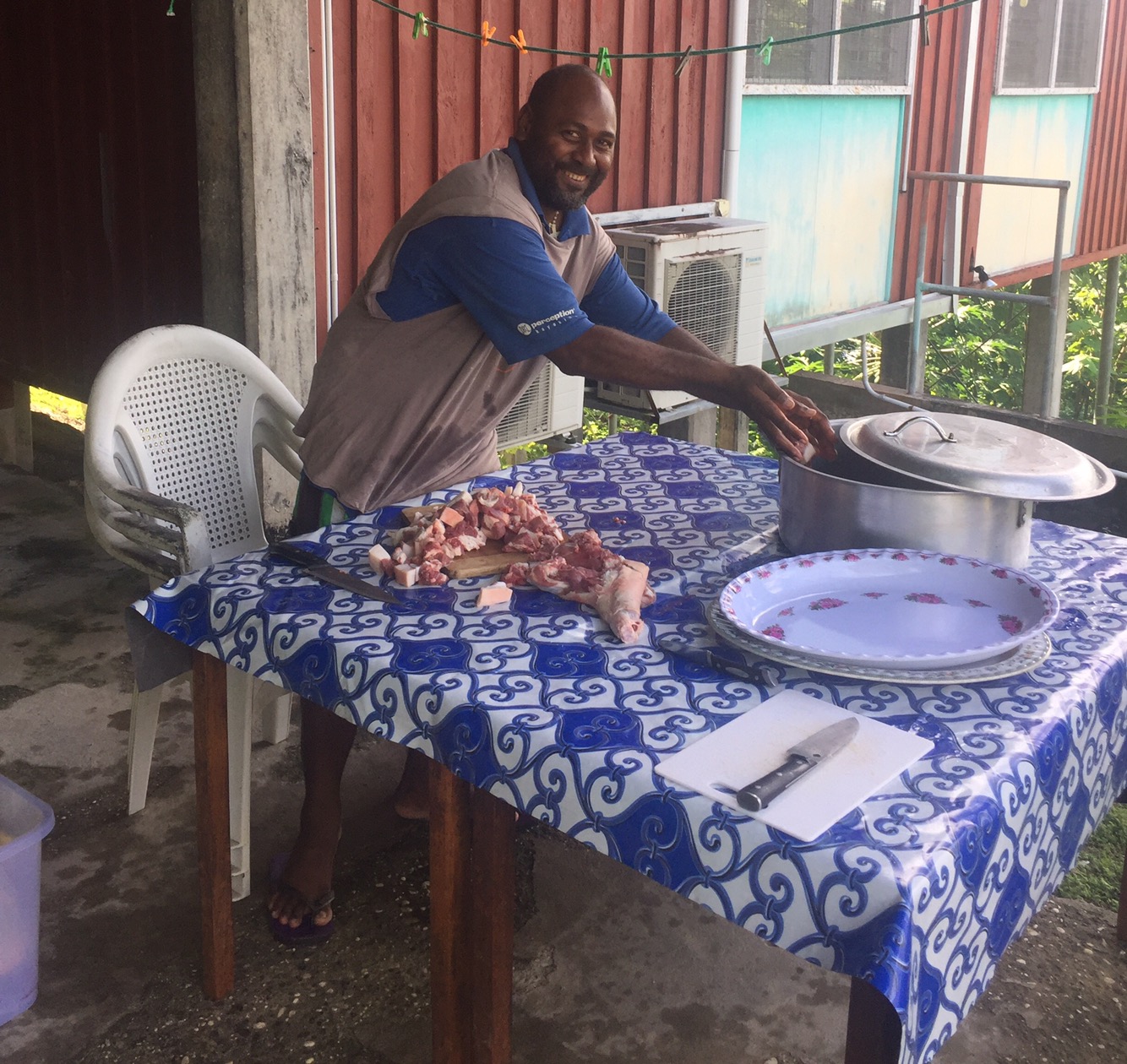
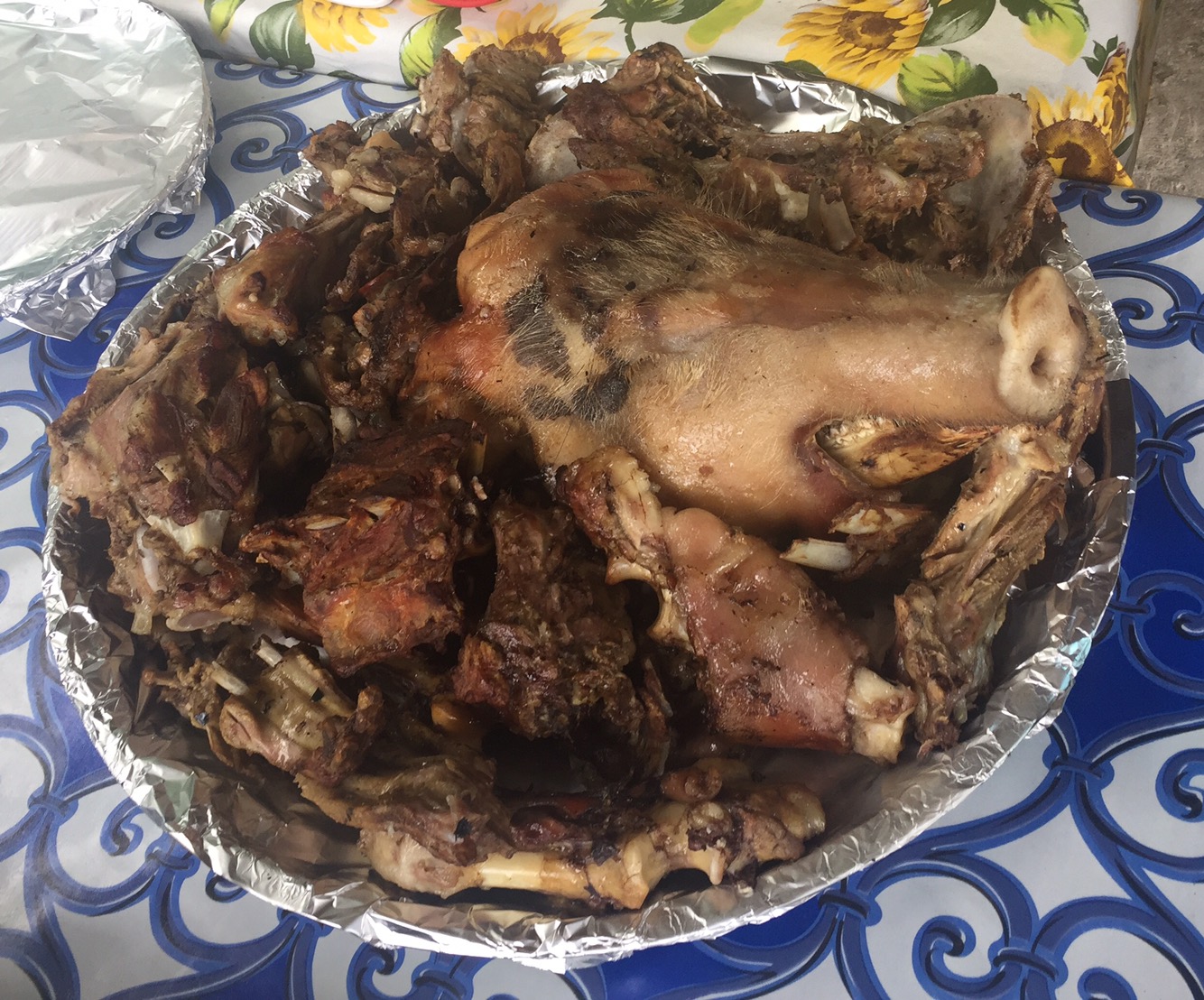
Pork by David
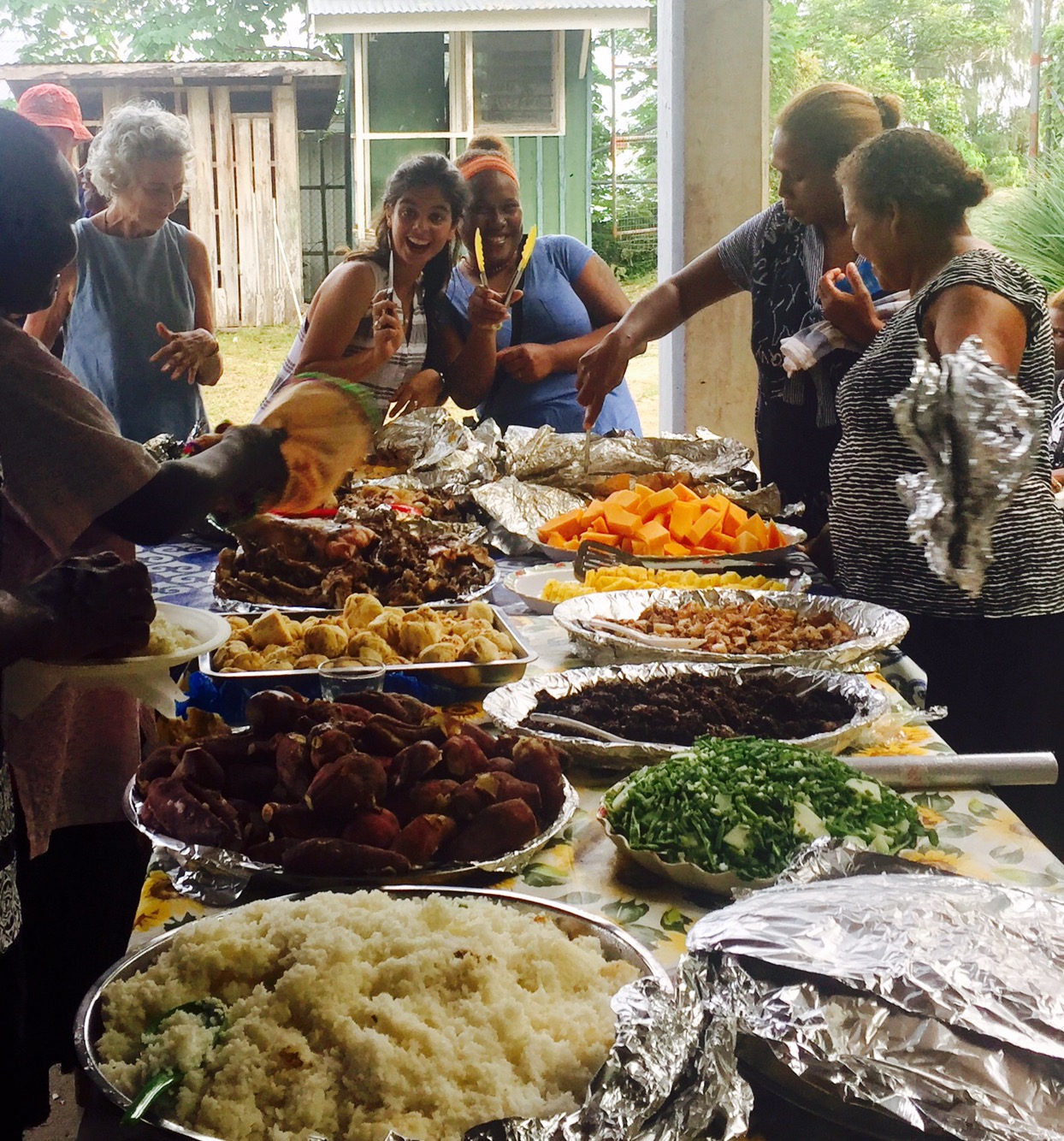
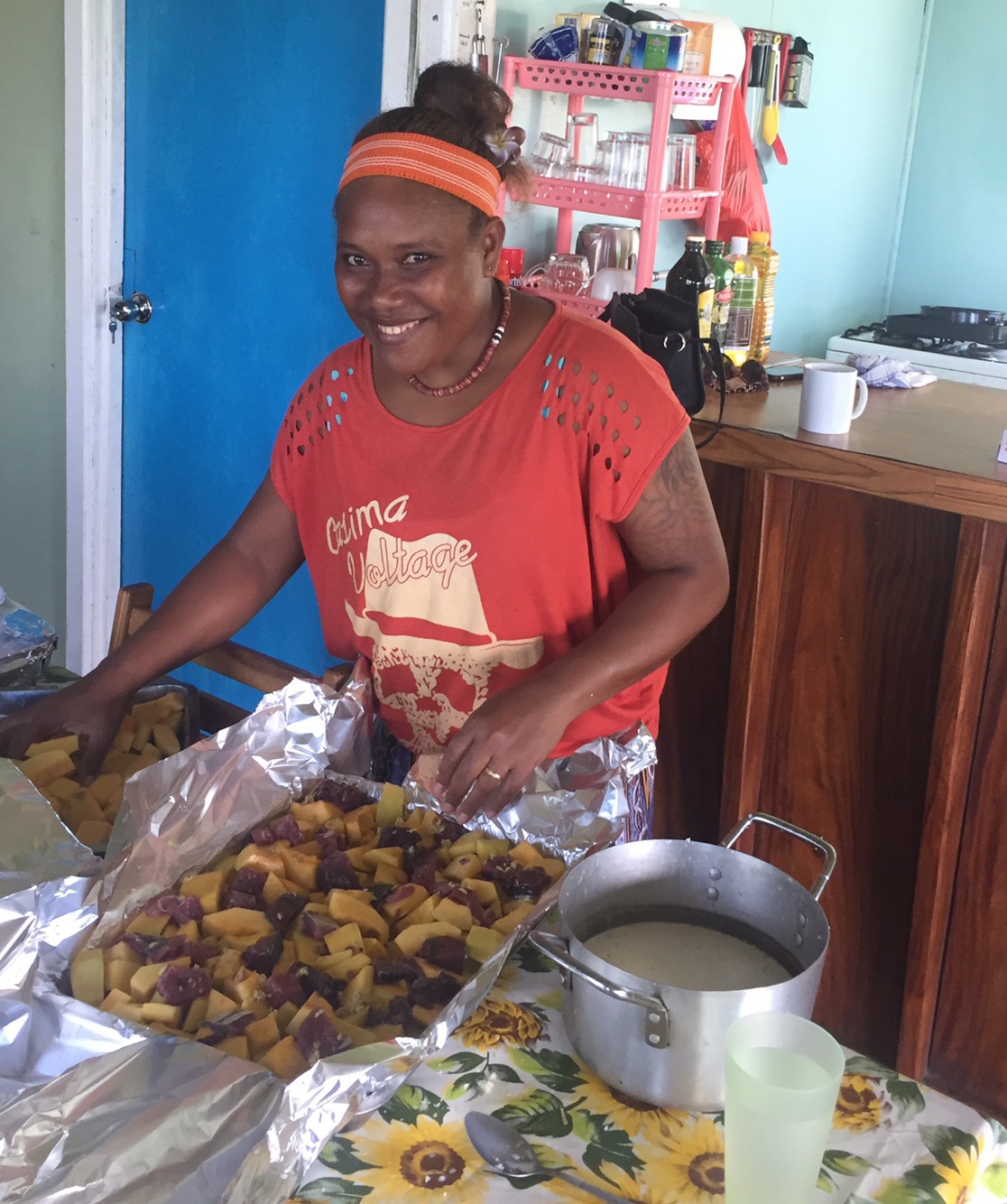
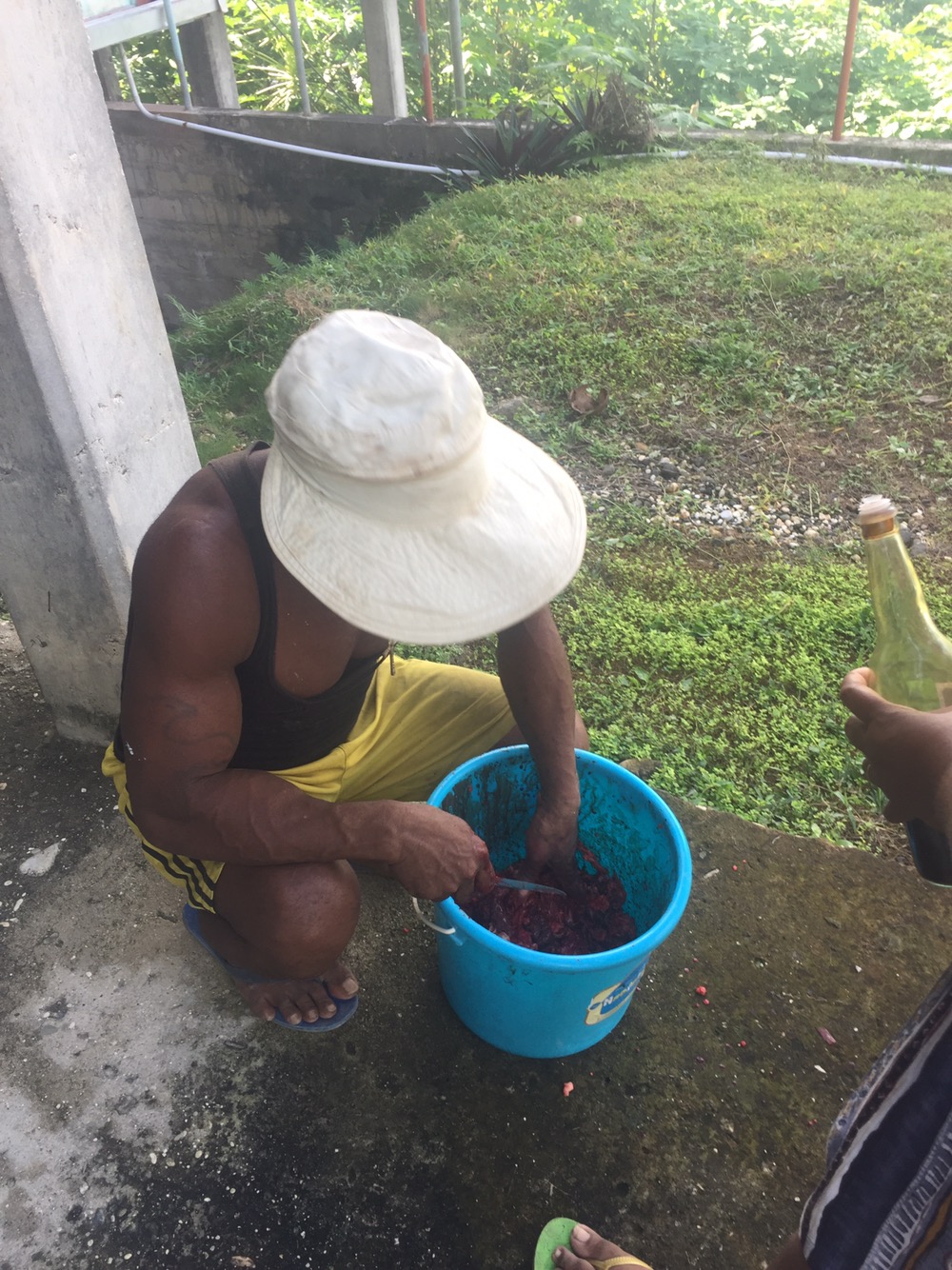
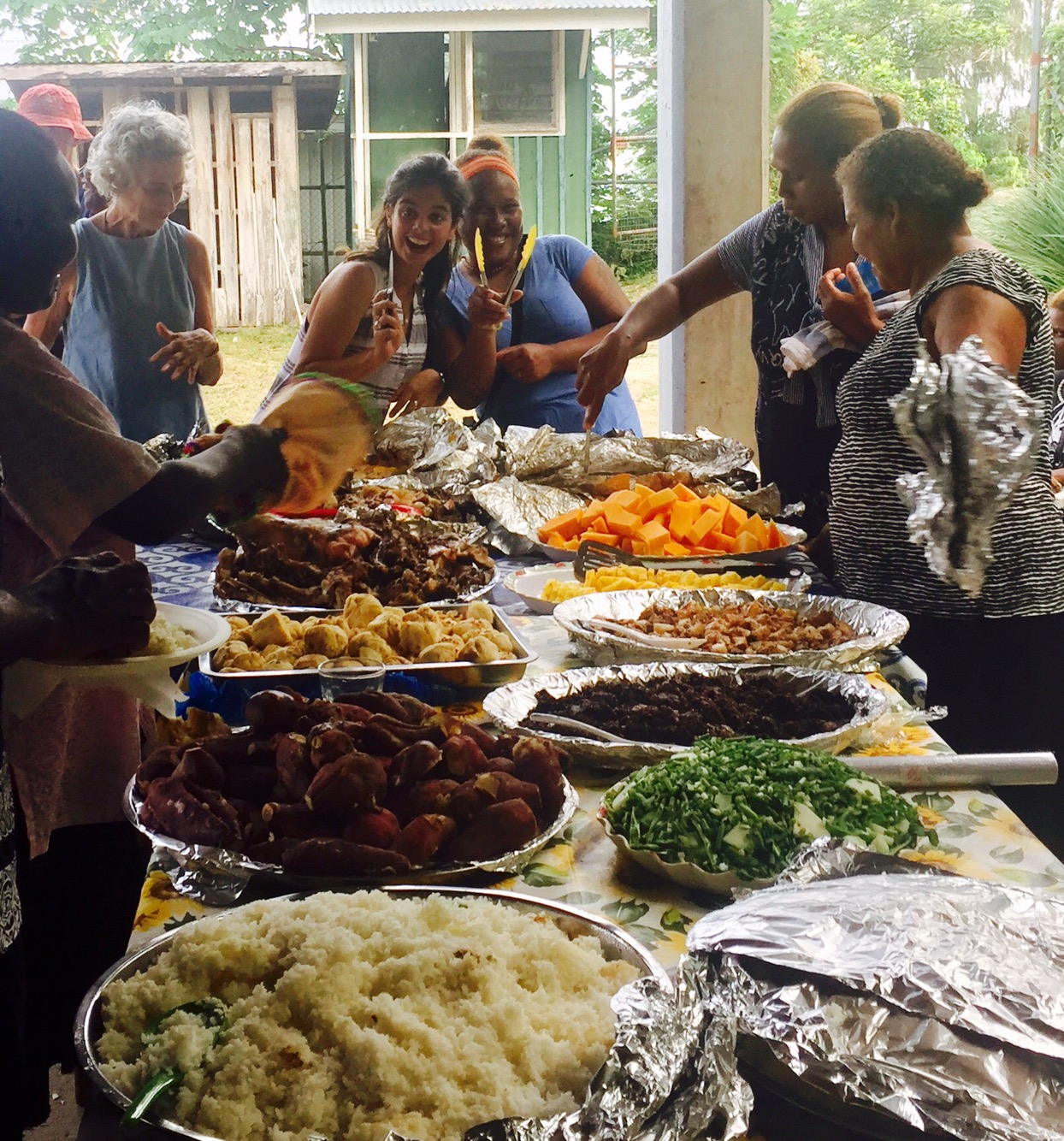
15 coconuts, 4 pumpkins, a woven basket full of potatoes, two huge yellow fin tuna, mangrove fruit and of course a whole pig have all been loving prepared. 
The Boys: scratching coconuts
Pumpkin and fish by Mary
Blood Pudding. Cooked in bamboo. By Bradley

The fire is removed and the stones are layed at the edges as the food is placed on the bottom layer. We then cover the food with the rocks and a thick layer of banana leaves are placed over the top to seal the oven. It is then left for three to four hours.

Stages of a Moto
The Party

It is a great party. The food is amazing and plentiful. 

We are amazed to be left with only the cleanest pile of bones. Kate spends sometime time trying to locate the pigs’ snout until she is informed that this one will have been taken first, the best bit.

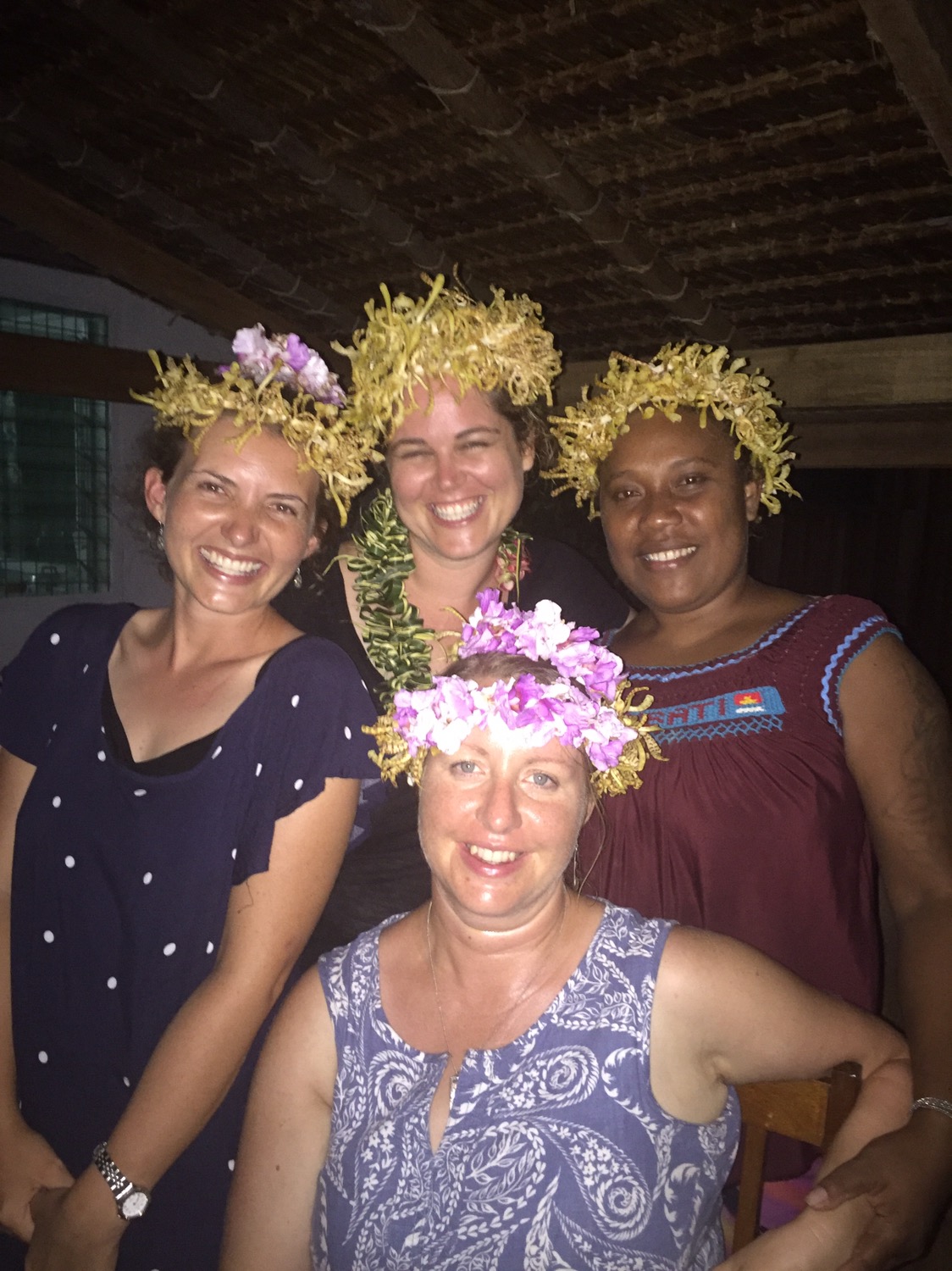
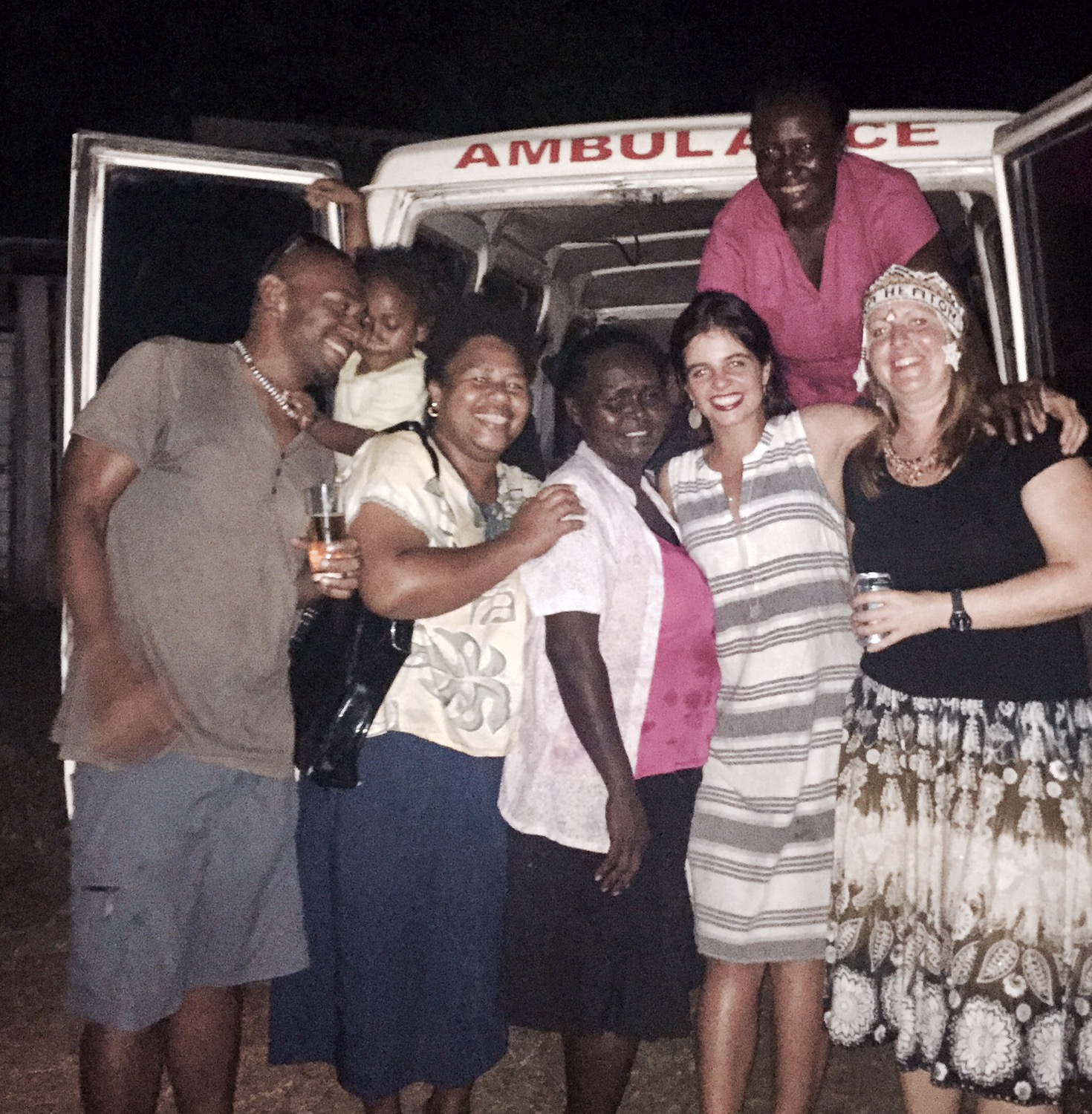
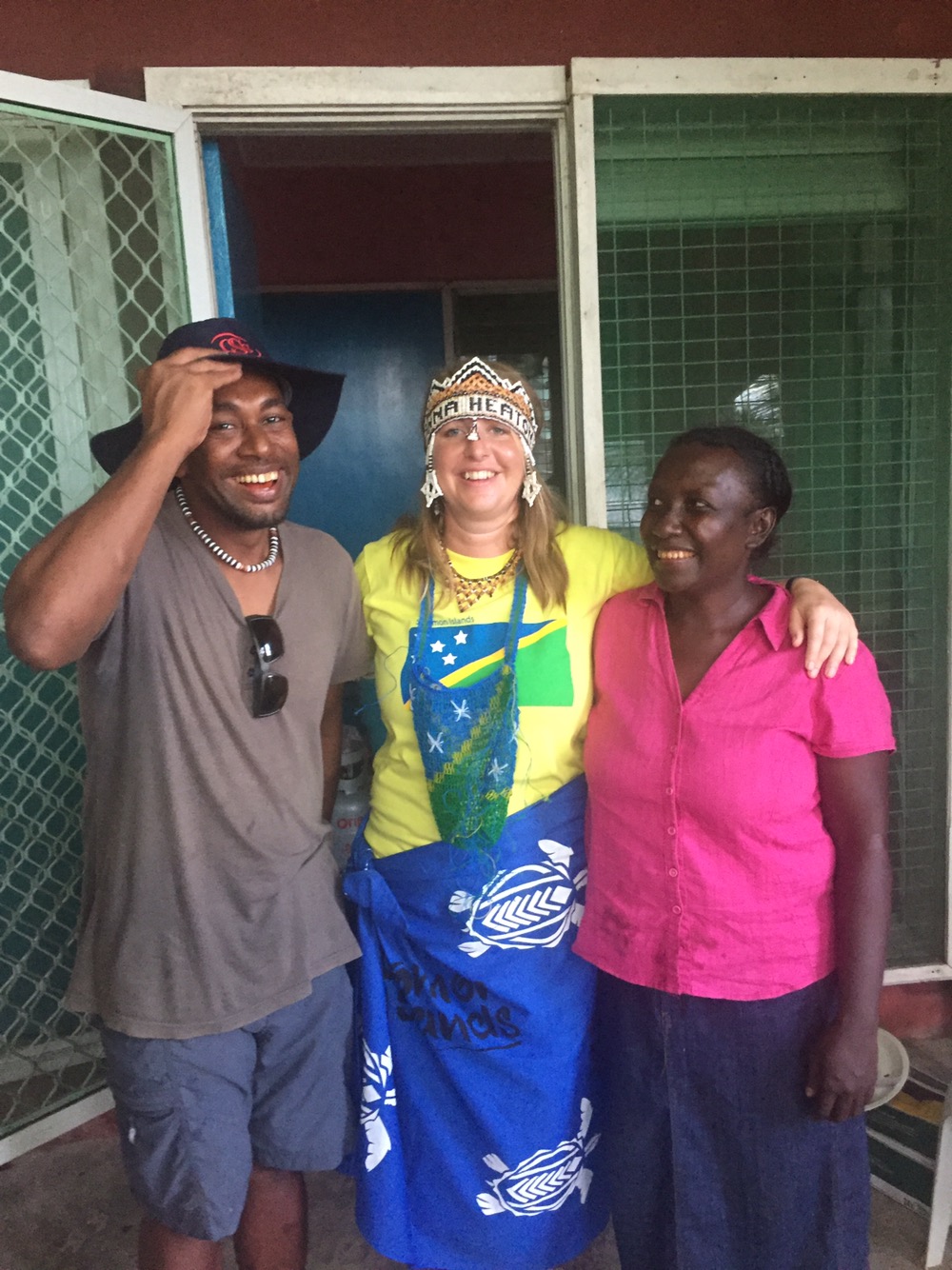
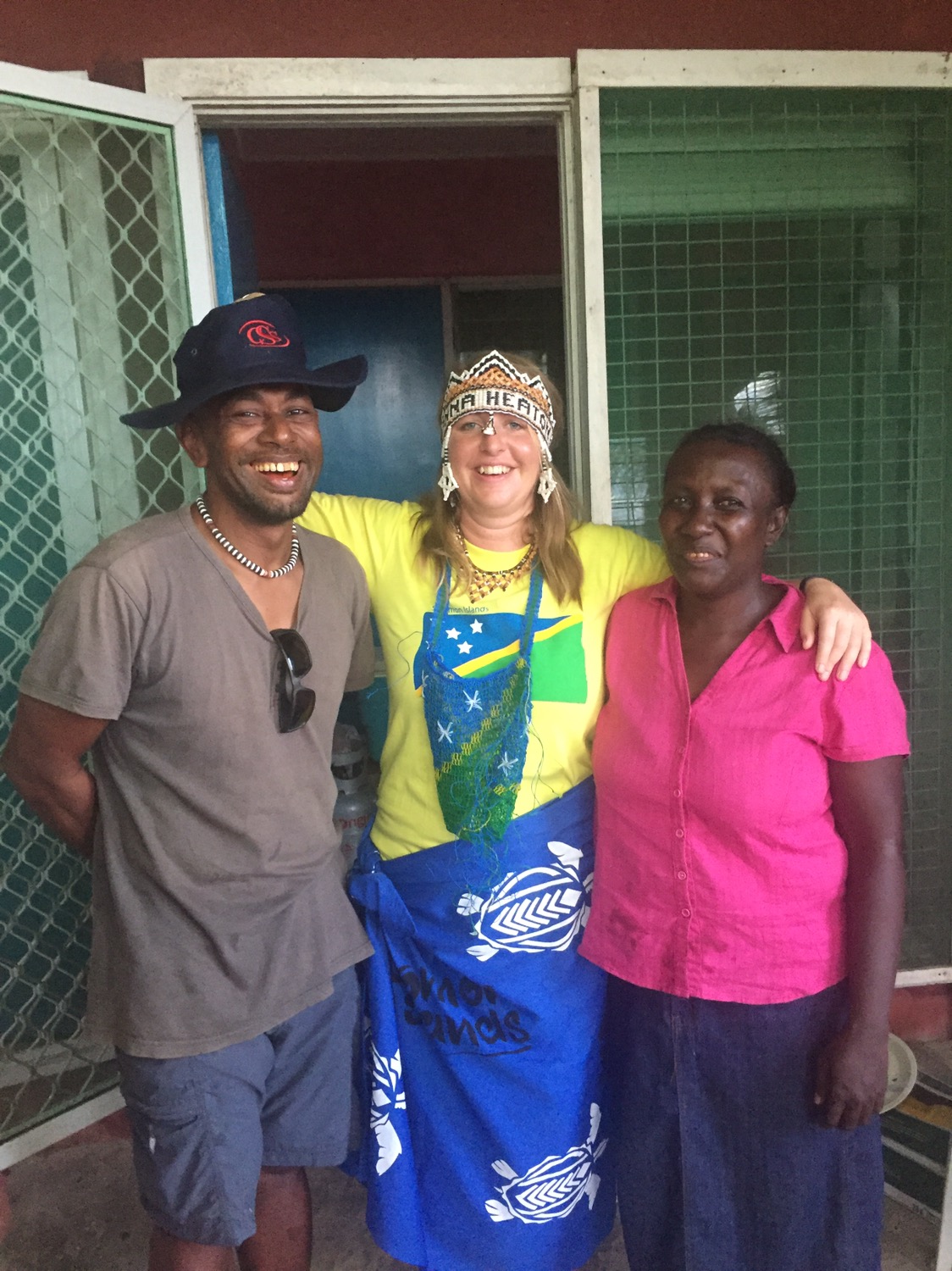
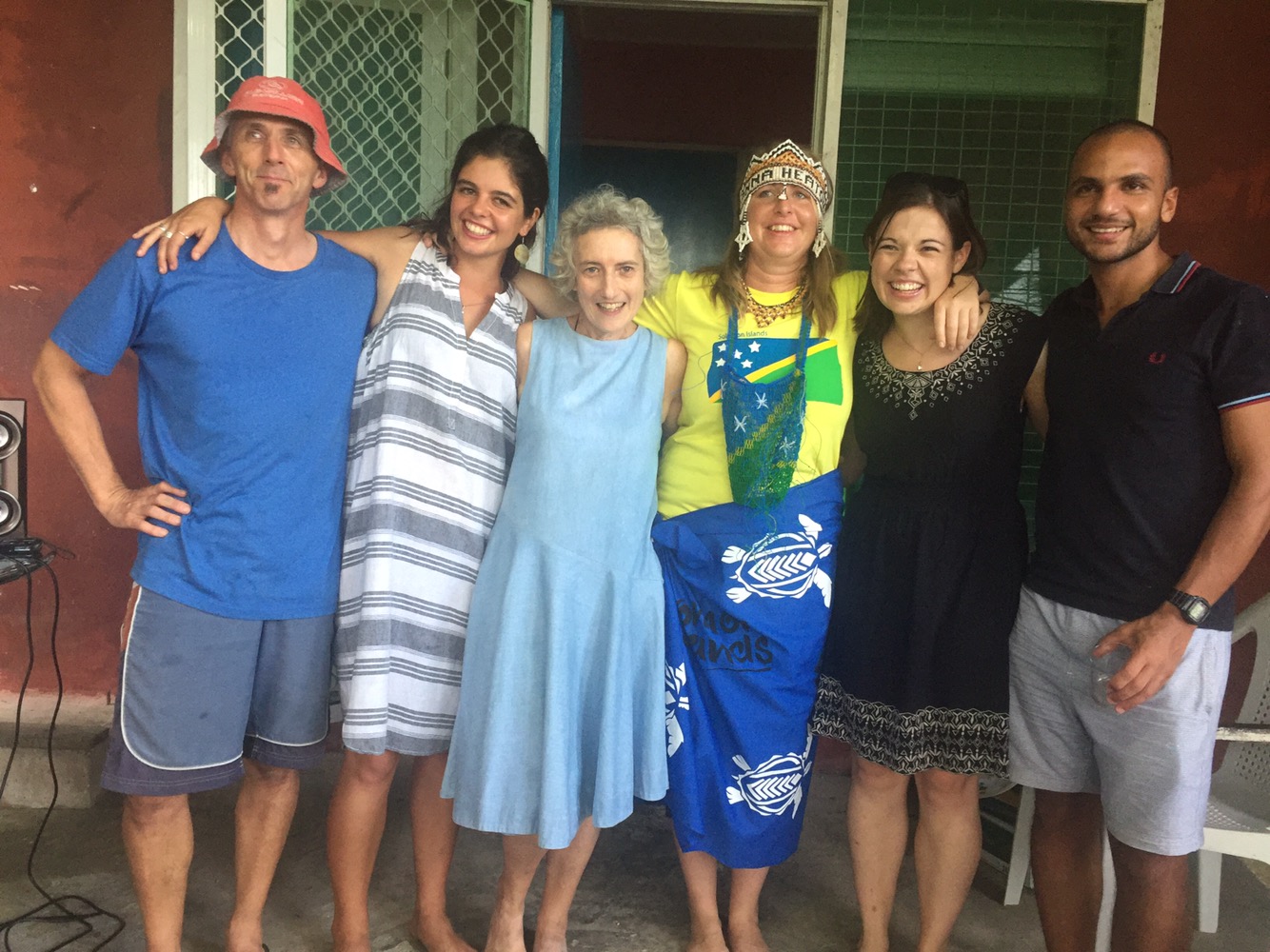
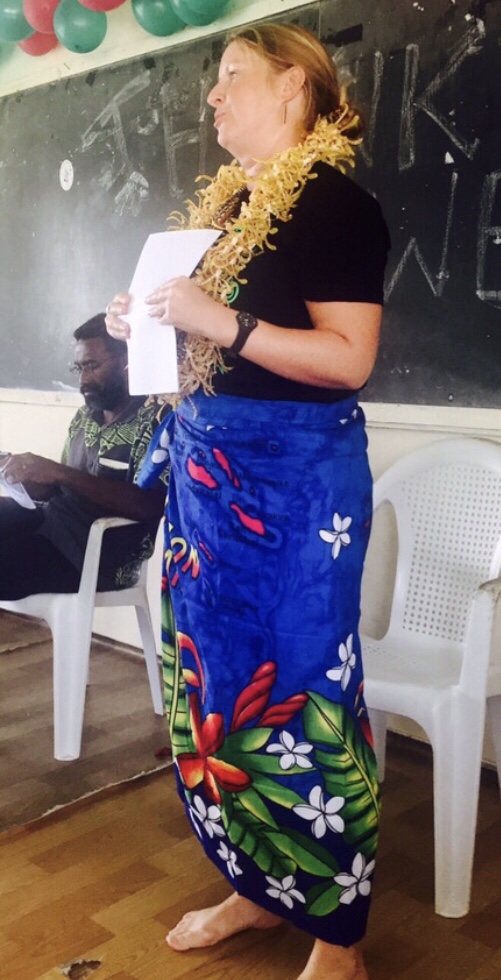
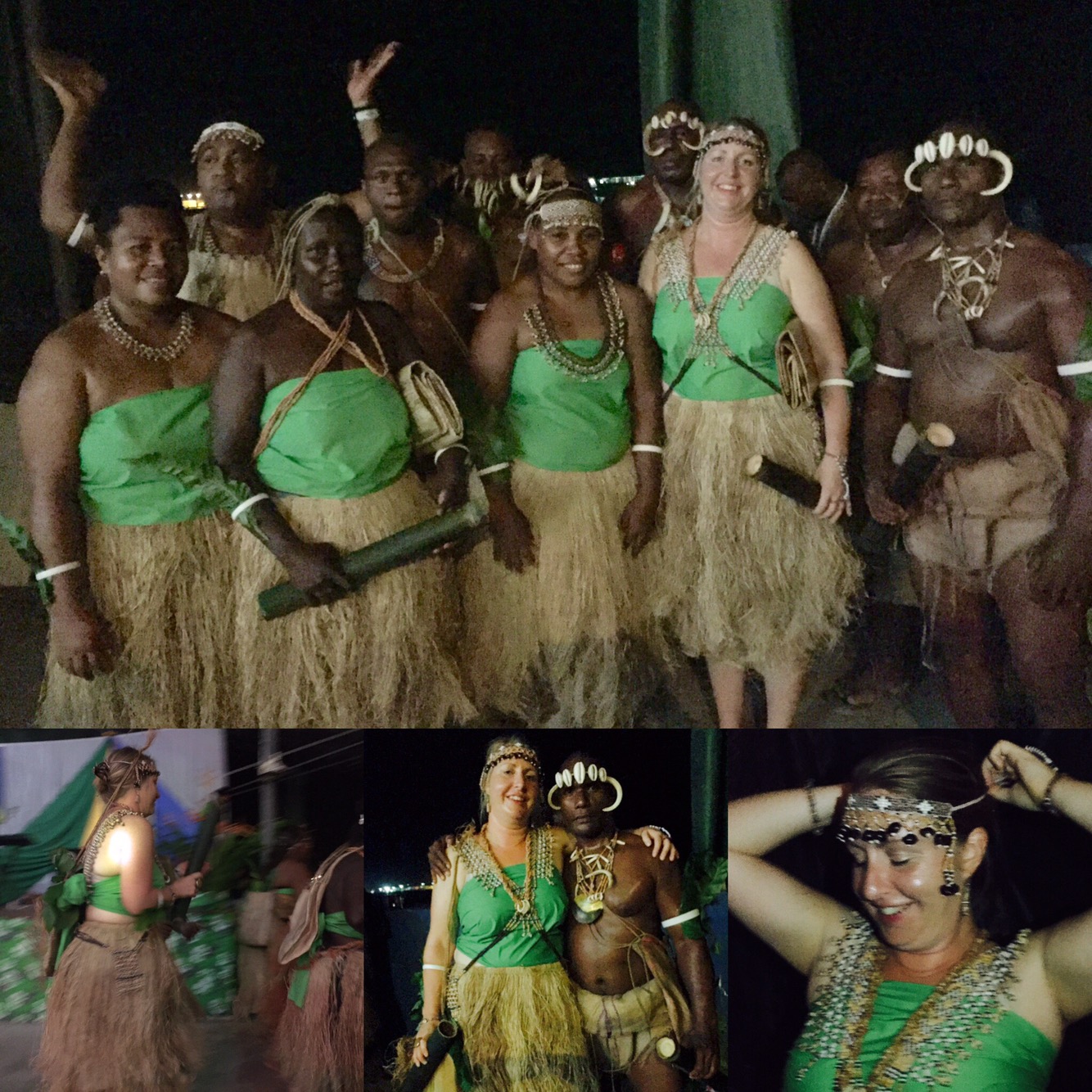
 By nightfall everyone is a little loose and the ladies are taking charge of the dance floor. Sorry, I stand corrected. The ladies and our security guard who may have got a little looser than he should. That, however, is another story. In defiance of true Solomon style, I tried to make it as informal as possible and the speeches, thankfully, were kept to a minimum. I know I will have to make one eventually but I’m not yet ready to say my goodbyes. I didn’t get away with it totally and my most amazing and special friend Mary made sure I looked the part in my Solomon Island outfit and crown. 

By boss Julie and my right hand man, Isaac
The Vollies
This crown, I imagine, will be most prized and special gift that I will take with me. It is a traditional crown made of shell money from Mary’s village in Langa Langa Lagoon. Tiny round disks have been lovingly carved from coloured shells and strung together to spell my name. A star hangs from each ear and a small triangle compliments my nose. I am told that I am now ready to find a husband. What I lucky girl I am.

The end

The Taxi

This weekend was a special weekend. It has taken eleven months to get to this place and even now, there is still something that causes an initial unease and discomfort that is palpable at first. Thankfully though, with a little work, this dissipates and once you are let in and everyone begins to relax, you will find the warmest, funniest and friendliest folk you would ever like to meet. Like I said, a great party.

Escape

Escape

For the last 7 years, I have not been in a job longer than 3 months. I enjoy the constant change and challenge of agency nursing. I get to do the job that I love, without the politics. It is now coming up to 11 months, same hospital, same office. I had to get out and I think everyone knew it.

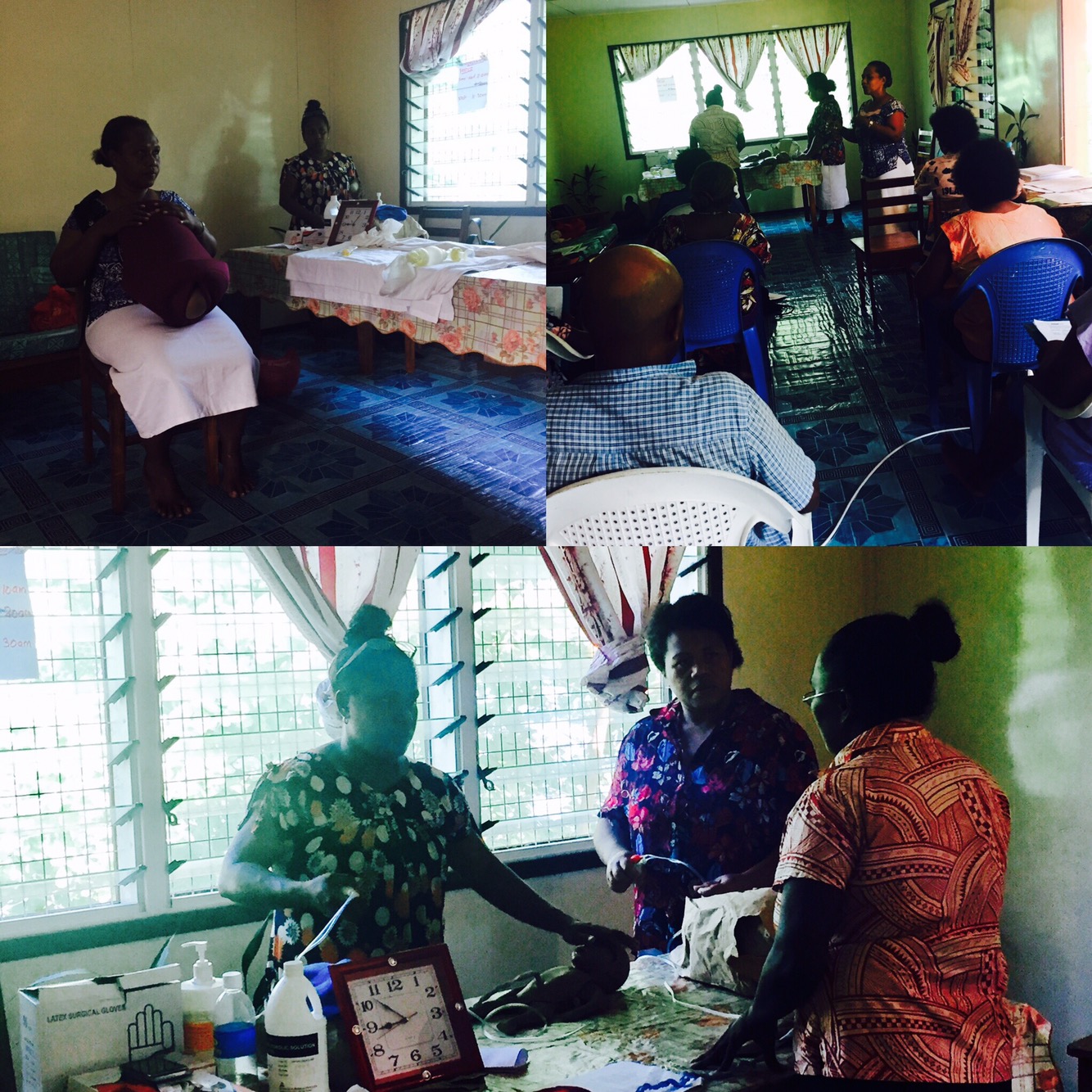
So I jumped on the back of a neonatal training course that was touring the south of Malaita. Everything went a little bit wrong and nothing happened according to plan, but I enjoyed every minute of it. With a strange fondness, I have grown to love this dysfunctional way of life.

We were supposed to leave at 8am. At 10am I got a call to say that everything was finally in place and I would be collected at the bottom of my road. I waited 30 minutes (Solomon time) before I set off, then I waited an hour at the side of the road and another 45 minutes at the market. Just after 12 we were off. No we weren’t. We stopped to pray and give thanks, then we were off. Finally.

Finally on the boat

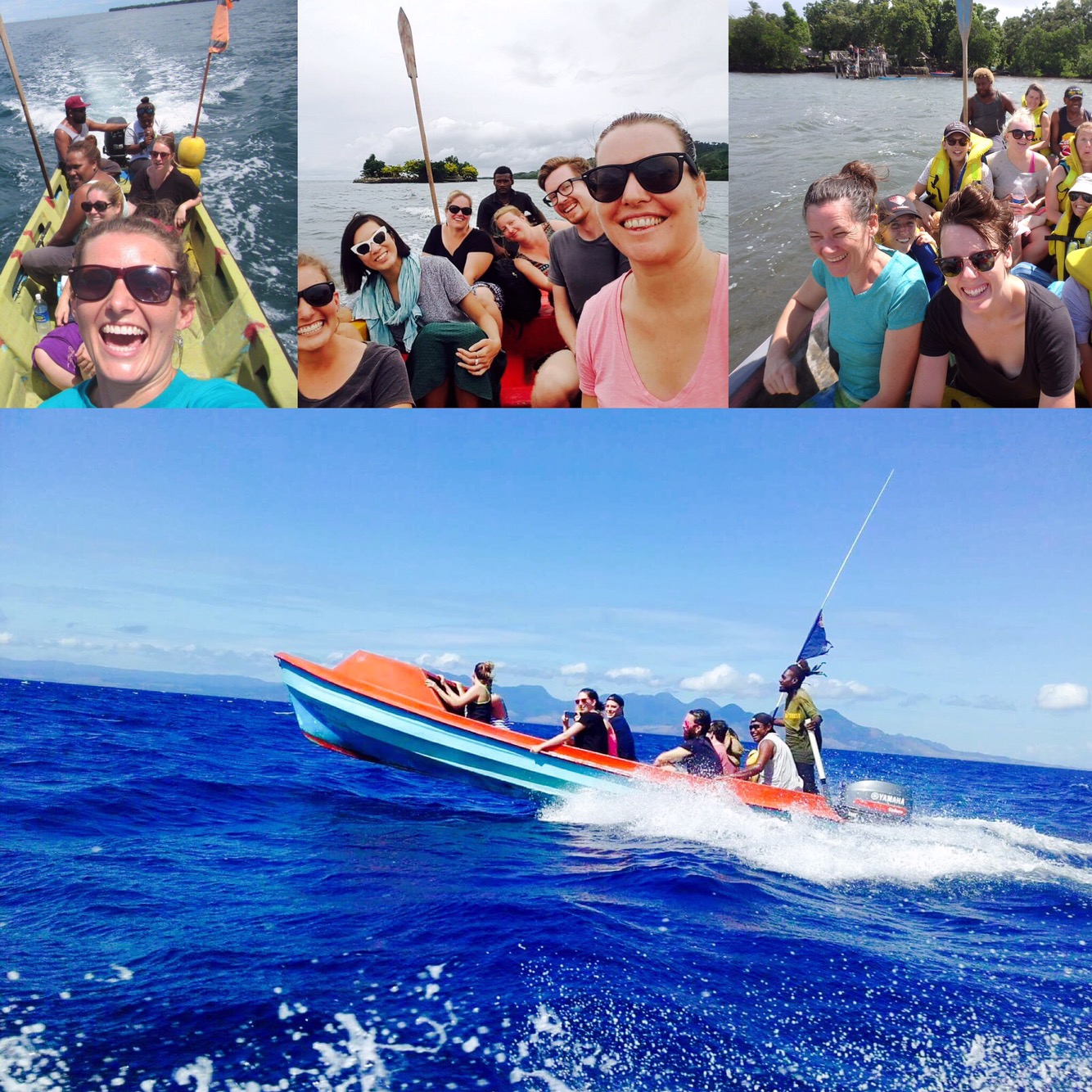
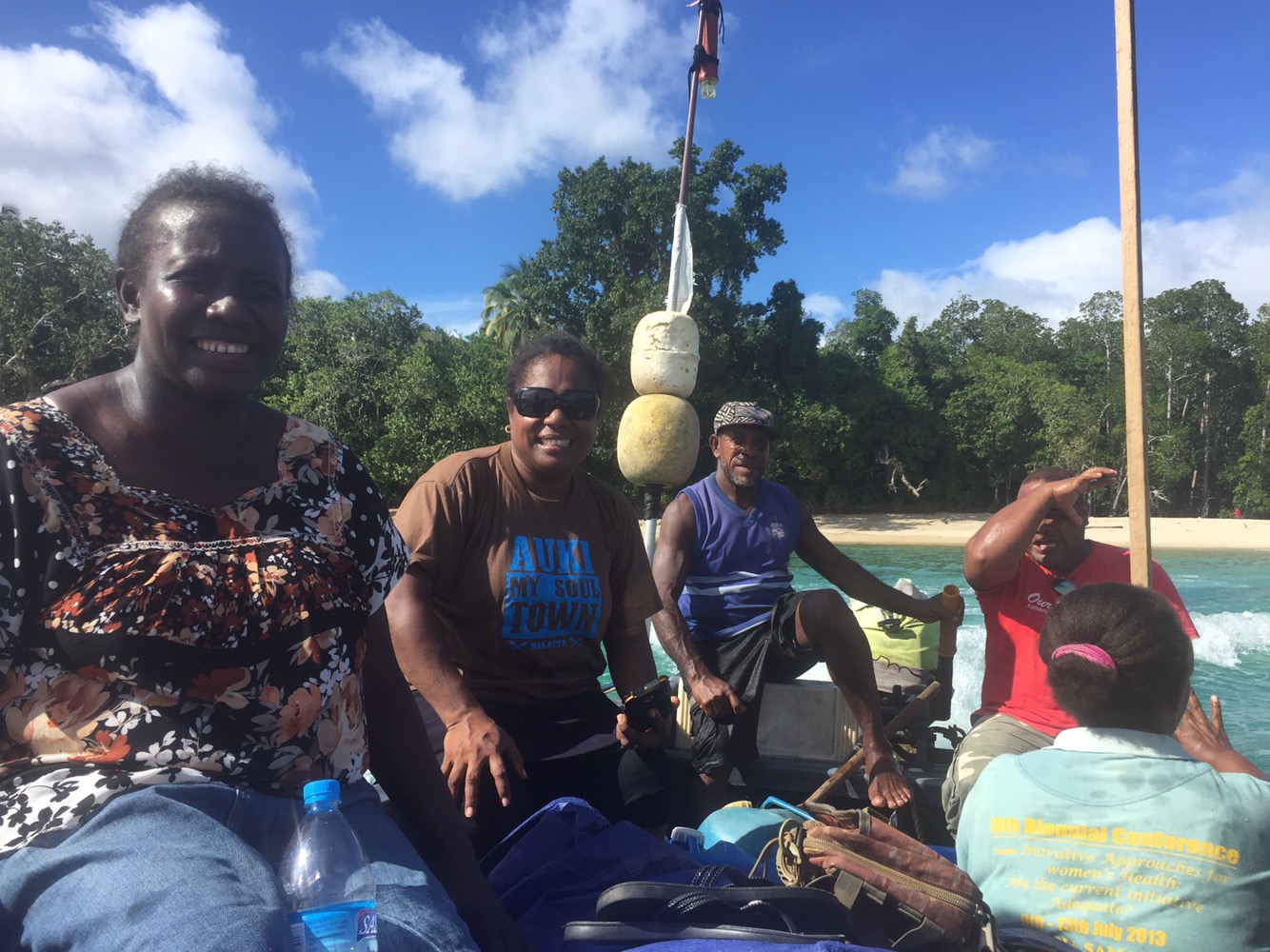
It was three hours cramped on the back of a truck, then three hours cramped in a small boat. The sea was rough and the weather not too kind.
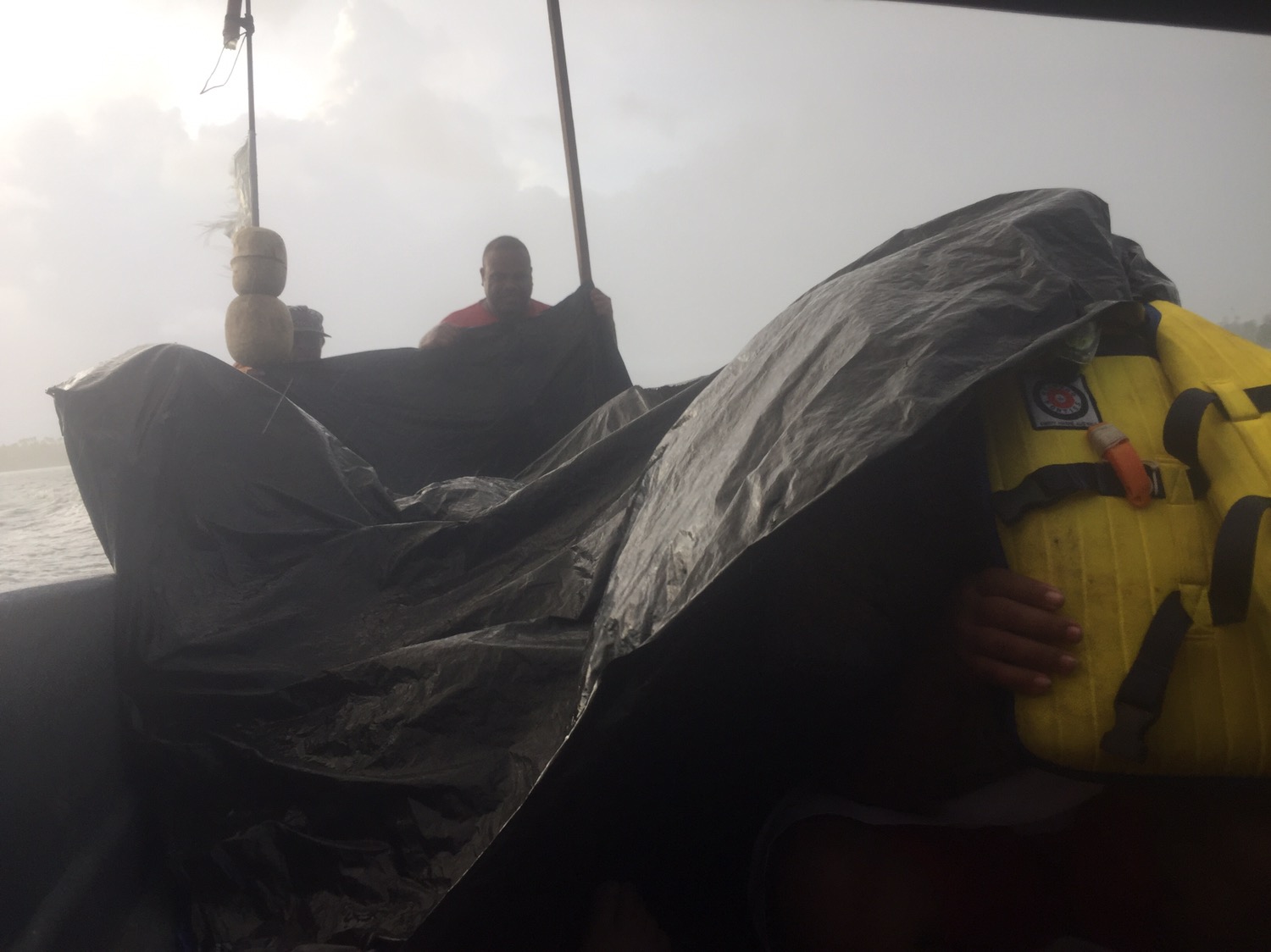
Believe it or not, there are 8 people under there!
Wrapped up in black plastic to shelter from the rain, pitching and hurling over the waves, I was thankful as we ducked inside to the peaceful waters of the west AreAre Lagoon. 

Calm between storms
It took us an hour before we were back out in the open ocean. It was dark now, the reflection of the moon highlighting the peaks and troughs of the vast rolling seas. I remember feeling very small and very vulnerable, 10 people squashed in a tiny boat.
Sunset over Areare Lagoon
At last, we arrived. I had no idea where we were or what it looked like, my sight confined to the light of my torch as I wandered up the rough track to the guest house, excited to see what daylight would bring.

Afio

Afio CBD

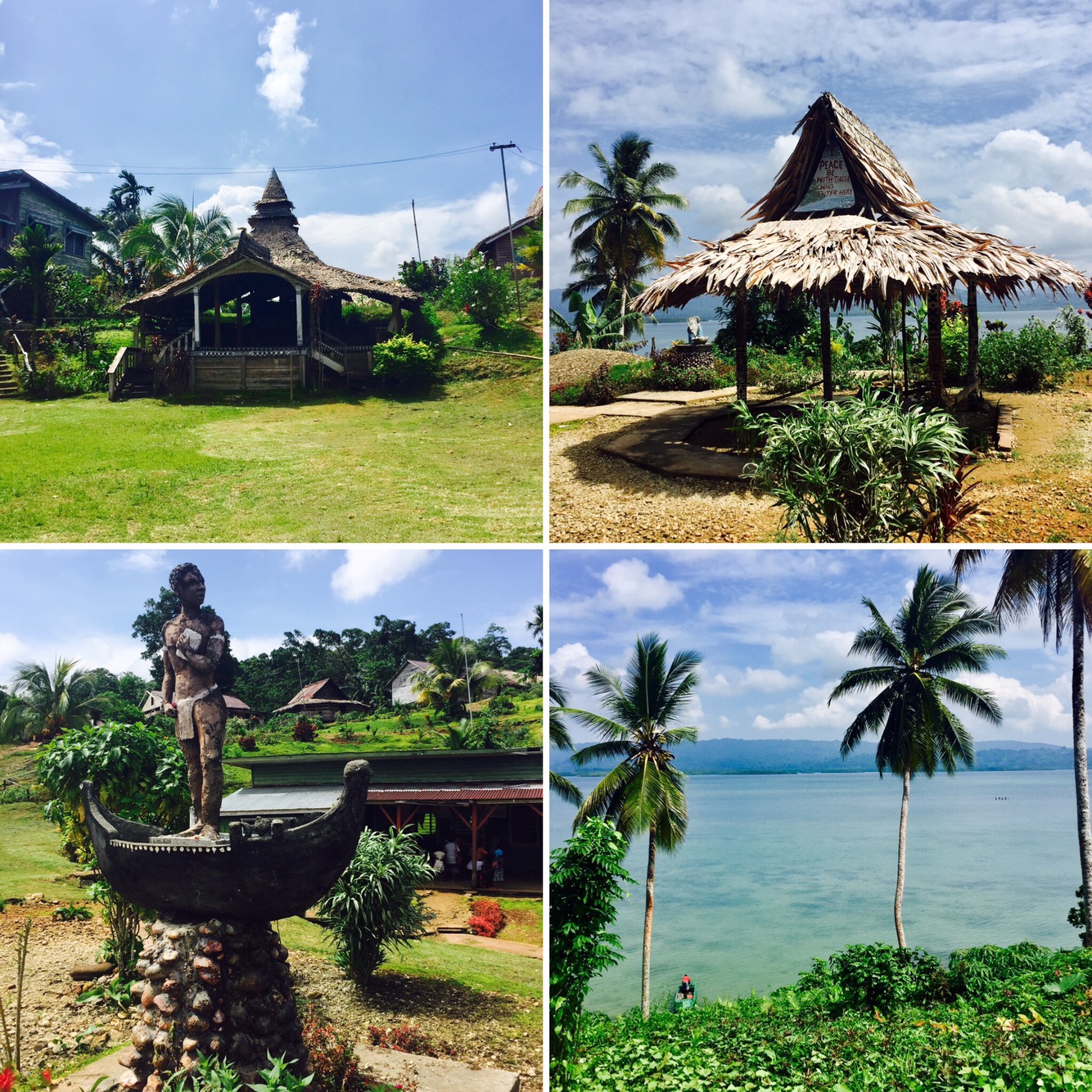
We were staying at a community station on Small Malaita, a small island separated by a narrow sea. The station, Afio, has guest houses, conference centres, markets, schools and an area health centre. It is the central meeting place for both south Malaita and Small Malaita. Every morning a steady stream of dugout canoes ferry children, workers and market sellers to the station as the small town converts to a Solomon style CBD for the day.

The Market

Just a normal day

Knowing very little about delivering babies, I am excused from the course and go to work in the area health centre for the day. 

Afio Area Health Centre

This day will be a memory that I will hold forever. I am working with senior nurse/midwife Michell, who I can tell from the outset has a beautiful soul. Today, she is the only one working. She has a large clinic to run. It has no ceiling, no electricity and no running water. Despite this, it is an attractive place and you can tell that Michell takes pride in her work. There are colourful posters and everything she has, which is not a lot, is labelled, organised and neatly stored. 

Today she has 17 patients, 3 birthing mothers and a long line of outpatients to see. There is a very sick baby who needs to go to Kilu’ufi Hospital for treatment. The only way to get there is the same way we came, a journey I found hard at the time but unimaginable if I or my child was sick.

I think about how I would deal with this situation if I was working in Australia. The answer: not well at all. First thing I would do is call for help and nurses would come. I would consult with a doctor. If I was really lucky, I would have telehealth that would enable them to be there, with me, in the emergency room. I would call RFDS who would arrange a plane and an ambulance, giving me professional advice and guidance till they arrived. But there is none of this and Michell has full responsibility for caring for all these people. She is not overwhelmed, she is not stressed, she does not complain and she does not panic. This is just an ordinary day. We work hard, but we work calmly and even though I am there and I am helping I know that Michell would cope just fine without me.

Despite the reality shock, I have one of the best days. I love nursing and I love having the chance to work as one again, in an environment that I am (slightly) familiar with. At the end of the day, Michell is grateful to me for being there. She tells me I have taught her a lot but I am pretty convinced that it is I that has learnt the lesson.

A tale of two clinics.


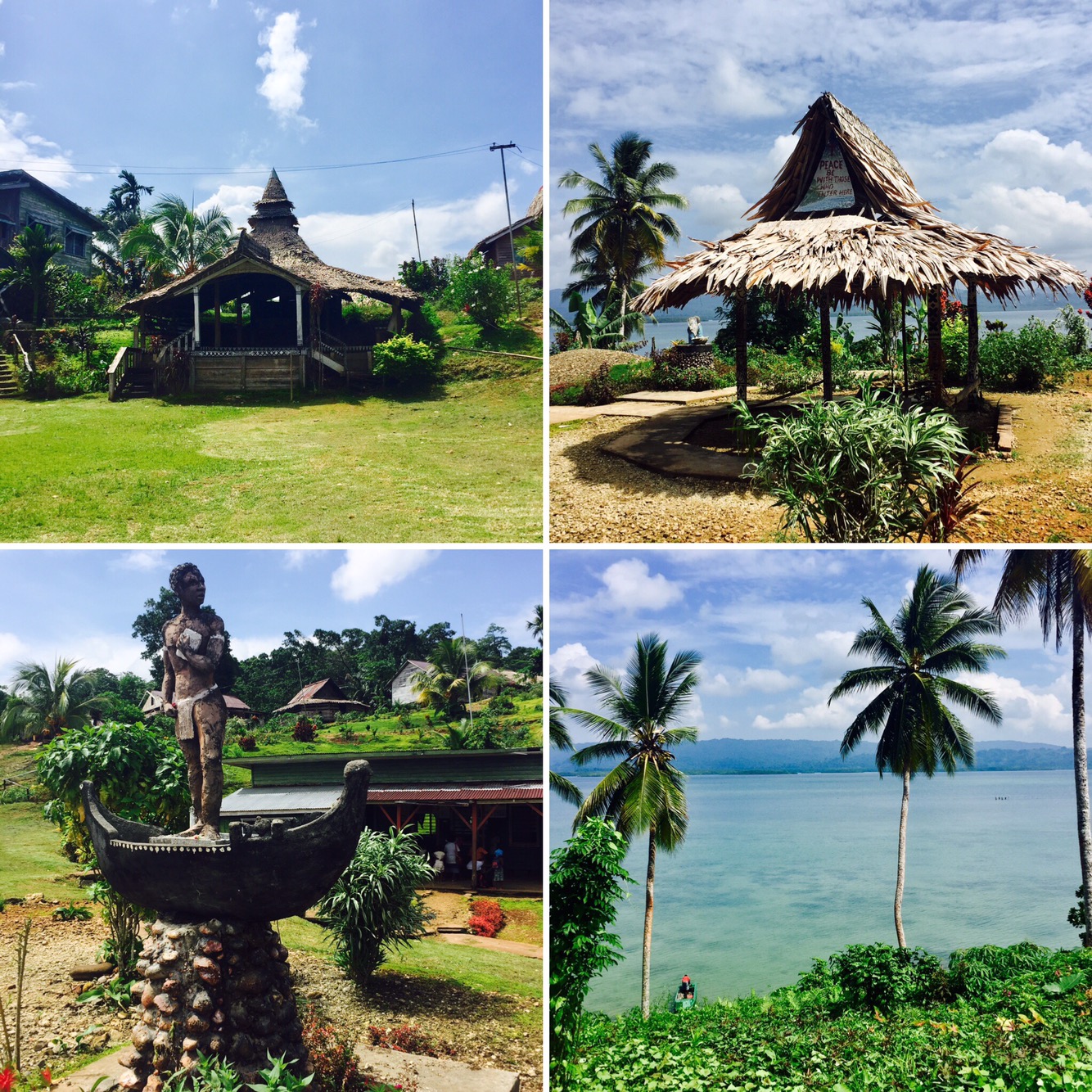
The following day I take a boat and head out to visit two remote clinics. We travel down the passage that runs between Malaita and Small Malaita before veering off into the mangroves. It is a magical world of secret passageways that run to small villages hidden amongst the dense foliage of huge green leaves. 

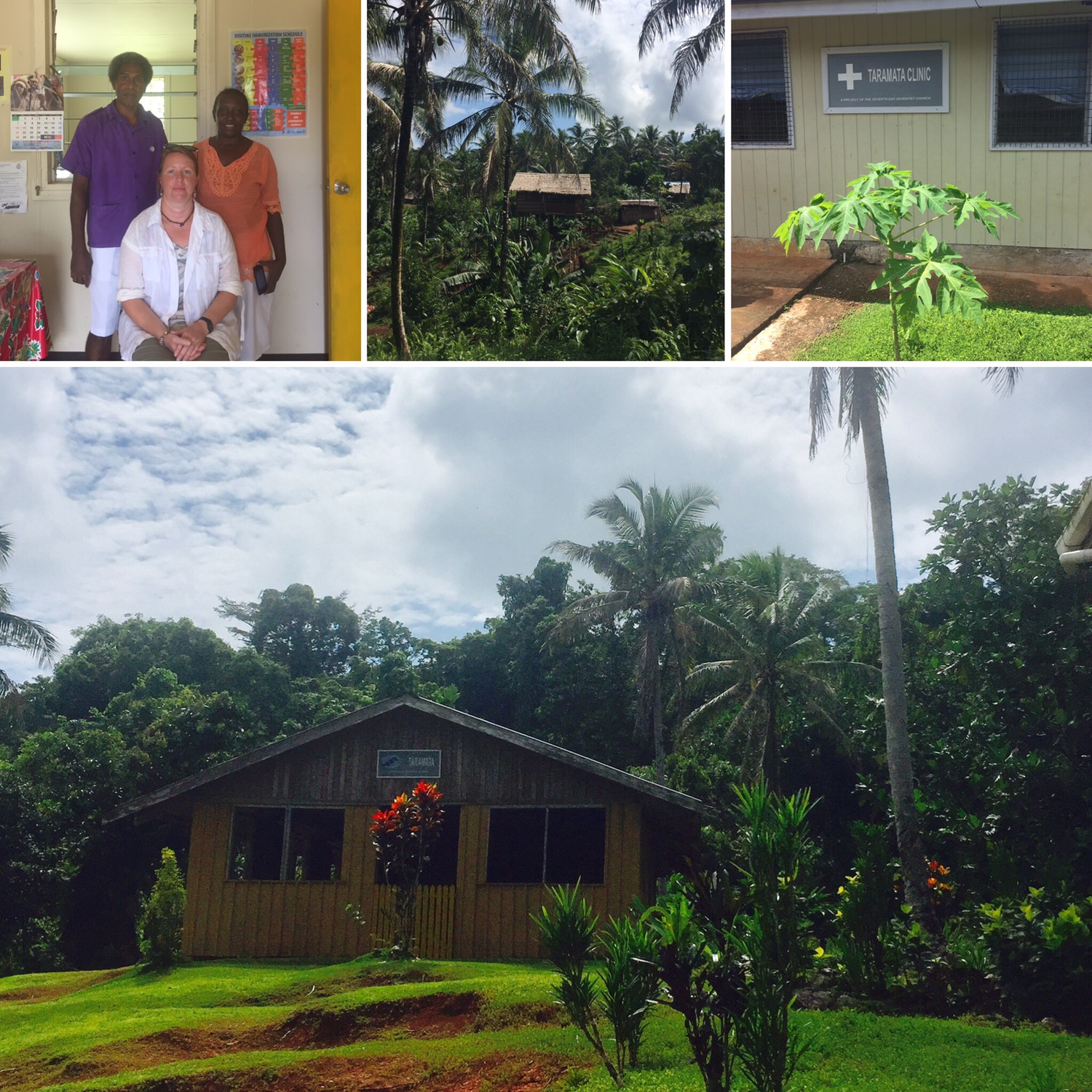
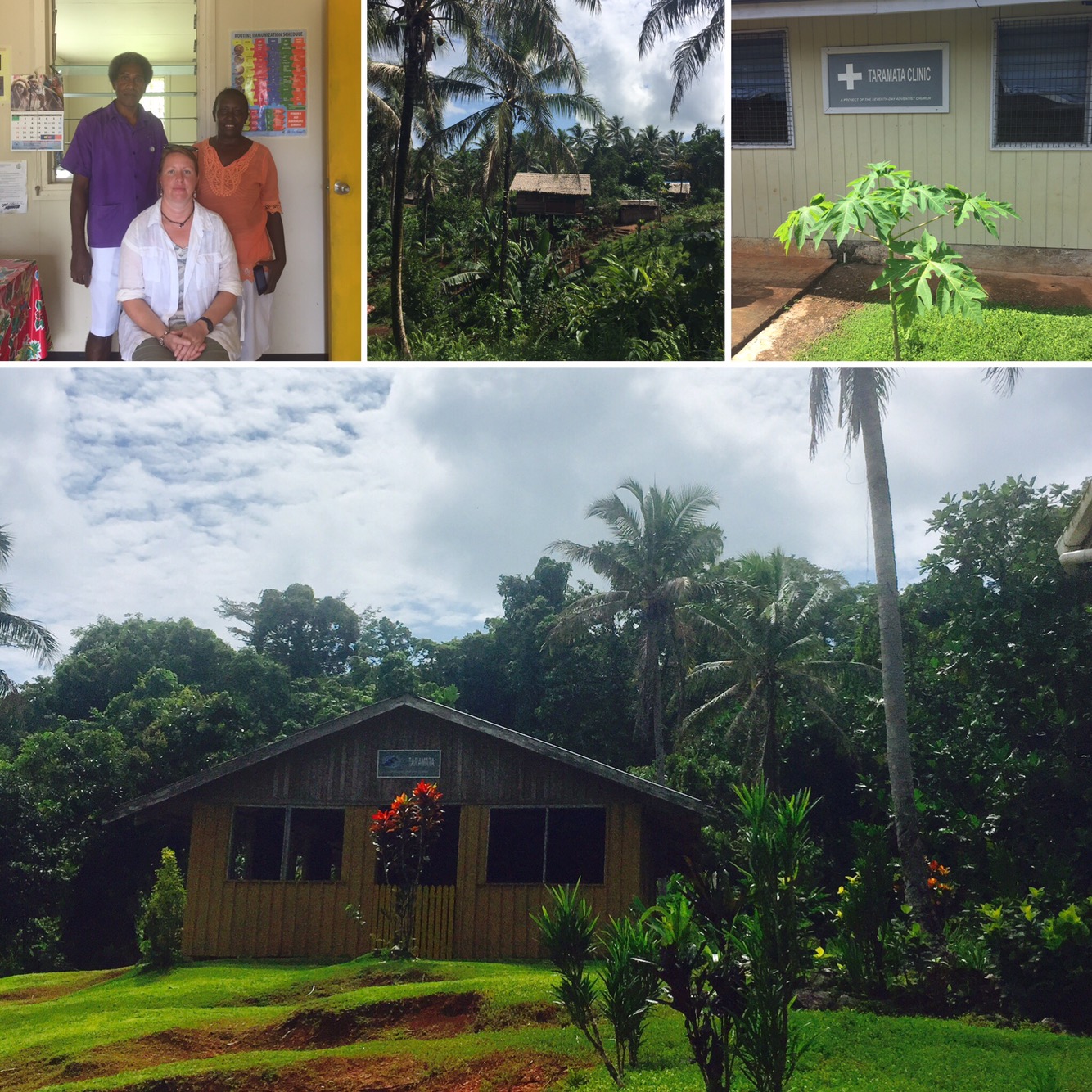
We take many turns and it is not long until I am totally lost and everywhere looks the same. The tide is out and the boat can go no further so we have to walk the rest of the way. We are visiting a small clinic in a village called Taramata. 

The walk to Taramata Clinic

It is the first clinic that I have seen here that has all four walls, running water and a roof. Not only that but it is clean and bright, there is solar light, a working fridge, a steriliser and a good store of supplies. The clinic is run by Stanley and his wife Alice and you can tell, as Stanley shows me around that they are proud of their small clinic. 

This clinic is invested in and supported by the whole community and the church. They believe that health is everyone’s responsibility and they work hard, as a village, to keep this health centre running.

Back in the boat we head off again through the mangrove maze and back out into the passage before stopping at a second village, Tarapina. 

Tarapaina Village
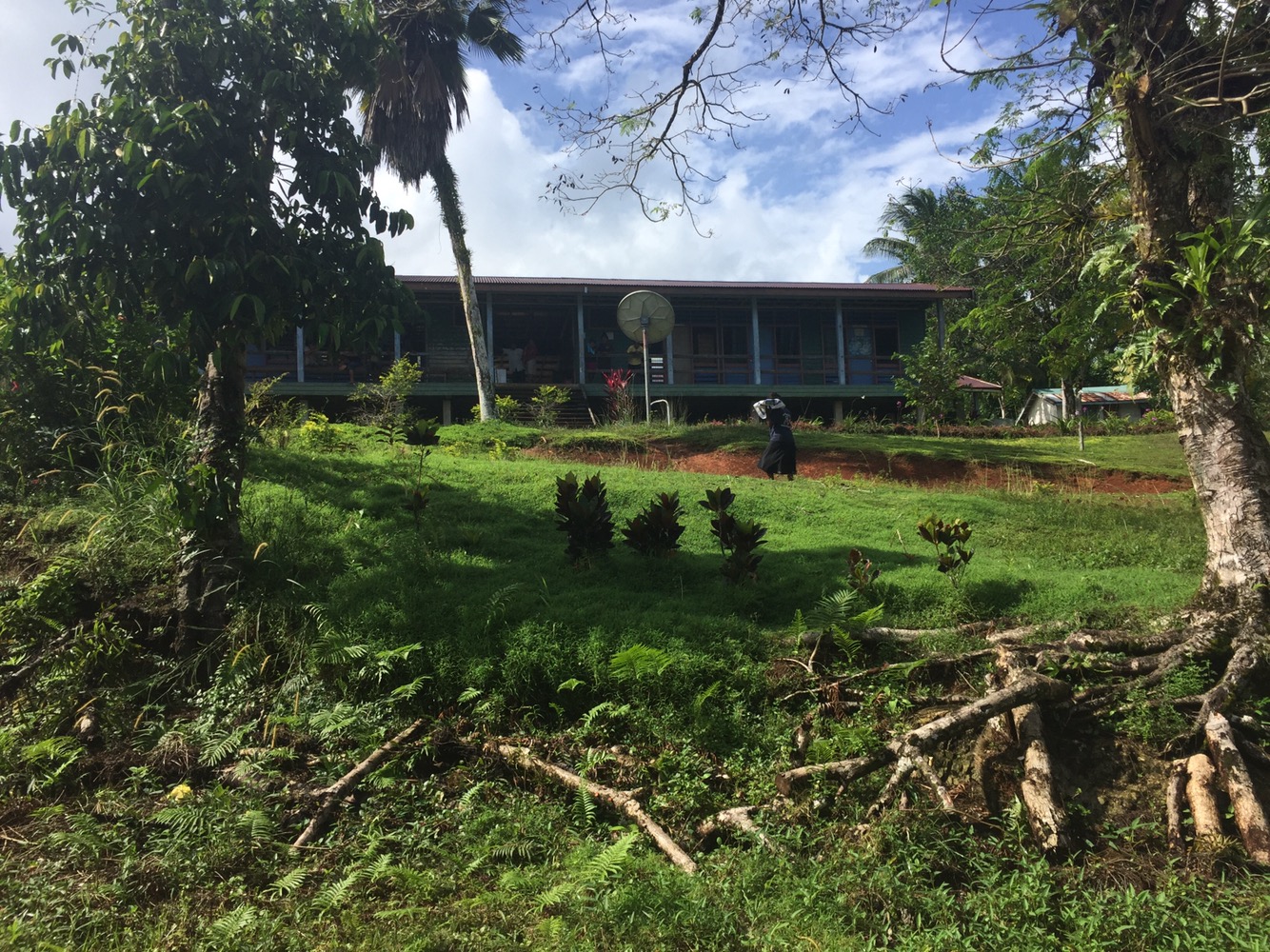
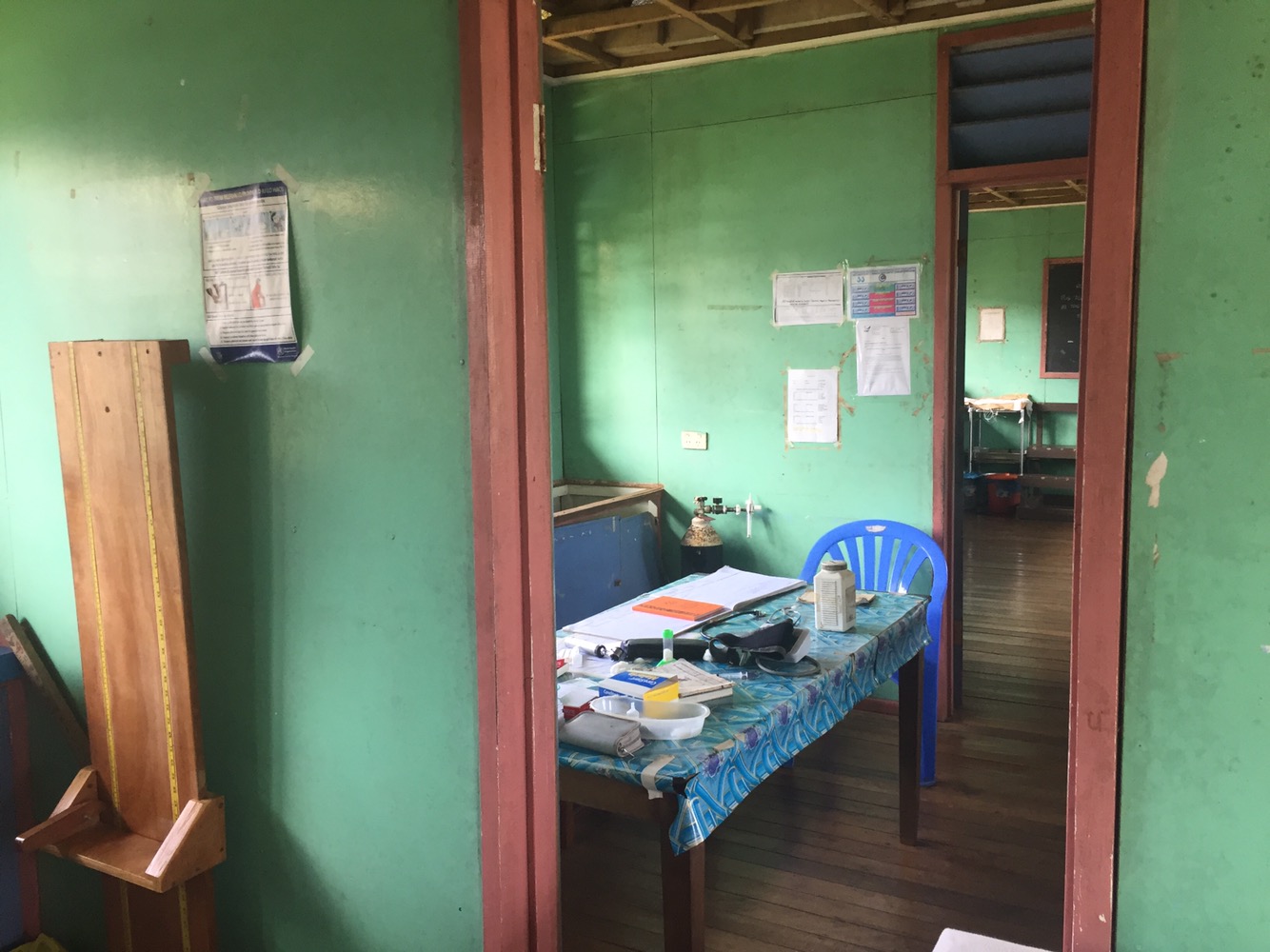
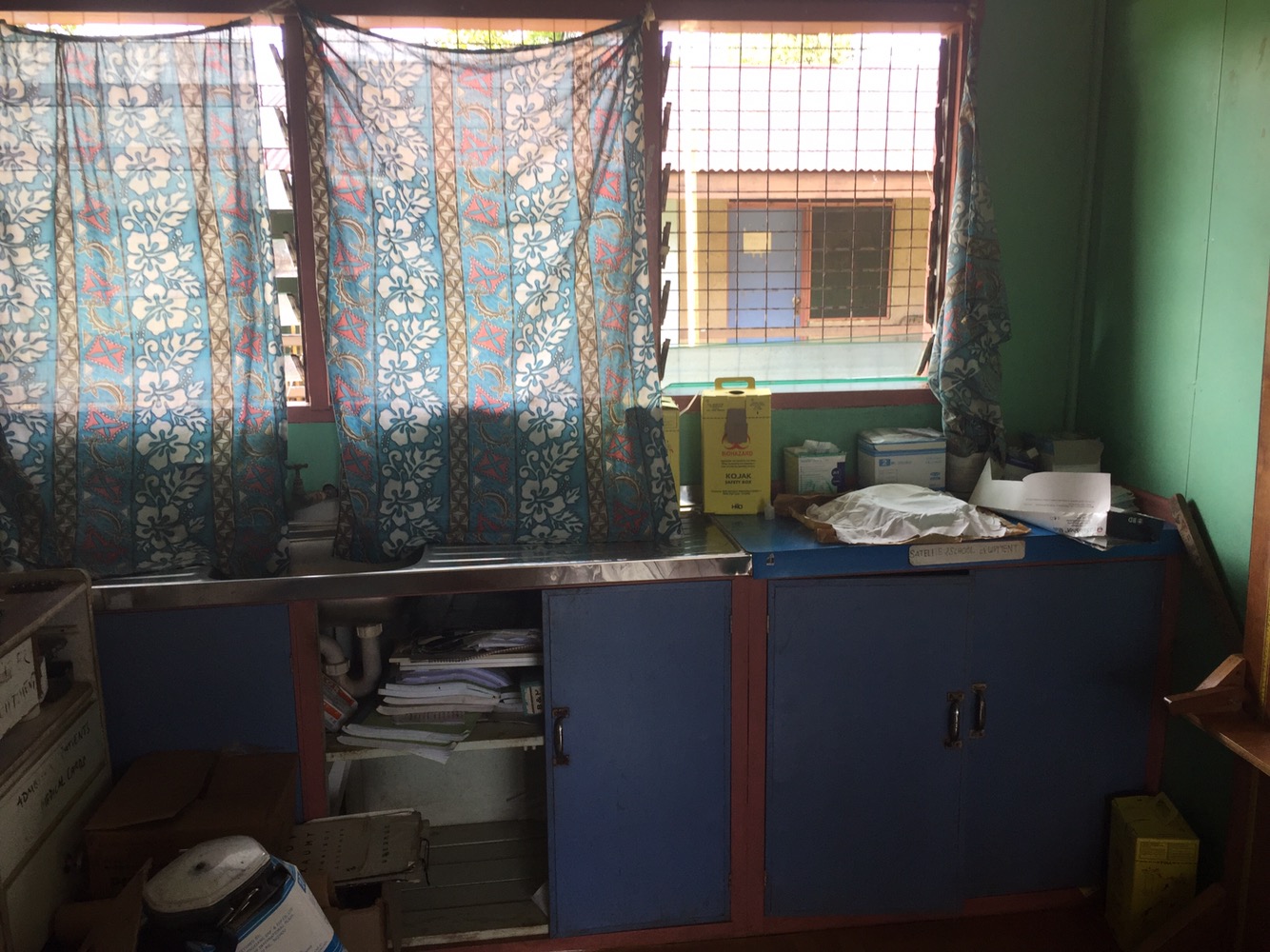
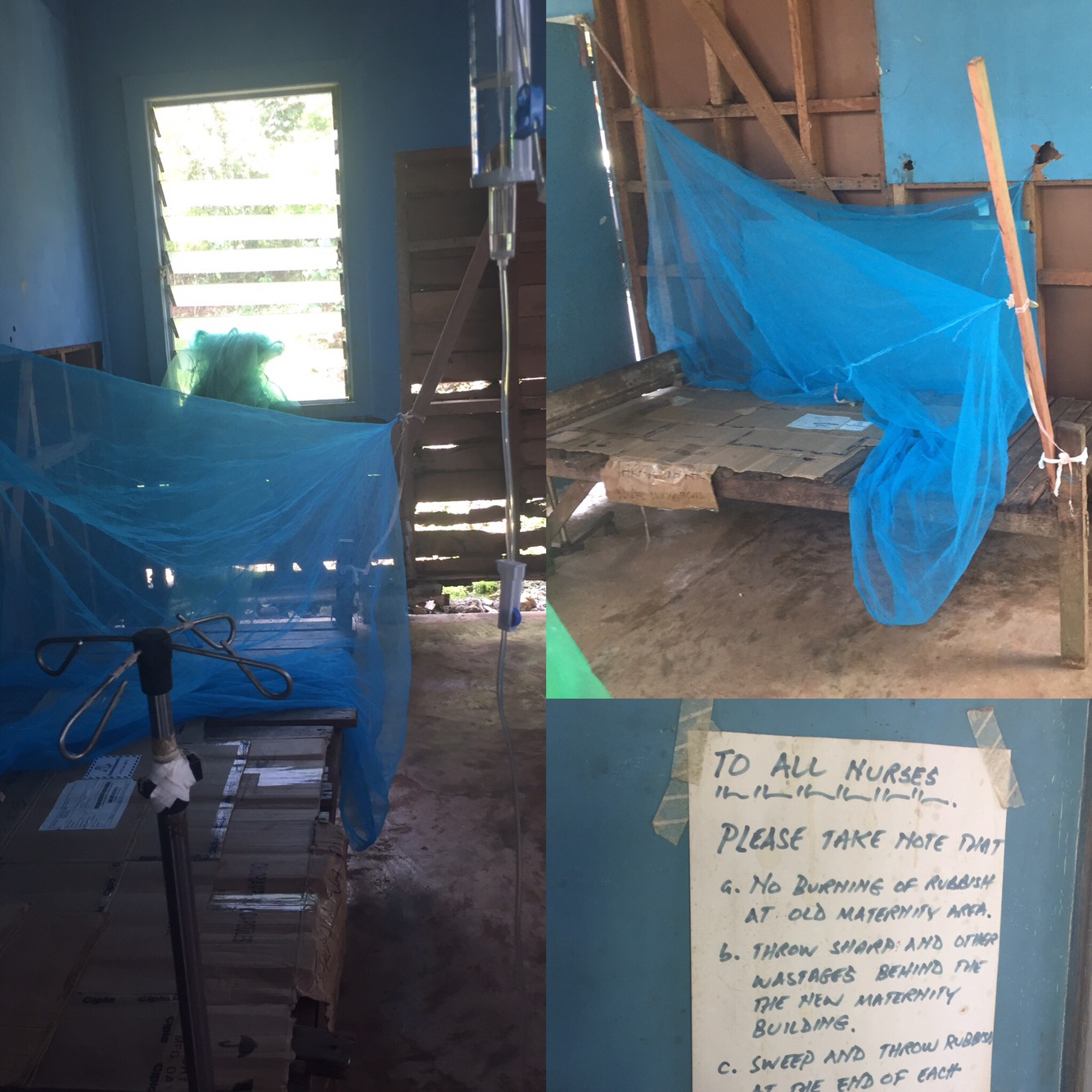
Again I am blown away by the beauty of this place, the community areas are amazingly maintained and immaculate but it is here that I meet a broken man. He has a very different tale to tell. John has worked here for years, it is his home and his people. He tells us that this is the reason he stays for he believes that no other nurse would. The health centre is the most run down I have ever seen. Although most clinics have no running water, they have a water source nearby. John tells us that his water source is some distance away so not only does he have to carry large amounts to the clinic but at the end of a long day he has to walk miles just to wash. We take a look around the clinic and I understand Johns distress. 

The walls have been eaten away by mites, the bed frames still stand but mattresses are long gone. A sick child lies on a cushion of cardboard boxes, an IV drip attached to his tiny hand. John tells us that equipment and supplies are donated and delivered but are often taken by thieves from the community. We talk to John for some time and not once does he smile, his story gets more and more distressing as he continues. It is clear that this is a broken man, from a broken community and he has no idea what to do to improve it. We leave with the promise that we will put in a report but I have the feeling that this is nothing that is not already known. It’s a sad end to what started as a very promising, uplifting day.

Crabs and Giggles

In the evening, we hang out at the guest house and I love being here with all the nurses and midwives from the region. There are about 15 of us I think and it reminds of school camps when I was younger. What I really enjoy is listening to the laughter. It is genuine, loud and infectious and it happens a lot. We eat large mud crabs and drink tea to the humming of the generator as the nurses tell tales of their working lives. 

They feel that they have learnt a lot from this two day workshop on neonatal care and are grateful for any education they get.


Home?

Michell waving us off

The next day it is time to head back to Auki. We have the usual two hour deliberation of getting more fuel, deciding who is going where, with which driver? In which boat? At 10 am we pile into the small boat. There are 10 of us and we are not small people. I weigh 80kg and I’m probably the smallest, add to that 5 x 20kg bags of sea shells, at least 10kg per person of luggage and all the training equipment, I estimate we weigh more than 2 tonne and we’re driving through a rough sea, against a strong current. It takes us a long, long time but with an incredibly numb bum and a burnt face we finally limp into Su’u harbour. Here we will be collected by the hospital truck. Except it is not there, nor is it coming.

Amusing ourselves by counting shells

When I say harbour, I can imagine you are thinking of a picturesque bay with boats and shops and cafes, but we are in the Solomon Islands. There is nothing but a concrete jetty. So we wait. And we wait. And then we wait some more. I feel slightly delirious when after more than 8 hours of hot sun and little water we are lying on our backs, staring at the darkening sky. I hear a truck approach. At last, we are on the final leg of our journey. It is an exciting three hour ride through coconut plantations, boggy troughs and fast flowing rivers before we make it into Auki. And finally, I am home at last.

Home to find a new addition: Ramoa, the rat killer.

It’s a crazy thing to say but I honestly think I would be disappointed if even one thing had gone according to plan.