It has been a busy couple of weeks down in Kilu’ufi Hospital Knowledge Lab.
The end of April is the dead line for all Australian Scholarship applications to be in. For 8 months I have diligently tried to fill the class room with attentive ears but never have I seen it as full as the Australian Awards Scholarship information session.
At the end of last year I was trying to get one of my colleagues to apply for a scholarship that would pay for him to study either in the Solomon Islands or another Pacific country such as PNG or Fiji. His response was “what is the point?” At first I was taken aback but he explained that he would be living away from his family for up to three years. Yes, he would come back with extra knowledge and skills, but then what would he do with it? He feels there is nowhere for him to move in his job except to a management position. He would receive a minimal pay rise and work longer hours with increased stress. He could move back to Honiara but he’s from a small village in south Malaita. He already feels far too far away from his own family. He has children who are happy in school, nor does he want to leave his wife behind. In my usual positive Anna way I tried to tell him that he was wrong and with an attitude like that, he was certainly never going to change the world. He just needed to believe in himself. He argued that I had been here less than six months and more times than I care to remember I had had my enthusiasm crushed and the wind knocked out of my sails. I would say 75% of my effort to boost morale and create an increased interest in education had fallen flat on its face. The walls are too high, the rivers too deep. He said I still have gas in the tank, some hope that I can maybe make a change. He asked me, would I still feel like that in 10 years? I’ll admit, it was a pretty strong argument.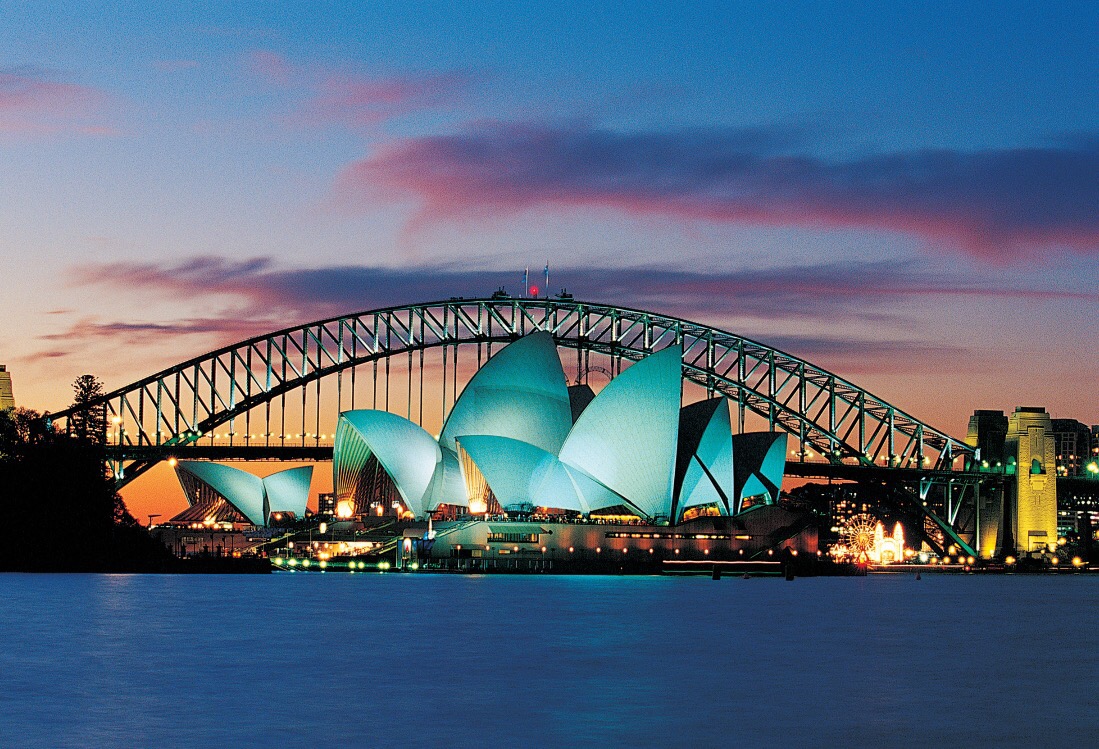
But Australia! Australia is a whole different kettle of fish. Living the Australian dream. Pack your bags, leave everything behind and sail off into a world of opportunity, a world of wonder. He didn’t think twice. The application form the only thing I’ve seen him complete. I don’t blame him. He is no different from any of us, from me. We are all searching for that one, elusive thing: happiness.
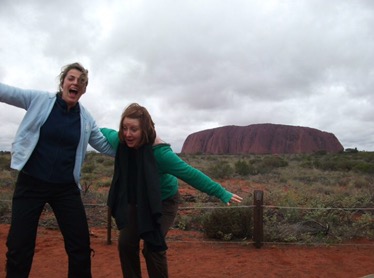
We are lucky. The majority of us have travelled. We may not get to see the whole world but we have certainly gone further and wider than many Solomon islanders could ever dream off. The majority can barely afford a cold beer in a bar, let alone pay for flights, hotels or a meal in a restaurant, Most have never been on a train, driven on a motorway or travelled in a lift. They have never woken up to a vegemite sandwich or eaten a chicken parmi. They have never had a wide screen TV, been to the cinema or to the theatre. Never stepped foot in an a shopping mall. Never slept in cotton sheets. This, (so we’re told) is what makes us happy.
My manager made an interesting point after reading my last blog. I had made a comment that Solomon Islanders did not seem unhappy, that they did not stay awake at night, worrying about the future. She told me I was wrong. On reflection I believe she was right and that it was a highly naive and ignorant comment to make so fleeting. Between that and having spent the last two weeks helping people chase what they believe to be their journey to happiness (Australia) I decided to do some research. It turns out, I am not the only one. Phewee, there are a lot of ideas out there.
So, the dictionary defines “happiness” as the state of being happy. Helpful.
 Buddhism states that ultimate happiness is only achieved by overcoming craving in all forms. It encourages loving kindness and compassion, the desire for the happiness and welfare of all beings.
Catholicism believes that perfect happiness can be attained not in this life, but in the next. Where is the fun in that? Imagine living your life, knowing that no matter how hard you try, you will never achieve happiness?
It turns out that you can measure how happy you are just by filling out a questionnaire. There are thousands to choose from: The Subjective Happiness Scale (SHS), The Positive and Negative Affect Schedule (PANAS) and The Satisfaction with Life Scale (SWLS).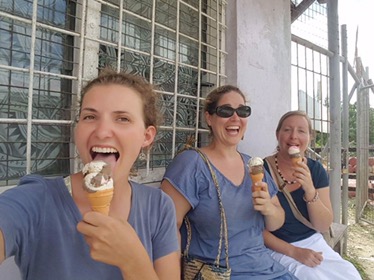
Go on, give it a go. You may be surprised.
Happy People Live Longer. It is a fact. Bruno Frey reported in his book of the same name that that happy people live 14% longer, increasing longevity by 7.5 to 10 years. Bring on the Happiness.
Carl Honore uses the term “turbo-capitalism” in his book In Praise of Slowness. He believes that long hours on the job is making us unproductive, error-prone, unhappy, and ill. In this media-drenched, data-rich, channel-surfing, computer-gaming age, we have lost the art of doing nothing, of shutting out the background noise and distractions, of slowing down and simply being alone with our thoughts. Similar musings to a recent blog of mine: 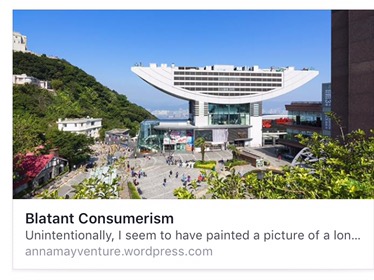
He suggests many ways in which in which we can slow our lives down. According to this theory, the Solomon Islanders should already be living the happiest of happy lives.
At lifeedited.com, Graham Hill thinks that too much space and too much stuff is making us unhappy. He believes that if you design your life with multi functional spaces you will have more money, health and happiness. The key to happiness: a sink combined with a toilet and a dining table that turns into a bed. True Story. Applicable to the Solomon Islands? I think not.
Along the same lines, two Americans, Joshua and Ryan have theoretically helped over 20 million people live meaningful lives. How have they done this? By blogging about minimalism. On paper, they had everything that we in the western world believe will make us happy: great six-figure jobs, luxury cars, over-sized houses, and all the stuff to clutter every corner of our consumer-driven lifestyles. What they found though was that they were slugging their guts out to afford more stuff that ultimately did not make them happy. Sound familiar? The solution: don’t focus on having less, focus on making room for more. More time, more passion, more experiences, more growth, more contribution, and more contentment. Do I think http://www.theminimalists.com will manage to spread their gospel here? Err, possibly not.
This poses the 100 dollar question: Does Money make us happy? 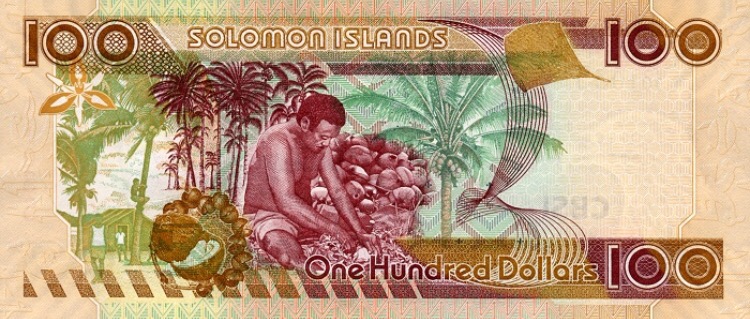 Clark and Senik (2011) published an interesting article “Will GDP growth increase happiness in developing countries?” They say that a growth in wealth may, at first, go hand-in-hand with a perceived improvement in “quality of life”, but additionally, it may well be accompanied by unwanted side effects such as pollution, income inequality or stress on the job. Secondly, they found that greater purchasing power increases individual happiness, but man is a social animal and relative concerns (income comparisons) may well diminish the absolute effect of greater wealth. The answer is, as always, ambiguous.
Dan Gilbert, a psychologist, has a different theory. He says that we all have a kind of psychological immune system in which happiness can be synthesised. This system is mostly made of non-conscious processors that help us to change the way we see the world. He says we do this in order to feel better about the world in which we find ourselves. The great news is that we all have it. The bad news: most of us have no idea how to use it. Getting closer? I think so.
Psychiatrist, psychoanalyst and Zen priest Robert Waldinger, the director of the famous “Harvard Happiness Study” states “Good relationships keep us happier and healthier, period.” The first lesson we are taught during our transition to the Solomon Islands is that building relationships is the most valuable thing you can do here. If you don’t take the time to make friends then you will get nowhere, period.

The last theory I found in my search for happiness (sorry, cheesy) was a TED talk by Benedictine monk: David Steindl-Rast called “Want to be happy? Be grateful.” I urge you, if you have a spare 15 minutes today, please listen to this: https://www.ted.com/talks/david_steindl_rast_want_to_be_happy_be_grateful
So simple. A previous blog I wrote was about religion and how I like the prayers every day because we are expressing gratitude for what we do have rather than thinking about all the things we don’t. Perhaps, in a society where we have access to everything we desire we have forgotten how to enjoy and be thankful for it. I think we can learn a lot from the Solomon Islanders.

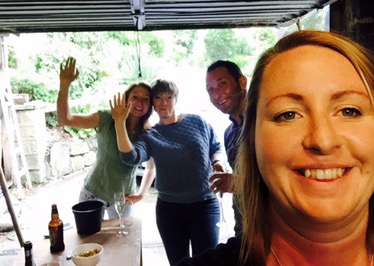
So, happiness. Who knows?
All I know is this: Those nurses who I see sleeping on tucked away beds in quiet corners during work hours, those I can barely motivate to get an email address never mind complete an online course, those who shy away from attending training sessions “because it was raining”, those who would rather smoke cigarettes and chew betelnut than do a full day’s work are suddenly motivated and career driven.
I just worry. Will one year, two years in Australia scratch that itch? Is it the dream of escape to a better life that motivates them or is it the aspiration to return to the Solomon Islands a leader and a pioneer, dedicated to helping in the development of their own country? Because they will have to come back. I hope it is the latter and a scholarship to Australia will give them the skills, the education and the motivation to come back and change the world. I really do.
And for those that miss out? Will the desire to go to Australia mean that they will never even consider expanding their education with a qualification here in the Solomon Islands? Because, as my colleague says “what is the point?”

 annamayventure